Best 4K Video Cameras for Wildlife Observation and Monitoring
For wildlife researchers and nature enthusiasts, a reliable 4K video camera with long battery life, robust night vision, and solid trigger performance can make all the difference. This guide highlights five top-performing wildlife cameras, each chosen for clear video, strong low-light capability, and durable outdoor build. Explore options that balance image quality, power options, and ease of use for off-grid settings or backyard wildlife watching.
| Product | Brand | Key Strength | Power / Connectivity |
|---|---|---|---|
| MRSCRET 4K Trail Camera | MRSCRET | 4K video, 60MP photos, wireless preview | WiFi via app, no home WiFi |
| MAXDONE Solar Trail Camera | MAXDONE | Detachable solar panel, long battery life | WiFi/Bluetooth app control, hotspot |
| GardePro A50 Trail Camera | GardePro | True 4K video, long-range No-Glow night vision | Non-cellular, low power, SD card |
| VIDVIS WiFi Solar Trail Camera | VIDVIS | 64MP, 4K video, fast 0.2s trigger | Solar / Type-C, WiFi hotspot |
| GardePro E8 2.0 Pro | GardePro | 4K video, dual antennas, live view | WiFi, Bluetooth, long range |
MRSCRET 4K Trail Camera Review

MRSCRET’s trail camera offers true 4K video and up to 60MP photo resolution, making it a strong option for wildlife monitoring where detail matters. Its built-in 2.0-inch color LCD allows real-time preview, while the included 32 GB SD card supports immediate storage of high-resolution files. The camera uses three PIR sensors to enable clear black-and-white night images, supporting motion-activated captures in low light. Remote viewing through the Trailcam Go app lets users view and download footage without visiting the device, though it does not connect to home WiFi.
Key considerations include the balance between wireless convenience and field robustness. The device is designed for outdoor environments and weather resistance, with a focus on capturing motion as wildlife moves through the frame. For researchers or property monitors, the combination of 4K video and high-resolution stills makes it suitable for documenting behavior and habitat use.
MAXDONE Solar Trail Camera With 4K And Solar Power
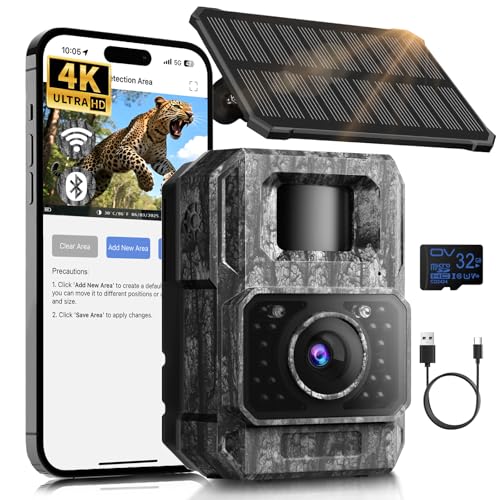
MAXDONE combines a detachable solar panel with a high-capacity 6000 mAh battery, offering extended field operation with minimal maintenance. It supports three charging modes: solar, Type-C, and traditional battery power, which is particularly valuable for long deployments in remote locations. The app-based control via TrailCamGO enables quick setup changes and photo/video transfers to a phone within a short distance, though the camera creates its own hotspot rather than relying on home WiFi. Its IP66 rating suits rugged outdoor use and variable weather.
The assignment of power and connectivity is crucial for wildlife work, where visits can be infrequent. By enabling continuous operation through solar charging, this camera helps researchers capture longer-term behavioral patterns and seasonal activity without frequent battery changes. The built-in WiFi/Bluetooth pairing supports efficient field data collection on mobile devices.
GardePro A50 Trail Camera — 4K Clarity, Long Range

The GardePro A50 delivers true 4K video alongside 64MP image resolution, enabling users to discern animal features with high clarity. Its non-cellular, non-WiFi operation emphasizes low power use, reducing the need for frequent battery swaps. A Starvis sensor enhances performance in low-light conditions, and night vision can reach up to 100 feet, making it a solid choice for early-morning or late-evening wildlife activity. This model is designed for straightforward deployment in outdoor habitats, with a focus on minimal disturbance and reliable capture.
VIDVIS 4K Trail Camera With Advanced Night Vision

VIDVIS equips a 64MP photo sensor and 4K video for comprehensive wildlife documentation. The 0.2-second trigger enables rapid capture of fast-moving subjects, a key feature for dynamic wildlife scenes. Powered by solar charging and a built-in 2600 mAh rechargeable battery, it supports flexible energy sources in field conditions. The camera offers a 70-foot PIR detection range and 850nm low-glow LEDs to minimize disturbance while delivering clear nighttime footage. A 32GB SD card is included to facilitate immediate data collection.
GardePro E8 2.0 Pro — WiFi Trail Camera
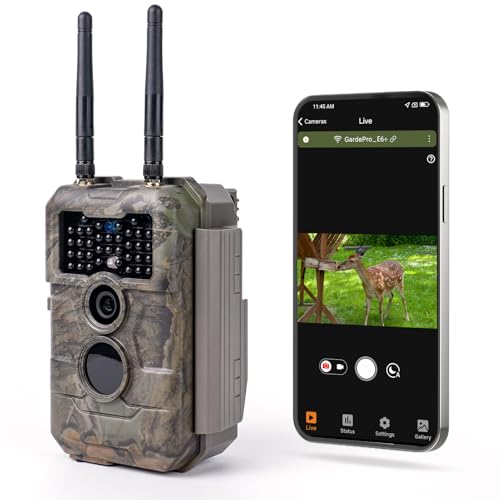
The E8 2.0 Pro combines low-power WiFi with dual antennas to extend range up to 165 feet under ideal conditions. It supports direct smartphone connections via Bluetooth and built-in WiFi, with the GardePro Mobile app facilitating camera operation. The camera records 4K video and 64MP stills, ensuring high-detail footage for wildlife monitoring. Its design prioritizes long battery life and reliable performance in field settings, where remote access and efficient power use are critical for extended deployments.
COONYES 4K Digital Camera For Vloggers (Note: Non-Wildlife Focus)
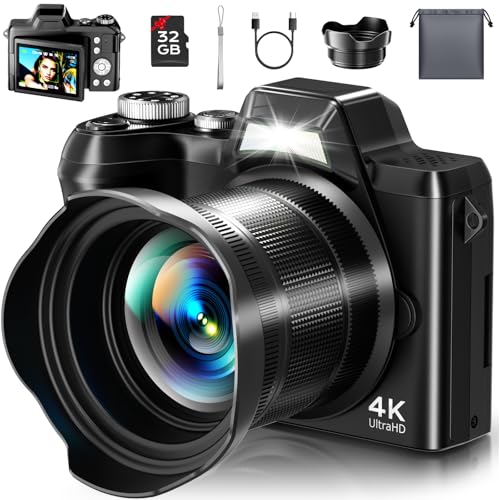
While primarily marketed for photography and vlogging, this COONYES model offers 4K video capture with 56MP stills, plus a flip screen and 16x zoom. It includes a range of features such as a lens hood and external microphone support, which may benefit documentary-style wildlife footage in controlled environments. This option sits outside the dedicated wildlife camera segment but can complement a field kit for broader shooting needs, including portraits of wildlife in calmer settings or staged sequences for education and outreach projects.
Buying Guide: Key Purchase Considerations for Wildlife 4K Cameras
- Resolution and image quality: Prioritize 4K video and high-resolution stills (64–64MP range) to capture subtle fur details, feather patterns, and habitat features.
- Low-light performance: Look for sensors designed for night use (such as Starvis) and infrared or low-glow night vision to minimize disturbance while improving nighttime footage.
- Trigger speed and memory: Fast 0.2s to 0.5s triggers reduce missed moments; ensure ample memory (SD cards) and consider models with HDR or improved image processing for dynamic scenes.
- Power strategy: Solar options and large-capacity batteries extend deployment, especially in remote areas. Assess whether the camera supports easy battery swaps or solar charging.
- Connectivity: WiFi or app-based control is convenient for field checks, but home WiFi compatibility varies. Some devices work as their own hotspot; others require local connectivity.
- Durability and weather sealing: For outdoor wildlife work, select IP-rated housings and rugged shells tested for rain, dust, and temperature fluctuations.
- Field setup and monitoring goals: Decide between cellular-enabled models (for remote live streaming) and non-cellular options (simpler, lower power, less maintenance) based on project needs.
- Data management: Consider the ease of offloading footage, reliability of image transfer to phones or laptops, and compatibility with editing workflows.
- Ethical considerations: Use devices in a way that minimizes wildlife disturbance; choose settings that balance data quality with animal welfare.
These factors help researchers tailor a wildlife monitoring kit to specific habitats, from dense forests to open fields. The five cameras highlighted above offer a spectrum of power options, network capabilities, and image quality to fit various field scenarios and study goals. When choosing, align the device’s strengths with the behavioral questions you aim to answer and the terrain where you’ll deploy it.