Best Landline Phones for Seniors With Dementia: Reliable, User-Friendly Options
For seniors facing dementia or memory challenges, a simple, reliable landline can be a lifeline. The following selections emphasize large buttons, loud rings, photo speed dials, and easy one-touch dialing to help family members stay connected with minimal friction. Each option below is designed to reduce misdials, boost clarity, and support independent communication in daily life.
Summary of Selected Products:
- ZAMQIU Landline Phones for Seniors – Corded, 9 Photo Buttons, One-Touch Dialing
- Sacumea Landline Phones for Seniors – 9 Photo Memory Keys, One-Touch Dial, Amplified Sound
- Serene Innovations Amplified Big Button Landline Phone – 26dB, Photo Buttons, 85 dB Ring
- Sacumea Big Button Phone for Seniors – 10 Photo Speed Dial Keys, SOS, 110dB+ Ringer
- Uvital Big Button Phone for Seniors – 9 One-Touch Dialing, Hands-Free, 98dB Volume
ZAMQIU Landline Phones for Seniors – 9 Photo Buttons

Features: One-Touch Speed Dialing with nine dedicated photo keys; easy to program and customize with familiar images. Large, high-contrast buttons aid visibility, and the device supports simple dialing for users with dementia or visual impairments. The phone emphasizes quick access to trusted contacts through photos, reducing the need to memorize numbers.
Additional benefits include adjustable volume settings across three ringtone and handset levels, along with a flashing visual alert to indicate incoming calls. The hands-free option remains straightforward, with a loud earpiece and a design that accommodates hearing aids. This model prioritizes straightforward operation while maintaining dependable call quality.
Sacumea Landline Phones for Seniors – 9 Photo Memory Keys

Features: Nine dedicated memory keys for one-touch dialing, with up to ten two-button memory options for additional numbers. The design emphasizes ease of setup in four steps and twenty seconds, making it approachable for seniors. Hands-free functionality supports louder, clearer conversations, helpful for those with hearing impairments or memory challenges. The phone is built to maintain simple operation while ensuring reliable daily communication with loved ones and caregivers.
Serene Innovations Amplified Big Button Landline Phone

Features: Designed for visual, auditory, or memory challenges; large buttons and high-volume calling support daily use for dementia or aging-related needs. One-touch photo speed dial is supported, enabling callers to quickly reach family and medical professionals. The phone’s 85 dB ring and 26 dB amplification help cut through background noise, reducing missed calls. The device is suited for seniors who require a straightforward calling experience with dependable loudness and clarity.
Sacumea Big Button Phone for Seniors – 10 Photo Speed Dial Keys

Features: Ten memory keys with photos for quick dialing, plus an SOS function for emergency access. The phone includes a 110dB+ ringer and adjustable handset volume up to 80dB, making it usable by users with severe hearing loss. A hands-free speakerphone option supports multi-tasking and accessibility, while the oversized keypad minimizes misdials and improves accuracy for visually impaired users.
Uvital Big Button Phone – 9 One-Touch Dialing Keys

Features: Nine large, replaceable photo buttons for one-touch dialing; supports 10 two-button memory groups and a do-not-disconnect warning to preserve stored numbers. Adjustable ringer volume up to 120dB and handset volume up to high levels, with a 98dB hands-free volume for clear conversations. The design focuses on reliable ease of use, with a reminder not to unplug the line to maintain stored contacts. Hands-free operation helps users who prefer not to hold the receiver during calls.
Uvital Big Button Phone – 8 One-Touch Dialing Buttons

Features: Eight one-touch large buttons plus one SOS emergency button, with 10 two-button memory groups. The ringer reaches up to 110dB to ensure calls are heard in noisy environments, and the hands-free volume can scale up to 110dB for comfortable conversations. This model supports cognitive and motor accessibility, making everyday calls simpler and more reliable for seniors with dementia or memory concerns.
VTECH SN1127 Amplified Landline Phone
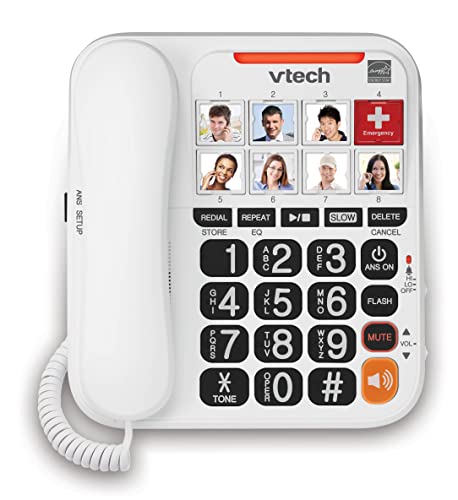
Features: Eight photo speed dial keys paired with a dedicated emergency key, 90dB ringer volume, and a 40dB audio booster to amplify voice clarity. A digital answering system with up to 22 minutes of recording time provides voicemail access when unavailable. The Slow Message Playback feature helps users navigate the system at their own pace, supporting cognitive needs and simplifying daily use for seniors with hearing or memory impairments.
Buying Guide: Key Considerations For Dementia-Friendly Landlines
- One-Touch Dialing And Photo Keys: Prioritize models with large, clearly labeled buttons and the ability to attach or replace photos so familiar numbers are instantly recognizable.
- Volume And Loudness: Look for adjustable ringer and handset volume, as well as hands-free speakerphone options, to accommodate varying hearing abilities and room environments.
- Visual Alerts And Ringers: Devices with flashing lights or high-contrast displays help users notice incoming calls in noisy homes or with hearing impairments.
- Memory and SOS Features: Many phones offer memory groups for quick access to emergency contacts; SOS buttons provide an important safety feature for dementia care.
- Ease of Setup: Choose phones with straightforward programming steps, minimal menus, and reliable performance without frequent resets or complex maintenance.
- Compatibility And Safety: Ensure compatibility with hearing aids if applicable and verify that devices are safe and stable for daily home use.
- Durability And Comfort: Consider corded designs for reliability and stability, with ergonomic keys and comfortable handset use for seniors with tremors or arthritis.
- Multi-User Suitability: Some models support multiple users (caregivers and residents) with easy switching between contact lists and memory options.
These options collectively address common dementia-related challenges by focusing on visibility, audibility, and ease of use. When selecting a model, consider the senior’s daily routines, hearing or visual limitations, and how caregivers plan to use the device in home settings. A device that balances simplicity with essential safety features can improve communication and reduce frustration for both seniors and their families.