Best Glasses-Friendly Binoculars for Clear Viewing With Minimal Eye Strain
Answering the common buyer question, these binoculars are chosen for eyeglass wearers, focusing on generous eye relief, adjustable eyecups, and optics that deliver a wide, bright field of view without constant fiddling. The top picks below are best for bird watching, sightseeing, travel, and outdoor adventures where eyeglass wearers need comfortable viewing. Each option highlights what makes it suitable for glasses wearers, plus a practical caveat to consider before you buy.
| Product | Main Benefit For Glasses Wearers | Best Use |
|---|---|---|
| Occer 12×25 | 15mm eye relief and adjustable eyecups | Bird watching, travel |
| Tinllaans 15×55 UHD | Large 22mm eyepieces, wide view | Sporting events, marine viewing |
| KTTREY 10×42 | 26mm eyepieces, 14mm eye relief | Hiking, wildlife |
| GIGAPENGUIN 15×52 HD | 22mm eyepieces, phone adapter ready | Travel, birding |
| FLYANT 20×50 | 26mm eyepieces, wide field | Birding, travel |
Occer 12×25 Compact Binoculars With Glasses-Friendly Eyepieces
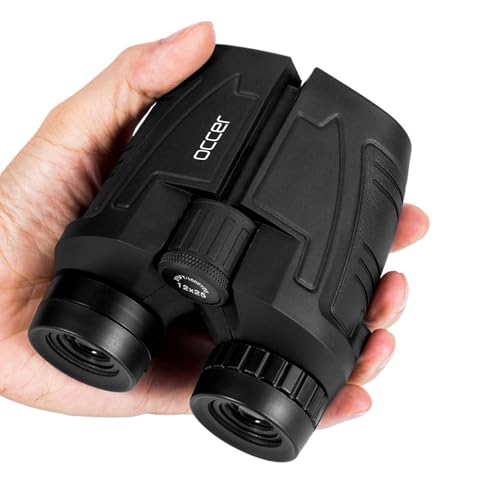
Best for casual observers who wear glasses or sunglasses, these binoculars feature adjustable eye cups that pull down to fit eyeglasses, bringing the full field of view closer to your eyes. The 12x magnification offers a balance of detail and stability, while the 25mm objective lens supports decent light transmission. The FMC broadband coating and BAK4 prism design aim to deliver a more natural image color and brightness. Caution: at 12x, shake can affect detail when used for distant subjects; a steady stance helps mitigate this.
Tinllaans 15×55 UHD Binoculars With Large Eyepieces

Best for long-distance viewing where a wider eye lens helps glasses wearers, this model uses 15x magnification with 55mm objective lenses and large 22mm eyepieces. Fully multi-coated optics and BAK4 prisms improve light transmission for crisper colors, while IPX7 waterproofing supports outdoor use in varied weather. Caution: fixed 15x magnification means you can’t zoom; ensure you’re aiming at distant subjects to avoid excessive shake.
KTTREY 10×42 Binoculars For Eyeglass Wearers

Best for versatile outdoor use, these 10×42 binoculars offer large 26mm eyepieces and 14mm eye relief, designed specifically for eyeglass wearers. The FMC lenses and BAK4 prism maximize light transmission for clear color and sharp edges, and a rugged, water-resistant build handles hiking, birding, and travel. Caution: heavier weight can become tiring over long sessions, so take periodic breaks.
GIGAPENGUIN 15×52 HD Binoculars With Phone Adapter

Best for travelers who want to capture moments, these 15×52 binoculars offer larger eyepieces for eyeglass wearers and a phone adapter to photograph subjects. The 22mm eyepieces support a comfortable fit, while multi-coated optics and BAK4 prisms boost light transmission for detailed views. Caution: higher magnification can magnify hand shake; use a stable stance or a monopod for best results.
FLYANT 20×50 High Powered Binoculars

Best for serious distant viewing, these 20×50 binoculars push magnification with a 26mm eyepiece design that aims to balance eye relief and field of view for glasses wearers. The green FMC coating enhances brightness, and the waterproof build supports outdoor use. Caution: higher magnification reduces depth of field; steady hands or support aids can help maintain a sharp image.
Buying Guide: Key Considerations For Glasses Wearers
- Eye relief and adjustable eyecups: Look for models with at least 12–16mm eye relief and twist-up/twist-down eyecups to accommodate glasses.
- Magnification vs. field of view: Higher magnification provides detail but can exaggerate shake. Choose a balance (8–15x) for general wearers and eyeglass use.
- Optics coatings and prism type: FMC coatings and BAK4 prisms improve light transmission and color accuracy, important for viewing in low light.
- Weight and ergonomics: Glasses-friendly models should have a comfortable grip and manageable weight to reduce fatigue during long sessions.
- Waterproof and fog-proof design: For outdoor use, IP ratings or sealing help prevent misting and moisture.
- Durability: Consider chassis material and protection against dust, rain, and accidental drops.
- Compatibility with accessories: Some models offer phone adapters or tripod compatibility, useful for photography or steadier viewing.
Frequently Asked Questions
- Q: Do eyeglass wearers need special binoculars? A: Look for models with long eye relief and adjustable eyecups to avoid vignetting and ensure full field of view when wearing glasses.
- Q: Is higher magnification better for glasses wearers? A: Not always. Higher magnification increases shake; 8–12x is often more stable for eyeglass users.
- Q: Should I prioritize waterproofing? A: Yes, if you expect rain, humidity, or splashes; it helps protect optics and maintain clarity.
- Q: What is eye relief? A: Eye relief is the distance from the last surface of an eyepiece at which a full image is still visible. Longer relief is better for glasses wearers.
- Q: Are phone adapters necessary? A: They are convenient for capturing images, but are not essential for viewing; choose based on photography needs.
- Q: How important are coatings? A: Coatings reduce glare and increase light transmission; fully multi-coated lenses improve overall brightness and color fidelity.