Best Guitar Shielding Paint for Cleaner Tone and Less Hum
If you’re shopping for conductive paint to shield guitar cavities and reduce hum, choose products designed specifically for instrument electronics. This guide covers five practical options that target electric guitars, highlighting who each product is best for, and why. Expect concise, comparison-friendly details to help you decide quickly.
Overview Of Selected Products
| Product | Best For | Key Benefit |
|---|---|---|
| WANJAO Guitar Shielding Paint | Players with tight cavities | Precise shielding in small areas with water-based formula |
| JAOJAO Guitar Shielding Paint | Professional tone projects | Efficient noise reduction with precise application |
| kuailaya Guitar Shielding Paint | Budget-conscious setups | Effective noise reduction and strong adhesion |
| LANGXINST Graphene Conductive Paint | High-performance shielding | Graphene-based, high conductivity and durability |
| StewMac Conductive Shielding Paint | Easy brush-on shielding | Two coats for solid grounding and easy use |
WANJAO Guitar Shielding Paint

Best for precision spaces, WANJAO provides a water-based conductive barrier designed to block hum, hiss, and RF noise in guitar electronics. Its primary strength is shielding small areas like pickup compartments and control cavities where traditional conductive tape struggles with corners. The formula dries to form a durable barrier and is washable when wet. A notable point: the bottle’s texture may thicken in hot weather as water evaporates, and the paint can be diluted with water (10-20%) without reducing effectiveness. This makes it suitable for players who need precise coverage and easy cleanup.
Who it’s best for: players who focus on pickup and cavity shielding in tight spaces and want a wash-off option during setup. Why selected: excellent adhesion in tricky corners, water-based convenience, and clear hum-reduction benefits.
Caution: expect possible viscosity changes during transit in hot climates; dilute carefully to maintain application control.
Conductive Paint (Nanotech style) For Versatile Surfaces

Best for general shielding projects and quick DIY repairs, this multipurpose conductive paint offers broad applicability. The formula is non-toxic, quick-drying at room temperature, and removable with soap and water, making it adaptable for workshops, homes, and classrooms. While it excels in non-critical shielding tasks and basic electronic repairs, its broad scope may be less ideal for highly precise guitar cavity shielding where curved geometries require careful layering. Choose this when you want a flexible option that can tackle more than just guitar work.
Who it’s best for: hobbyists or educators needing a versatile conductive coating. Why selected: broad compatibility and easy cleanup.
Caution: for guitar-specific shielding, more targeted products may deliver denser, longer-lasting protection in tight spaces.
Mysora Nanotechnology Conductive Paint

Best for enthusiasts seeking high conductivity with nano-enhanced performance, this 50 ml option is designed for shielding guitar cavities and multi-surface circuit work. The paint emphasizes non-toxicity and safety for home studios, thanks to its water-based, fume-free composition. It includes practical tips: if the mixture seems thick or dry, add 10-20% water and shake. Grounding is noted as part of its shielding effectiveness, though details are general. This product is suited for projects where low-resistance connections and easy cleanup are valued.
Who it’s best for: home studios and hobbyists prioritizing safety and clear shielding without harsh chemicals. Why selected: nano-enhanced conductivity and user-friendly handling.
Caution: ensure proper ventilation during application and drying, even with water-based formulas.
kuailaya Guitar Shielding Paint
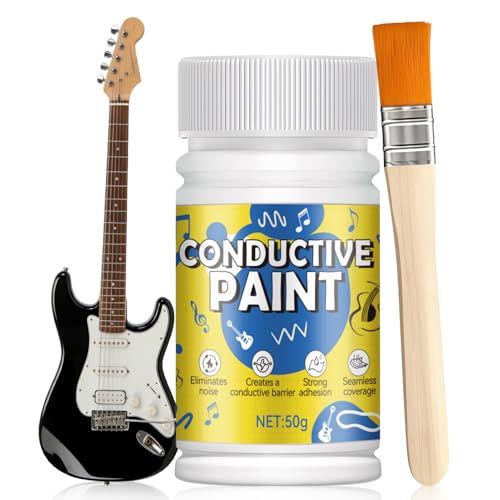
Best for reducing buzzing in high-gain setups, kuailaya offers strong adhesion and effective noise reduction for electric guitar cavities. Its formulation aims to penetrate complex corners of pickup slots and circuit chambers with a single-coat or multiple coats to enhance shielding. Stirring well before use and applying evenly is recommended. Grounding completion is noted as a part of achieving full shielding. A practical limitation is that results depend on uniform coverage and grounding integrity; poor grounding can diminish outcomes.
Who it’s best for: players with irregular cavity geometries needing a reliably adherent shield. Why selected: targeted shielding in challenging shapes and solid noise reduction.
Caution: avoid insufficient coverage or improper grounding, which can compromise shielding effectiveness.
MG Chemicals 841WBU EMF Shielding Paint

Best for walls and guitars alike, this 1-part low-VOC shielding coating uses nickel flake to block EMF and RF. It is suitable for guitar cavities and other wooden surfaces. Its blend is designed to be effective on wood and drywall components commonly found in guitar builds or modifications. A potential limitation is that it is a general-use shielding paint, and those seeking ultra-thin or ultra-flexible coatings may prefer more guitar-specific formulations.
Who it’s best for: players seeking a robust EMI/RF shield with a low-VOC profile for workshop projects. Why selected: proven shielding approach with nickel-enhanced conductivity.
Caution: ensure compatibility with your instrument’s finish and proper curing to avoid uneven layers.
StewMac Conductive Shielding Paint
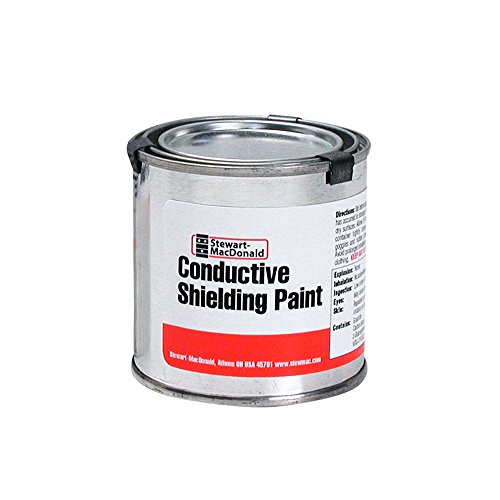
Best for easy brush-on shielding, StewMac’s conductive paint is designed to reduce hum, noise, and radio interference in guitar electronics. It’s especially suitable for cavity shielding where a brush-on approach can be more precise than tape. The recommended method involves two or more coats to maximize shielding effectiveness. It emphasizes practicality for shielding tight spaces like pickup and control cavities. A limitation is that performance depends on consistent application and thorough drying between coats.
Who it’s best for: DIY players who value straightforward brush-on coverage and repeatable layering. Why selected: simple application and targeted cavity shielding in one product.
Caution: ensure each coat cures fully for best results; insufficient drying can weaken the shield.
Buying Guide: How To Choose The Right Conductive Paint For Your Guitar
- What cavity shape and size are you shielding? Small, tight spaces benefit from precision formulations like WANJAO or StewMac.
- Is ease-of-use a priority? Water-based paints with brush-on application reduce mess and cleanup, while some nanotech options emphasize high conductivity with careful layering.
- How important is grounding completeness? Effective shielding often depends on proper grounding along with an even, continuous coating.
- Do you need multi-surface versatility? Some paints are designed for guitars and other surfaces, while others focus solely on instrument cavities.
- What about safety and cleanup? Non-toxic, fume-free formulas are preferable for home studios and classrooms.
Practical tip: always shake or stir the paint well before use, especially for formulations with nano additives or sediment. Apply evenly in thin coats, allowing proper drying time between layers. For best comprehensive shielding, test continuity with a multimeter after curing and grounding.
FAQ
- What is conductive shielding paint used for in guitars? It reduces hum, hiss, and RF interference by creating a conductive barrier around electronics.
- Can I dilute shielding paint with water? Some water-based paints allow 10-20% water dilution to adjust viscosity, without harming shielding.
- Is graphene-based paint better for guitars? Graphene-based coatings can offer high conductivity and corrosion resistance, improving long-term performance.
- How many coats are recommended? Many products suggest two or more coats for optimal shielding, with thorough drying between coats.
- Are these paints safe for home studios? Most listed options are water-based and non-toxic, suitable for hobbyists and classrooms.
- Do I need to ground the shielding paint? Yes, proper grounding completes the shield and improves effectiveness across complex cavity geometries.