Best Direct Box for Guitar: Top Passive DI Boxes for Clean, Silent Signals
Direct boxes (DI boxes) are essential for converting high-impedance, unbalanced guitar signals into balanced, low-impedance signals suitable for PA systems or recording interfaces. This guide highlights five solid options and explains who each is best for. It emphasizes passive DI boxes, which require no power and are popular for stage setup and studio sessions.
Product Snapshot: Quick Comparison
| Product | Best For | Key Benefit |
|---|---|---|
| Passive Di direct box 1/4″ instrument to balanced & unbalanced XLR — Yovus | A budget-friendly, simple setup | 1/4″ in and through; XLR output |
| Radial Pro DI Passive Direct Box — Radial Engineering | Rugged, road-ready DI | Custom transformer; rugged I-beam construction |
| Pyle Premium Direct Injection Audio Box — Pyle | Value-driven live gigs | Impedance transformer; buzz/hum cancellation |
| Whirlwind IMP 2 1-Channel Passive Instrument Direct Box — Whirlwind | Compact, reliable DI | Inline transformer; converts to balanced mic level |
| PYLE-PRO Premium Direct Injection Audio Box — Pyle | Same brand option for value seekers | Ground lift; clean audio |
Below you’ll find five detailed product sections. Each highlights who it’s best for, why it was selected, and a practical limitation to consider.
Yovus Passive DI Direct Box Review

The Yovus model is a straightforward passive DI box with 1/4″ instrument input and through jack, plus XLR output. It’s best for players seeking a simple, cost-effective solution for stage or studio use. The design emphasizes minimal signal loss and easy setup, making it a good choice for beginners or budget-conscious performers.
Best for: guitarists and bassists who want a no-fuss, plug-and-play DI for direct connection to a mixer or interface.
Limitations: Lacks extra features like ground lift or multiple impedance settings found on higher-end units.
Radial Pro DI Passive Direct Box

The Radial Pro DI is a rugged, purpose-built DI with a custom transformer and robust construction. It’s well-suited for touring and studio use where durability matters. The transformer-based design helps preserve signal integrity while isolating the instrument from the console, reducing noise and buzz.
Best for: performers and engineers who need a durable, high-quality DI that can withstand heavy road use.
Limitations: Higher price point compared to entry-level options may be a consideration for casual players.
Pyle Premium DI Box — Passive 1/4″ to XLR

Pyle’s Premium DI Box offers a ¼” device connector with a transformer-based impedance match, designed for connecting guitars, keyboards, or processor devices to a main PA or recording mixer. It includes buzz and hum cancellation as part of its feature set, which helps maintain clean audio in live environments.
Best for: budget-conscious performers who still want effective hum/buzz suppression and reliable signal integrity.
Limitations: Fewer advanced features than some premium models; may lack some tonal shaping options found in higher-end DI boxes.
Whirlwind IMP 2 1-Channel Passive Instrument Direct Box
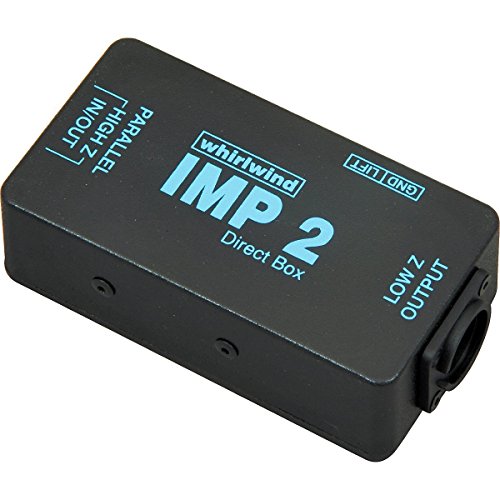
The Whirlwind IMP 2 is an inexpensive yet effective DI that uses an inline transformer to convert line or instrument-level signals to a low-impedance, balanced output. It’s notable for its compact footprint and solid sound quality at a very approachable price point.
Best for: players who want an ultra-portable DI without sacrificing basic DI performance.
Limitations: May not offer the same level of build ruggedness or long-term reliability as premium models under demanding touring conditions.
Pyle-PRO Premium DI Box — Passive DI Unit
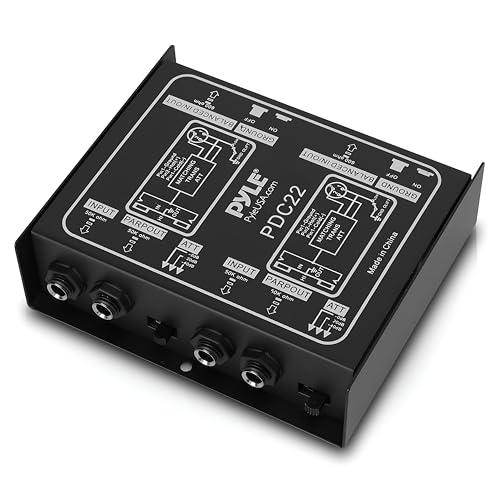
This Pyle-PRO DI Box is another value option from the same brand family, designed for reliable passive DI duties. It emphasizes clean signal transmission with an emphasis on easy instrument-to-PA integration and consistent performance in live scenarios.
Best for: players seeking a second DI option within a budget-friendly lineup, or as a backup DI for gigs and rehearsal spaces.
Limitations: Similar to other budget boxes, it may lack some refinement or feature depth of higher-tier options.
Bolanle Passive DI Box — Studio and Live Use

The Bolanle unit emphasizes pure signal conversion without requiring power. It includes a built-in hum and ground loop eliminator and dual-mode signal attenuation for flexible output control, making it adaptable for both studio recording and live performances.
Best for: players and engineers who want a straightforward, battery-free DI with noise-reduction features for variable environments.
Limitation: The feature set focuses on essential DI tasks; advanced tone-shaping options are limited compared with some premium brands.
Donner Special-Ⅰ Passive DI Box

Donner’s Special-Ⅰ is a heavy-duty, professional DI box designed for stage and studio use. It provides impedance matching for direct instrument connections to mixers and amplifiers and employs a transformer to reduce hum and buzz typically caused by ground loops.
Best for: users needing a rugged DI that performs reliably in demanding live or studio environments.
Limitations: The emphasis on durability may come with a larger footprint compared to ultra-compact models.
Buying Guide: What To Consider When Choosing a Direct Box
What matters most is matching the DI box to your rig and performance context. Here are practical questions to guide your choice:
- Do you need a compact, portable unit for gigging, or is a larger, rugged build acceptable?
- Is ground loop hum a frequent issue in your setup, making a DI with ground lift essential?
- Do you require impedance matching and a transformer-based design for signal integrity?
- Will you connect a wide range of instruments (guitar, bass, keyboards) to the same DI, or rely on a single type?
- Is budget a critical factor, or do you prioritize build quality and long-term durability?
Key differences to compare across models include transformer quality, presence of ground lift, input/output options, and overall ruggedness. For stage use, prioritize models with robust housings and reliable connectors. For studio work, you can favor units with cleaner, more transparent signal paths and practical attenuation controls.
FAQ
Q: What is a passive DI box? A: A passive DI box converts high-impedance, unbalanced signals to balanced, low-impedance outputs without needing external power. It relies on a transformer to isolate and balance the signal.
Q: When should I use ground lift? A: Ground lift helps eliminate hum caused by ground loops. Use it when you notice ground-related noise between your instrument and the mixer or interface.
Q: Do I need a DI box if my interface has instrument inputs? A: If your interface has instrument-level inputs, you may still benefit from a DI for impedance matching and to connect to a PA system or front-of-house without colorization.
Q: Are premium DI boxes worth the investment? A: For frequent touring or studio work requiring the best signal integrity and durability, premium DI boxes offer clearer sound and more reliable performance under demanding conditions.
Q: Can a DI box improve tone? A: A DI box preserves the original signal integrity by matching impedance and isolating the source, reducing noise and buzz that can color tone during transport to the mixer.
In summary, the right DI box depends on your use case. For portability and budget, Whirlwind IMP 2 or Yovus are solid picks. For rugged reliability, Radial Pro DI stands out. For value with noise reduction features, Pyle and Donner options provide practical benefits. The Bolanle DI adds a power-free option with essential noise-control features, while the Pyle-PRO variant offers a backup choice in budget-friendly lineups. Use the Buying Guide questions to pick the model that aligns with your live, studio, and transport needs.