Best Esd Bags for Electronics: Shield Your Tech From Static
Answering the need for reliable electrostatic discharge (ESD) protection, these bags are designed to safeguard sensitive electronics during storage and transit. The top picks below cater to different buyers: hobbyists storing small components, technicians transferring computer parts, and businesses shipping batteries or large boards. Each product highlights practical sizes, resealability, and shielding materials to minimize static risk.
| Product | ||
|---|---|---|
| Daarcin Anti Static Bags (30pcs) | 3.15×4.72″, 3.94×5.9″, 5.9×7.87″ – 10+10+10 | Small to mid-size components, RAM, SSDs |
| HRX Package Large Anti Static Bags (20pcs) | 12×16 inches each | Open-top storage and intercompany transfers |
| Mobudy Antistatic Bags (30pc) | 3 sizes included; 30pc total | Varied parts with resealable convenience |
| Daarcin 100pcs 3.93×5.9in Bags | 3.93×5.9″ (10x15cm) – 100pcs | Bulk SSD/HDD and small parts |
| SilTriangle Large ESD Bags (20pc) | 16×24 inches | Bulky components and large displays |
Daarcin Anti Static Bags, 30pcs Mixed Sizes

The 30-piece Daarcin set covers three common sizes: 3.15×4.72 inches for small drives or memory modules, 3.94×5.9 inches for 2.5″ drives, and 5.9×7.87 inches for 3.5″ drives. It includes labels for quick identification and uses PET with aluminized film for added shielding. Best for individuals storing mixed components, RAM sticks, I/O cards, or small disks. A limitation is the lack of a built-in moisture barrier beyond the resealability, so consider additional desiccants for humidity-prone environments.
HRX Package Large Anti Static Bags

These large bags measure 12×16 inches and come with 20 reusable bags plus 20 self-adhesive ESD shielding labels. Made from LDPE with a non-toxic, odor-free composition, they are suitable for storing motherboard components, SSDs, HDDs, and other PC parts. They’re ideal for intercompany transfers or bulk storage. A caveat is the open-top design, which may expose contents to moisture if not stored properly; seal with the included stickers to enhance protection.
Antistatic Bags ESD Shielding For 3 Sizes (Mobudy)
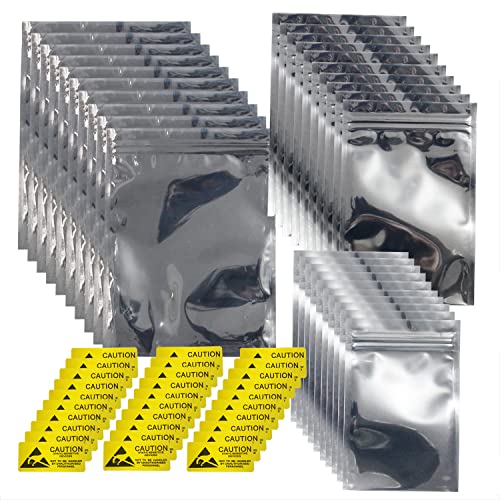
Mobudy offers three bag sizes with 30 pieces total plus 30 anti-static labels, using PET with aluminized film for multiple shielding layers. The resealable design helps prevent humidity exposure and static transfer during handling. Best for technicians who frequently reorganize components, prints, or small devices. A potential limitation is that the packaging emphasizes labeling inside the bag rather than outside; ensure you plan a labeling strategy for quick scanning.
Daarcin 100pcs Anti Static Bags (3.93×5.9in)

This bulk set focuses on 3.93×5.9 inch bags, ideal for 2.5″ drives and similar-sized parts, with 100 labels included. It emphasizes high anti-static coefficients and PET with aluminized film for robust shielding. It is best for users needing cost-effective bulk storage and easy organization of a larger inventory. A limitation is that the larger open-top sizes may require careful stacking to avoid unintentional exposure to air.
Daarcin Antistatic Bags, 30pcs Mixed Sizes

This 30-pack includes three sizes with 10 bags per size and 30 labels, offering a complete ESD protection kit for common electronic components. The packaging uses PET with aluminized film to block static with a non-toxic, odor-free profile. Choose this if you want a balanced mix of sizes with labeling for quick inventory. A caveat is that the moisture resistance is improved by seal and storage practices rather than in-bag moisture barriers.
Buying Guide
What to consider when choosing esd bags for electronics:
- Shielding material: Look for PET with aluminized film for dual protection against mechanical and electrostatic damage.
- Bag size variety: Choose sets that cover your typical component sizes—from small memory modules to large motherboards.
- Sealing method: Resealable, zip-top bags help protect contents from humidity and static exposure during handling.
- Moisture protection: Some sets include moisture-resistant features or separate desiccants; plan how you’ll store bags to minimize humidity.
- Labels and identification: Pre-labeled options save time during inventory and shipping; decide whether you need outside-label visibility or inside labeling.
- Open-top vs open-and-seal design: Open-top bags are easier for bulky items but may need additional protection in transit.
- Bulk vs. mixed sets: For larger inventories, bulk packs reduce cost per bag; for smaller or varied needs, mixed-size packs offer flexibility.
FAQ
- What is an ESD bag best used for?
Answer: ESD bags shield sensitive electronics from electrostatic discharge during storage, handling, and transport. - How many sizes should I consider for a mixed inventory?
Answer: At least three sizes to cover small components, medium drives, and larger boards. - Are ESD bags reusable?
Answer: Many are resealable and reusable, though durability depends on use and handling. - Do I need labels inside and outside the bag?
Answer: Labels inside help keep the exterior clean; external labeling can speed inspection and inventory checks. - Is moisture protection important?
Answer: Yes, especially in humid environments; look for moisture-resistant features or desiccants as needed. - Can I store open-frame components in these bags?
Answer: Yes, but ensure the bag size accommodates the item and provides an adequate seal to prevent exposure.