Best Ethernet Cables for WiFi Router to Maximize Performance and Reliability
Yes, a high-quality Ethernet cable can dramatically improve your home network’s reliability and speed when connecting a router to devices or to a modem. This article highlights top Cat 8 and Cat 6/7 options that suit different needs—gaming, streaming, long runs, indoor/outdoor use, and budget. Best for gamers, best for outdoor setups, and best overall picks are covered. The following table summarizes five well-suited cables and what they’re best for.
| Product | Length | Best For | Key Benefit |
|---|---|---|---|
| UGREEN Cat 8 Ethernet Cable 6FT | 6 ft | Gamers and streamers | 40 Gbps, 2000 MHz, strong shielding |
| DbillionDa Cat 8 Ethernet Cable 6FT | 6 ft | High-performance home networks | Weatherproof, outdoor-ready, heavy-duty |
| Vabogu Cat 8 Ethernet Cable 6FT | 6 ft | Indoor/outdoor versatility | Weatherproof, UV resistant, shielded |
| Orbram Cat 8 Ethernet Cable 15 ft | 15 ft | Fixed installations and in-wall runs | Flat design, in-wall suitability, high shielding |
| Jadaol Cat 8 Ethernet Cable 25 ft | 25 ft | Flexible, longer runs | Flat, S/FTP shielding, CAT8 performance |
UGREEN Cat 8 Ethernet Cable 6FT
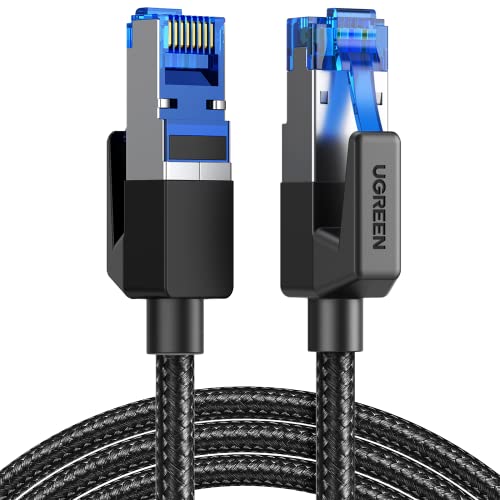
The UGREEN option is a compact Cat 8 cable designed for high-speed connections. It supports up to 40 Gbps and 2000 MHz bandwidth, making it highly suitable for gaming consoles, PCs, and streaming boxes connected to a router or modem. Shielding includes four foiled twisted pairs (F/FTP) and gold-plated RJ45 ends to minimize interference and crosstalk. The braided cotton exterior adds durability, and the cable is rated for frequent bending with a proven 10,000-bend endurance. Best for users who want maximum speed in a short, tidy run from router to a nearby device.
Who it’s best for: competitive gamers and streamers who need the lowest possible latency and the cleanest signal in a compact setup. Caution: the 6 ft length may be limiting for larger rooms or distant router placements.
DbillionDa Cat 8 Ethernet Cable 6FT

This DbillionDa Cat 8 cable emphasizes durability with heavy-duty outdoor/indoor suitability. It features waterproof and UV-resistant PVC jacketing, enabling safe direct burial for outdoor use. The 26 AWG conductors and four shielded twisted pairs—F/FTP—deliver up to 40 Gbps and 2000 MHz while reducing EMI and RFI. Best for home networks needing long-term reliability in challenging environments. A caution: direct burial should follow local guidelines and safety practices.
Vabogu Cat 8 Ethernet Cable 6FT
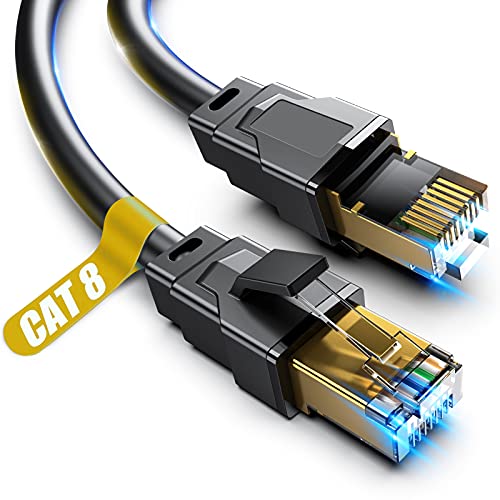
The Vabogu Cat 8 cable emphasizes shielding and weather resistance, with 26 AWG conductors and high-quality STP (shielded twisted pair) design. It supports up to 2000 MHz and 40 Gbps, suitable for a router-to-PC or router-to-game console link with minimal interference. Its weatherproof jacket handles indoor and light outdoor use well. Best for setups where interference is a concern and you still want a compact 6 ft run. Limitation: longer runs may require larger gauges for updated performance consistency.
Orbram Cat 8 Ethernet Cable 15 ft
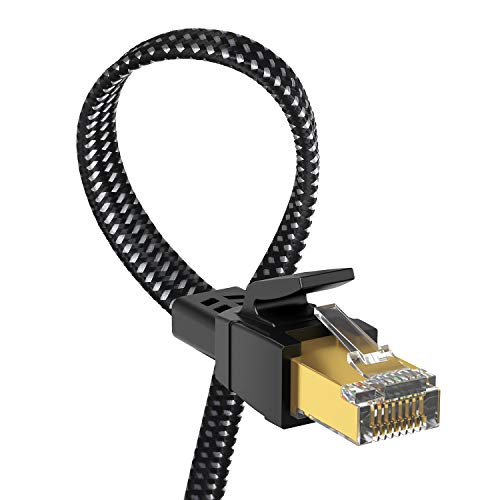
Orbram offers a flat, shielded Cat 8 option designed for in-wall and in-floor runs. The 15 ft length makes it a practical choice for connecting a router to a distant modem or for routing along walls without a bulky cable profile. It uses four shielded foiled twisted pairs (S/FTP) and 24K gold-plated RJ45 connectors to minimize interference. Best for fixed installations where a low-profile, durable cable is preferred. Caution: a flat design can be less flexible in tight corners compared with round cables.
Jadaol Cat 8 Ethernet Cable 25 ft

The Jadaol Cat 8 offers a longer 25 ft run with a flat design and S/FTP shielding. It’s compatible with Cat 5 through Cat 7 devices, making it a versatile choice for users upgrading from older networks. The flat form helps reduce desk clutter and makes it easier to hide along baseboards or under carpets. Best for households needing a longer, yet still robust, Cat 8 connection for gaming consoles, smart TVs, and PCs. Limitation: some users may prefer round cables for extreme flexibility in tight spaces.
Buying Guide: How To Pick The Right Ethernet Cable
- What speed do you actually need? If your router and devices support multi-gig speeds, Cat 8 cables can deliver up to 40 Gbps, but most home internet connections won’t exceed 1 Gbps. Choose based on device capabilities and plan.
- Indoor vs outdoor: Do you need weatherproof protection? Outdoor-rated cables (like DbillionDa and Vabogu) tolerate UV exposure and moisture, while indoor cables are ideal for desk setups.
- Shielding matters: F/FTP or S/FTP shielding reduces interference and crosstalk, beneficial in environments with many devices or long runs.
- Length vs signal integrity: Longer runs may require thicker conductor gauges (e.g., 26 AWG) and robust shielding. Flat cables save space but can be less flexible in tight corners.
- Installation considerations: Flat cables are easier to conceal along walls; braided jackets add durability but can be stiffer. Plan routing before purchasing.
Frequently Asked Questions
- Do I need Cat 8 cables for a typical home network? Not always. If your internet plan tops at 1 Gbps, Cat 6a or Cat 7 can be more cost-effective while delivering ample speed with improved shielding.
- Will a longer Cat 8 cable slow down my connection? No, if the connected devices and router support the speed; the cable’s job is to carry the signal reliably. Longer runs may introduce minor latency in some setups, but Cat 8 minimizes this with shielding.
- Is shielding worth it in a typical apartment? Yes, shielding helps in environments with many electronics and potential interference, improving stability.
- Can I bury a Cat 8 cable underground? Some Cat 8 cables are designed for direct burial, but always check the product specifics. Follow local codes when burying any cable.
- Are flat Cat 8 cables as durable as round ones? Flat cables save space but may be less flexible in very tight spaces. For wall or baseboard runs, they are convenient; for behind furniture, curved installations, round cables may be easier.
- What’s the best cable length for most router-to-device connections? A length around 6–15 ft covers many setups, balancing signal quality and manageability. Longer runs are suitable when devices are farther from the router.