Best Filters for Astrophotography to Enhance Clarity and Contrast
Astrophotography thrives on contrast, wavelength selection, and light pollution control. The following filters are among the most popular choices for imaging deep-sky targets—from emission nebulae to distant galaxies—whether you shoot from a dark site or a city sky. This guide highlights five highly capable options, explains how they work, and compares their best-use scenarios for American readers using common telescope setups.
Summary Table of Selected Products
| Product | Filter Type | Wavelength Focus | Mount Size | Best For |
|---|---|---|---|---|
| SVBONY 1.25″ UHC Filter | UHC | Broad light pollution cutoff; enhances nebula contrast | 1.25″ | Nebula imaging from light-polluted skies |
| SVBONY SV220 2″ Dual-Band Nebula Filter | OIII & H-Alpha (dual-band) | High transmission at 500.7nm and 656.3nm | 2″ | Deep-sky nebulae in urban areas or under Moon |
| SVBONY SV220 7nm Dual-Band Nebula | OIII & H-Alpha (7nm) | Narrowband nebula lines | 1.25″ | One-shot color or monochrome cameras for nebulae |
| SVBONY SV240 Multi-Narrowband Filter | Ha, OIII, H-Beta (multi-band) | Broad coverage of major emission lines | 2″ | Versatile urban/short-exposure workups |
| Celestron 1.25″ UHC/LPR Filter | UHC/LPR | Selective wavelengths to reduce artificial light | 1.25″ | Improved celestial viewing and imaging in light-polluted skies |
SVBONY 1.25″ UHC Filter for Nebula Imaging
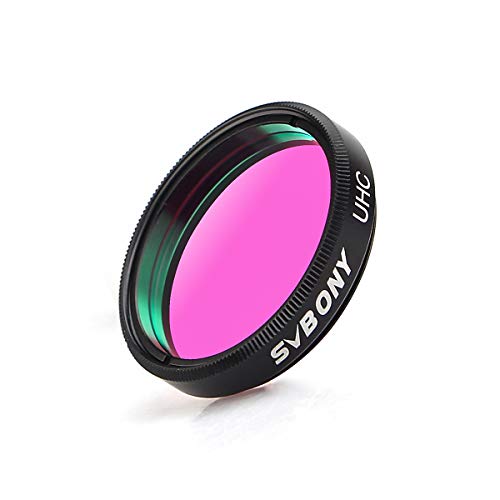
The SVBONY 1.25″ UHC Filter is designed to reduce skyglow by selectively transmitting wavelengths that emphasize emission nebulae. It darkens the sky background and boosts contrast for nebulae, making it easier to resolve faint details from light-polluted environments. This filter is applicable to both visual observation and astrophotography, offering sharp, clear results with compatible telescopes. UHC filters are a popular choice for amateurs seeking a practical improvement without complex setup.
SVBONY SV220 2″ Dual-Band Nebula Filter

The SV220 2″ Dual-Band Filter excels at transmitting OIII (500.7 nm) and H-Alpha (656.3 nm) lines while suppressing artificial light and skyglow. With high transmission (over 94%) and strong out-of-band rejection, it delivers enhanced contrast and finer detail for deep-sky imaging. This setup is especially beneficial for urban or near-moon observations, enabling more vibrant nebula features with one-shot color or monochrome cameras.
SVBONY SV220 7nm Dual-Band Nebula Filter

This 7nm narrowband variant focuses on the same essential nebula lines but with a tighter bandwidth to further suppress light pollution. By concentrating transmission on H-Alpha and O-III lines, it can provide higher contrast in challenging skies. It supports high-contrast imaging for both visual work and astrophotography, particularly when city lights dominate the scene.
SVBONY SV240 Multi-Narrowband Filter

The SV240 offers Ha, OIII, and H-Beta wavelengths in a single 2″ filter. Its cut-off depth meets urban light pollution challenges and provides wide compatibility with many astrophotography systems. The multi-band approach allows imaging a broad set of targets without swapping multiple filters, supporting diverse deep-sky projects and flexible workflow in compact setups.
Celestron 1.25″ UHC/LPR Filter
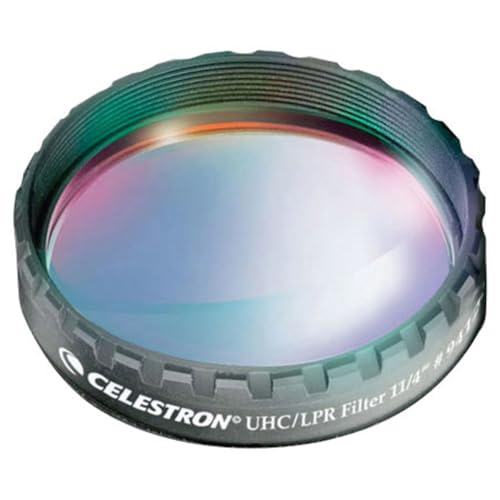
Celestron’s 1-1/4″ UHC/LPR Filter reduces artificial light in a targeted fashion, optimizing spectral transmission for celestial viewing and imaging. It is designed to improve the visibility of nebulae and other deep-sky objects by suppressing common light pollution wavelengths, providing a practical upgrade for observers in bright environments and for those who value reliable performance across scenarios.
SVBONY SV227 2″ Narrow-Band Filter Kit

The SV227 set includes SII, H-Alpha, and OIII 5nm filters designed for monochrome cameras, helping isolate key emission lines to enhance structure and detail in nebulae and planetary nebulae. Each filter is individually tested for quality, ensuring consistent performance across different targets and observing conditions.
SVBONY SV226 M54 Filter Drawer for Deep Sky
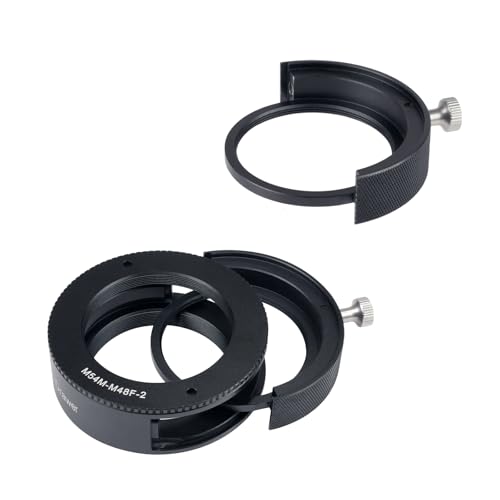
The SV226 M54 Filter Drawer provides a dual-magnet design for secure filter placement and quick swaps during imaging sessions. Built for full-frame compatibility, it supports rapid transitions between filters, helping maintain momentum in important observing windows. Its versatile mounting and strong hold make it a practical accessory for deep-sky astrophotography workflows.
Buying Guide: Key Purchase Considerations and Comparisons
What to consider when choosing filters
Filter bandwidth and transmission: Narrower bands (e.g., 5–7 nm) isolate specific emission lines and reduce unwanted light, but may require longer exposures or higher sensitivity cameras. Wider bands (e.g., UHC) offer broader coverage and faster results, which can benefit beginners or those in moderate light pollution.
Wavelength targets and object types
H-Alpha, OIII, SII lines are common targets for nebulae and galaxies. Dual-band filters optimize two lines at once, while multi-band filters cover more targets but may have slightly reduced peak transmission. Consider your typical subjects (planetary/nebulous) and camera type (color vs. monochrome).
Mount size and compatibility
Filters come in standard diameters (1.25″ and 2″). Match to your telescope’s filter thread and camera filter wheel or drawer. For full-frame imaging, a robust 2″ option with easy swapping can improve workflow efficiency.
Impact of light pollution and observing site
Urban environments benefit most from light-pollution-reduction designs. Narrowband selections help compensate for bright skies, while multi-band options suit versatile sites and targets. Testing under your typical conditions is recommended to understand practical gains.
Practical workflow and reliability
Consider filter sets that align with your imaging cadence: rapid filter swapping, secure mounts, and filter compatibility with existing gear. A durable filter drawer or good magnet system reduces the risk of accidental drops during critical moments.
Budget and value
Invest in a core set of filters that cover the most common emission lines for your targets, and expand gradually. High-quality coatings, consistent transmission, and durable mounts typically offer better long-term performance and fewer drive-by issues during long sessions.