Best Full Spectrum LED Lights for Plants to Boost Indoor Growth
Full spectrum LED grow lights are ideal for indoor gardeners seeking steady, reliable light closely resembling natural sunlight. This guide highlights five versatile options suited for seed starting, vegetative growth, or flowering, depending on your plants’ needs. The top picks below are selected for ease of use, adjustable spectrum options, and reliable timer features. They are best for hobbyists with small to medium grow spaces, home office setups, or compact indoor gardens. A quick summary table follows to compare key specs at a glance.
| Product | Best For | Key Benefit |
|---|---|---|
| Aokrean 48 LEDs Halo Grow Light | Starter plants, small pots | Three spectra and timers for varied needs |
| GooingTop 6000K Clip Light | Compact desks and shelves | High CRI, flexible clamp and gooseneck |
| RWNTAO 168 LEDs Clip Lights | Budget two-pack setups | Three modes, ten dimming levels |
| LBW 428 LEDs Standing Light | Floor-height setups | High PPFD, tripodal stand options |
| VIPARSPECTRA P700 | Seedlings and vegetative zones | High lumen output with efficient heat dissipation |
Aokrean Plant Grow Light, 48 LEDs Full Spectrum Halo

The Aokrean halo grow light provides three lighting spectrums and 10 brightness levels. It can be inserted into soil or used with a base, offering flexible placement for small pots. Timer options cover 3, 9, or 12 hours, enabling dependable daily light cycles. This unit is best for beginners and growers with compact setups seeking simple, adjustable lighting without complex installation.
Who it’s best for: home growers with potted plants that need adjustable daily lighting and a straightforward installation. Why selected: versatile spectrum options and a compact halo design suit small indoor spaces. Caution: the stand requires soil contact for stability, so ensure your pot is positioned securely to prevent tipping.
GooingTop LED Grow Light, Clip Plant Lamp

This 6000K full spectrum clip lamp combines red and white LEDs to emulate midday sunlight. A high color rendering index (CRI ~95) supports healthy leaf development and reduces color distortion when inspecting plants. It includes a 3/4/12-hour timer cycle and uses a USB or AC power plug for flexible power options. Best for: desk gardeners and compact plant corners requiring adjustable placement and reliable timing. Caution: its clamp design needs a stable support surface to avoid wobble with heavier trays.
RWNTAO Grow Light Upgrade 168 LEDs, Clip Lights
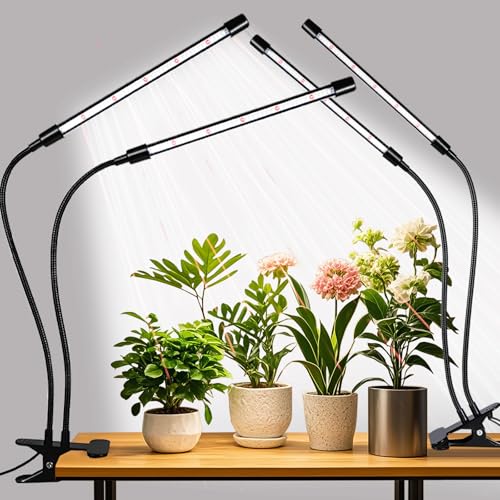
RWNTAO offers an upgraded full spectrum with a mix of red and white LEDs and a concise 3/9/12-hour cycle. The dual-clip design and multiple dimming levels support plants at different growth stages. Best for: budget-conscious setups needing two lights in the same area. Why selected: 10 dimming levels provide nuanced control. Limitation: data notes emphasize energy efficiency, but real-world performance can vary with plant spacing and proximity.
LBW Latest Grow Light for Indoor Plants

LBW presents a standing grow light with 428 LEDs across three bands, delivering broad full-spectrum coverage with a tall, adjustable tripod stand. It features 3/6/12-hour timers and six brightness levels, enabling precise daily schedules for varied plant needs. Best for: taller plant sets or floor-level setups in larger rooms. Why selected: strong spectrum coverage and flexible height. Caution: longer stands require floor space clearance to avoid collisions with other items.
VIPARSPECTRA P700 Grow Light

The VIPARSPECTRA P700 delivers a high-lumen, 70W class full spectrum with balanced 660nm red and white LEDs. It supports seedling and vegetative growth with efficient heat dissipation through large aluminum heat sinks and a fanless design. Best for: dedicated seedling trays and small tents where quiet operation matters. Why selected: high output relative to power consumption. Limitation: larger footprint than clip-on options, so ensure adequate ceiling or shelf space.
Buying Guide
What should you look for in a full spectrum grow light?
Key factors include spectrum options (red, blue, white mix), adjustable brightness, and timer features. Look for lights that offer 3–12 hour timer cycles and multiple spectrum modes to cover seedling, vegetative, and flowering stages. Consider fixture type: clip-on, halo, standing, or hanging to match your space.
How to choose based on space and plants?
Small desks or shelves: clip-on or halo lights with flexible goosenecks work best. Medium tables: standing lamps on adjustable tripods provide height control. Larger areas or tents: ceiling-hanging or larger stand lamps with higher PPFD support are preferable. For dense foliage or flowering plants, prioritize higher PPFD and more red spectrum.
What about energy use and longevity?
LED options can save energy compared to older lamp types. Check for consistent PPFD ratings, heat dissipation design, and long-life LEDs. A fanless design reduces noise but ensure adequate heat management for extended use.
How to position for best results?
Keep lights close enough to avoid stretching plants while avoiding leaf scorch. For adjustable goosenecks, angle to direct light onto the leaf surface. Space multiple lights to ensure uniform coverage across the plant canopy.
Recommendations by use case
- Best for beginners with small pots: Aokrean Halo Grow Light.
- Best for compact workstations: GooingTop Clip Light.
- Best for budget two-light setups: RWNTAO Clip Lights.
- Best for floor-level, larger plants: LBW Standing Light.
- Best for seedling and vegetative stages: VIPARSPECTRA P700.
FAQ
- Do full spectrum lights replace sunlight? They supplement it, providing consistent growth light indoors.
- Can these lights be used for all plant types? Yes, most support a wide range of common houseplants, herbs, and seedlings.
- Are timer settings essential? Timers help automate care and prevent over- or under-lighting during vacations or workdays.
- Is higher wattage always better? Not always; match light intensity to plant size, distance, and growth stage for optimal results.
- Which configuration is easiest for beginners? A clip-on or halo light with a simple 3/9/12-hour timer and multiple spectra.
- Do these lights need special care? Clean the lenses occasionally and ensure proper heat dissipation to extend lifespan.