Best Lavalier Wireless Microphone for Clear On‑Camera Audio and Streaming
Finding the right lavalier wireless microphone can dramatically improve on‑camera audio for vlogs, interviews, podcasts, and live streams. This guide compares top options, highlighting sound quality, battery life, range, and ease of use. Each pick below is suitable for iPhone, Android, cameras, or laptops, with varying strengths to fit different shooting scenarios.
The following summary table provides quick pointers to help you choose. All models are designed for portability, reliable wireless performance, and ease of use in real-world environments.
| Product | Brand | Key Strength | Typical Use |
|---|---|---|---|
| DJI Mic Mini | DJI | Ultralight; 48h with charging case; long range | Vlogging, travel, on‑the‑go shoots |
| DJI Mic 2 | DJI | Intelligent noise cancelling; 32-bit float recording | Interviews, streaming, professional content |
| KUKIHO Wireless Lavalier | KUKIHO | 164 ft range; DSP noise reduction | Outdoor video, mobile reporting |
| Mini Mic Pro | Mini Mic Pro | USB-C/Lightning; plug‑and‑play | Quick setup; travel vlogging |
| RØDE Wireless PRO | RØDE | 32-bit float on‑board recording; timecode | Filmmaking, documentary, multi‑cam setups |
DJI Mic Mini: Ultralight Lavalier for On‑Camera Audio

The DJI Mic Mini is a compact wireless lavalier system designed for lightweight wearability. Weighing roughly 10 g, it remains discreet on camera while delivering detail-rich sound with a 400 m maximum transmission range and a 48 kHz sampling rate. The 120 dB SPL headroom supports clear vocal capture in noisy environments. The charging case extends total use to up to 48 hours, making it a strong option for long days of shooting or travel vlogging.
Key features include a small form factor, long range transmission, and extended battery life. The combination supports reliable performance for street interviews, run‑and‑gun shoots, and livestreams where portability matters most. The device is suited to both iPhone/Android and cameras, with a focus on natural voice reproduction and minimal setup.
Typical scenarios: documentary vlogs, field reporting, and event coverage where light equipment and quiet background noise handling are essential.
What to consider with DJI Mic Mini
- Battery longevity and case charging efficiency for full-day shoots
- Discreet size vs. receiver placement for best line of sight
- Compatibility with multiple recorders and devices
DJI Mic 2: Advanced Wireless Lavalier with Noise Cancelling

The DJI Mic 2 expands on the original with intelligent noise cancelling and 32-bit float internal recording, providing resilient performance in challenging audio environments. Its 820 ft (250 m) range supports multiple setups, while pre-linked transmitters and receivers reduce setup time to a minimum. USB-C and Lightning adapters broaden compatibility across iPhone, Android, and cameras, making it a flexible choice for creators who work across platforms.
Notable advantages include improved signal clarity, ready-to-use pairing, and extended internal recording as a safeguard against dropouts. It’s well-suited for in-studio interviews, documentary segments, and on‑site reporting where consistent audio quality is non‑negotiable.
Key considerations with DJI Mic 2
- Wireless stability across long ranges in different environments
- Internal recording as a backup for potential transmitters
- Ease of use when switching between devices
KUKIHO Wireless Lavalier: Long Range And Noise Reduction

The KUKIHO wireless lavalier emphasizes a broad open-area transmission range and effective noise reduction. It’s designed for creators who film outdoors or in busy locales, where wind and environment can interfere with voice capture. The included DSP noise reduction helps keep dialogue clear and intelligible. The device is easy to operate, with plug‑and‑play pairing and broad compatibility across iPhone, iPad, Android, Windows, and Mac devices with appropriate adapters.
Use cases include field reporting, travel vlogging, live streaming on location, and collaborations where quick setup and reliable transmission are essential. The system aims to deliver consistent audio with minimal post-production editing, especially in non-studio environments.
Practical tips for KUKIHO
- Outdoor wind protection to maximize wind noise mitigation
- Check adapter compatibility for your device before recording
- Test audio levels early to avoid clipping in dynamic environments
Mini Mic Pro: Pro-Level Wireless For Content Creators

The Mini Mic Pro positions itself as a robust plug‑and‑play option, designed for iPhone, Android, tablets, and laptops. It comes with USB-C and Lightning adapters to minimize setup friction. The microphone emphasizes studio-like sound with compact size, making it ideal for voiceovers, on‑camera narration, and mobile interviews. Its wind protection accessories help mitigate outdoor noise and breath sounds, providing a more polished final product.
Key usage scenarios include quick interviews, social media content creation, and travel videos where a dependable, portable microphone is advantageous. The device’s simplicity is balanced by strong audio fidelity and portability.
Pro considerations for Mini Mic Pro
- Plug‑and‑play performance across devices without apps
- Included accessories for wind and outdoor noise control
- Clip‑on form factor for unobtrusive placement
PQRQP 3 in 1 Wireless Lavalier: Universal Receiver

The PQRQP system features a 3 in 1 universal receiver and an omni-directional lavalier microphone, designed for a wide range of devices including iPhone, Android, phones, laptops, and cameras. It claims up to 65 feet of stable transmission and offers active noise reduction to emphasize voice clarity in noisy environments. The system is tailored for livestreaming, vlogging, and outdoor recording, with a focus on minimizing post‑production noise and maximizing real‑time intelligibility.
Considerations include compatibility notes about 3.5 mm inputs on laptops, keeping in mind some devices require adapters. It suits creators who frequently switch between devices or shoot in diverse settings, from street interviews to studio-style shoots.
Choosing PQRQP
- Receiver compatibility across devices you own
- Distance and environment handling for consistent audio
- Clipping and wind noise considerations in outdoor shoots
ZOPPLM Wireless Mini Microphone: Dual Pack For iPhone And Android
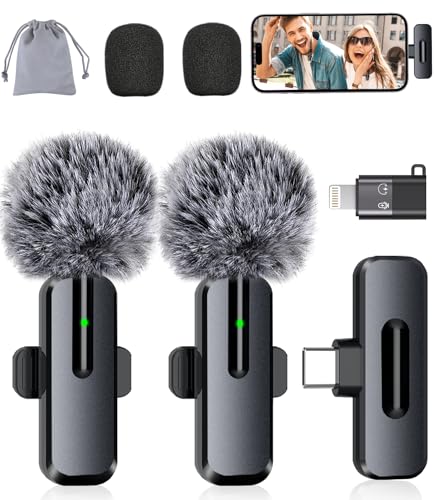
The ZOPPLM dual-pack provides a straightforward plug‑and‑play experience with USB-C and Lightning adapters, making it suitable for iPhone, iPad, and Android devices. Its DSP noise reduction and wind noise mitigation help deliver cleaner audio in busy environments. The dual-pack format is ideal for couple interviews or multi-person vlogs where two microphones are advantageous.
Best used for mobile content creation, social media videos, and casual interviews where reliability, ease of use, and compact form factor are priorities. The setup emphasizes minimal friction and steady wireless performance across devices.
Buying Guide: Key Purchase Considerations
When selecting a lavalier wireless microphone, consider the following to balance performance, usability, and value:
- Compatibility: Ensure the system works with your primary devices (iPhone, Android, cameras, laptops) and that adapters are included if needed.
- Transmission Range: Longer ranges are advantageous for on‑location shoots, but ensure the environment is free from interference and obstacles.
- Audio Quality: Look for high‑quality converters, low noise floor, and features like 32‑bit float recording or noise reduction for clearer speech.
- Battery Life: Long battery life and a reliable charging case support extended shoots and travel.
- Reliability in Real Environments: Wind noise reduction, wind muffs, and DSP processing help maintain intelligibility in outdoor or busy spaces.
- Ease of Use: Plug‑and‑play setups and pre‑linked transmitters save time on set and reduce the chance of errors during recording.
- Backup Recording: Internal recording or timecode features provide safeguards against dropouts and sync issues in post.
- Form Factor: Compact, lightweight mics improve wearability and reduce visibility on camera, which matters for certain productions.
- Accessories: Wind protection, clips, adapters, and cases add value and expand device compatibility.
In practice, choose a system that fits your typical shooting style: if you film solo vlogs outdoors, prioritize battery life and wind handling; if you conduct interviews in a controlled environment, prioritize pristine audio and ease of setup. Consider whether you need one mic or a dual‑mic setup for two speakers, and assess compatibility with your existing gear to minimize extra purchases.