Best Mobile Internet Options for RVs: Stay Connected on the Road
Answering the call for reliable RV internet, this guide highlights five top options designed for travel, camping, and remote work on the road. The best picks balance ease of use, coverage, and data options so RV owners can stay connected without long-term contracts. This overview helps you choose who the product is best for—whether you want pay-as-you-go portability, broad international data, or Starlink-style off-grid capability. The table below summarizes the five selections to compare at a glance.
| Product | Best For | Key Benefit |
|---|---|---|
| EIOTCLUB 4G LTE Portable WiFi Hotspot | Road-trippers who want instant setup | Pre-installed SIM with 1 GB trial data |
| Solis Edge 5G Hotspot (SIMO) | High-speed travelers needing global data | 5G and WiFi 6 with lifetime/allocation data options |
| STARLINK Mini Kit | RVers in remote or off-grid areas | Starlink network for satellite-based internet |
| GL.iNet GL-SFT1200 Opal | Tech-savvy travelers needing VPN and OpenWrt | AC1200 dual-band with open firmware |
| TravlFi Journey1 LTE RV WiFi Hotspot | RV owners seeking multiple networks | Pay-as-you-go with extensive US coverage |
EIOTCLUB 4G LTE Portable WiFi Hotspot

The EIOTCLUB hotspot targets road travelers who want quick setup. It ships with a pre-installed SIM and 1 GB trial data, with the SIM locked for reliable US coverage. It features a 1.7-inch LCD display for easy status checks, connected-device counts, QR recharge codes, and an online manual. Weighing 4.4 oz, it includes a 3000 mAh battery for up to 12 hours of use, plus a sleep mode to conserve energy. Best for: RVers who want a compact, ready-to-use solution without long-term commitments. Limitation: limited initial data and SIM-lock may constrain cross-border use.
Solis Edge 5G Hotspot Device

The Solis Edge uses secure 5G and WiFi 6 to deliver fast, reliable internet, with a bundle that includes Lifetime Data (12 GB/year) and 30 GB Global Data. It’s light at about 2.8 ounces and designed for long battery life, making it suitable for extended trips. Best for: RVers who need high-speed access across multiple countries and prefer a data-forward plan. Limitation: real-world speeds depend on local coverage; no SIM lock means compatibility with various carriers.
STARLINK Mini Kit

The Starlink Mini Kit offers portable satellite internet for RV use, travel, and remote work where traditional cellular coverage is weak. Activation is quick via the Starlink App, and the kit is designed for simple setup and on-the-go access. Best for: RVers in remote areas or places with poor cellular reception who still need reliable online connectivity. Caution: satellite-based internet requires unobstructed view of the sky, and latency may be higher than mobile networks.
GL.iNet GL-SFT1200 (Opal) Portable WiFi Router
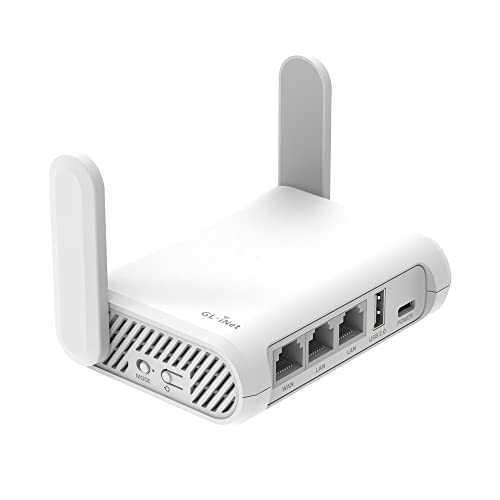
The GL-SFT1200 Opal is a compact dual-band router with OpenWrt firmware, making it ideal for tech-forward travelers who want VPN support and custom network settings. It supports up to 300 Mbps on the 2.4 GHz band and 867 Mbps on the 5 GHz band. Best for: RVers who value flexibility, VPN features, and offline-friendly configuration. Limitation: setup instructions should be reviewed to maximize performance and security.
TravlFi Journey1 LTE RV WiFi Hotspot

The TravlFi Journey1 focuses on RV users who want multiple network options and pay-as-you-go data. It emphasizes private, portable internet with coverage across the U.S. and flexible data plans, including e-SIM options. Best for: RVers who travel widely in the U.S. and prefer a wide data plan selection without long-term commitments. Limitation: some plans may require careful plan selection to optimize costs.
Buying Guide
What should you consider for RV internet reliability? Start with coverage needs: cellular networks work well in most highways and towns, while satellite options are valuable off-grid. Data plans: decide between pay-as-you-go and bundled data, and check per-month data limits. Device portability matters for packing into an RV cabinet or pocket. Battery life is crucial for long trips. If you travel internationally, global data and compatibility become important. Firmware openness and VPN support may appeal to privacy-minded users. Weigh ease of setup against advanced features like open-source firmware or multi-network aggregation.
What kind of internet is best for RVs?
Cellular hotspots are convenient for general use; satellite options excel in remote locations. Consider a mix: a primary mobile hotspot for daily use plus a satellite option for off-grid weeks.
How much data do RVers typically need?
Average browsing and streaming require several gigabytes monthly. If you work remotely, plan for higher data like 20–50 GB or more per month depending on usage and streaming quality.
Is 5G worth it for RV travel?
5G offers faster speeds in supported areas, but availability varies by region. For many itineraries, 4G LTE plus a generous data plan suffices; 5G is a plus where coverage exists.
Should I choose multi-network or satellite?
Multi-network hotspots provide broad coverage in urban and rural areas. Satellite like Starlink helps where cellular coverage fails, but latency and weather impact performance.
What about privacy and setup?
Open firmware and VPN-capable routers offer greater privacy controls. If you’re not tech-savvy, choose devices with straightforward setup and clear recharge options.
How to compare products quickly?
Consider: device weight and battery life, data plans included, regional coverage, and whether the unit is SIM-locked or unlocked. A simple at-a-glance comparison helps you pick the right fit for your RV adventures.
Frequently Asked Questions
- What internet solution is best for full-time RV living? A combination of a reliable cellular hotspot for daily use and a satellite option for remote trips provides continuous connectivity.
- Do RV hotspots require a long-term contract? Many options offer pay-as-you-go or no-contract plans, but some bundles include data commitments. Check the terms before purchasing.
- Can I use these devices internationally? Some models offer global data or e-SIM options. Verify country support and roaming policies for your travel plans.
- Is Starlink suitable for RV parks with trees? Starlink requires a clear sky view. Obstructions like trees may affect performance; position carefully for best signal.
- Are these devices easy to set up for non-tech users? Simpler devices with pre-installed SIMs and clear on-device screens are friendlier for beginners, while advanced models offer more customization.
- How do I extend data after the included trial? Most devices use top-up QR codes, e-SIM add-ons, or linked data plans; manage top-ups via the device or companion app.