Best Octave Pedals for Guitar: Elevate Your Tone With These Top Picks
Are you searching for the best octave pedals to expand your guitar’s sonic range? This guide highlights five widely used octave pedals that suit different playing styles, from classic analog tones to modern polyphonic shimmers. Each entry explains who it’s best for, why it stands out, and a clear caveat to consider before you buy. Whether you’re layering bass-like lows, adding octave-up leads, or crafting ambient textures, these pedals help you explore a broader sonic palette.
| Product | Best For | Why It Stands Out |
|---|---|---|
| BOSS OC-5 | Players needing reliable polyphonic octaves | Versatile mono/poly with dry output and smart tracking for chords |
| Donner Octave Guitar Pedal | Budget-minded players seeking multiple shift types | Seven shift types across three tone modes for wide sonic Options |
| SONICAKE Octave Pedal | Compact setups focusing on analog warmth | 100% analog, two-octave range with minimal latency |
| AFOT Polyphonic Octave Pedal | Explorers of top/bottom/both octave layers | Three modes and precise dry/octave controls |
| JHS Pedals 3 Series Octave Reverb | Ambient players wanting octave-driven pads | Reverb-plus-octave layering inspired by classic shimmer |
BOSS OC-5 Octave Pedal

The BOSS OC-5 is a polyphonic octave pedal designed to track chords and single notes with flexible output options. It supports mono and poly modes, plus a dry direct output for blending your original tone with the octave effect. This makes it a practical choice for players who need reliable octave tracking across musical parts and live performances. Best for players who want clear, predictable octave behavior in a compact, stage-ready package.
Best for: Players who perform with chords and need a reliable octave voice without fuss. The dry output helps preserve your core tone while layering octave textures. Caution: Some users note that extremely high-gain settings can emphasize tracking quirks, so dial in gain carefully.
Donner Octave Guitar Pedal

The Donner Octave Guitar Pedal offers 21 tonal options through seven shift types and three tone modes (Sharp, Flat, Detune). It also provides WET and DRY controls to shape the blended signal. This pedal is well suited for players who want a wide array of octave and detune flavors in a compact, affordable package. Best for: Gigging players who need a versatile set of octave flavors without a high price tag.
Limitation: The abundance of modes can require careful tweaking to avoid muddy blends in busy chords. Start with the Dry/Wet balance and tone mode in moderate ranges.
AFOT Polyphonic Octave Pedal
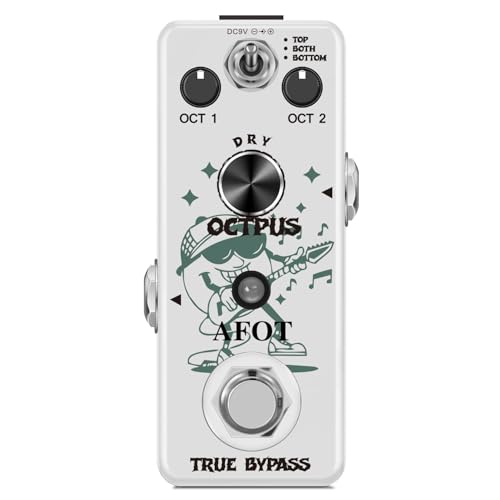
The AFOT Polyphonic Octave Pedal delivers three modes for octave layering—Top, Both, or Bottom—along with precise control over dry and octave levels. It’s crafted for players who want flexible layering options for riffs, leads, and textured pads. Best for: Players seeking clear, independent control of multiple octave layers in a small footprint.
Caution: As with many polyphonic octave pedals, tracking performance can vary with complex chords; plan for simple-to-moderate chords when first dialing in settings.
Klowra Verdict Polyphonic Octave Pedal

The Klowra Verdict focuses on polyphonic octave voicings with rich organ and cello emulation possibilities. It includes four-voice tracking and an Infinite Freeze feature to sustain notes, offering a hands-on way to build layered textures in live or studio settings. Best for: Solo performers and loopers who want a broad, evolving texture without carrying extra gear.
Limitation: The feature set includes several complex modes; take time to map out a few go-to presets for quick changes on stage.
JHS Pedals 3 Series Octave Reverb

JHS Pedals offers the 3 Series Octave Reverb, blending octave effects with a shimmer-style reverb. This option suits players who want ambient, pad-like textures where octave layers interact with expansive reverb tails. Best for: Shoegaze, ambient, and experimental players who seek lush, evolving soundscapes. Caution: Reverb-dense setups can obscure picked notes in busy passages; balance decay and mix to preserve articulation.
Buying Guide: How To Choose Your Octave Pedal
- What tone do you want? Analog warmth, digital precision, or polyphonic versatility each suit different styles. Consider if you need a single octave down, octave up, or both.
- Monophonic vs. polyphonic tracking. If you play chords, polyphonic pedals like OC-5 or AFOT offer better chord integrity. For single-note leads, a classic analog design can feel more responsive.
- Controls you’ll use. Look for clear dry/wet blending, octave depth, and tone controls. Some pedals add dedicated mid-cut, freeze, or envelope features for textures beyond simple octave shifting.
- Output options. Dry direct outputs help preserve your core guitar tone. See if you need stereo or mono compatibility for your rig.
- Size and setup. If you travel or have a small board, compact pedals with true bypass and robust chassis are practical.
Quick Comparison: Choosing At A Glance
- Best for chords and reliable tracking: BOSS OC-5
- Best value with many tonal options: Donner Octave
- Best analog warmth, low latency: SONICAKE Octave Pedal
- Best for flexible top/bottom layering: AFOT Polyphonic Octave
- Best for ambient pads and shimmer: JHS 3 Series Octave Reverb
FAQ
- What is an octave pedal used for? It adds pitches an octave above or below your played notes, enabling ultra-wide textures, bass-like lines, and layered harmonies.
- Do I need a polyphonic octave pedal for chords? Yes, if you frequently play chords, a polyphonic pedal helps preserve chord integrity without note glitches.
- Can octave pedals interfere with my dry tone? Most pedals offer dry/wet controls to blend the original signal with the octave effect, reducing tone loss.
- Are analog octave pedals better than digital? Analog pedals often deliver warmer, more immediate tracking, while digital models can offer precise, flexible options and extra modes.
- Is true bypass important? True bypass minimizes tone coloration when the pedal is off, preserving your guitar’s natural signal.
- Which pedal is best for ambient music? Pedals with shimmer and octave reverb, like the JHS Octave Reverb, excel in creating expansive pads and ethereal textures.
Choosing the right octave pedal depends on your playing style, the complexity of your arrangements, and how much you value polyphonic tracking versus tonal warmth. This guide provides a clear starting point with five well-regarded options and practical considerations to help you pick the best fit for your rig.