Best Garage Parking Sensor Solutions for Precise Vehicle Placement
Answering the common buyer question: which garage parking sensor system reliably guides you to the perfect stopping point? This guide compares five top options, highlighting who each product is best for, and why it stands out. From compact single-car setups to wider-angle dual-laser systems, these sensors help prevent door dings and wall scrapes. The buyer profiles below target drivers who want simple installation, adjustable stop distances, and clear LED indicators. A quick summary table follows to help you compare key features at a glance.
| Product | Best For | Best Feature |
|---|---|---|
| STKR Garage Parking Sensor – Dark Grey | Single-car garages with easy wall-mount | Precise ultrasonic detection with color LED display |
| VKQTS LED Garage Parking Aid | Budget-friendly dual-power option | Clear LED warnings and flexible distance setting |
| Fosmon Wider Angle Upgrade | Two-car garages needing wider guard area | 75-degree laser spread for two cars |
| Strdfeve Garage Parking Sensor | Users who want familiar red/yellow/green cues | Memory of set distance and precise range |
| Purthog 2026 Upgraded LED | Versatile power choices in one unit | Multi-color LED indicators with dual power |
STKR Garage Parking Sensor – Dark Grey

Best for: small to medium single-car garages that require straightforward, adjustable stopping distance. Why selected: This STKR model uses an ultrasonic sensor to signal green, yellow, or red, guiding you to the ideal stop. It offers a customizable stop distance from 6 inches to 6 feet and supports both battery power (4 AA) and USB power, increasing installation flexibility. Limitations: USB power availability depends on adjacent outlets; batteries are a backup.
VKQTS LED Garage Parking Aid

Best for: garages seeking a compact, budget-friendly LED-based indicator with dual power options. Why selected: VKQTS provides automatic LED cues (green/yellow/red) and a simple distance setting process via a middle button. It supports dual power supply (AAA batteries or USB), making it adaptable to different wall outlets. Caution: Batteries are not included, so you’ll need to supply them if you choose battery power.
Fosmon Wider Angle Upgrade – Dual Laser
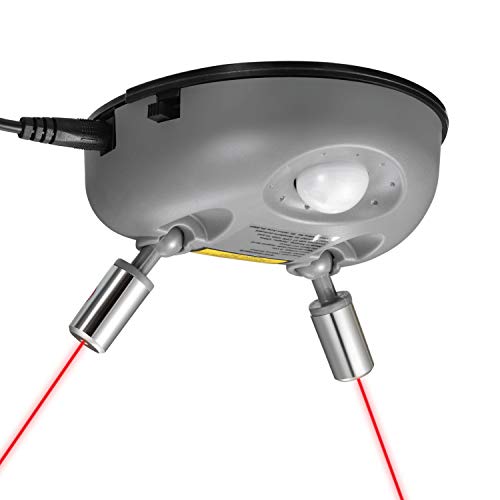
Best for: garages with two vehicles or narrower spaces where a wider sensing angle helps. Why selected: Fosmon’s updated model widens laser coverage to about 75 degrees, enabling safer parking for two cars. It is straightforward to install and calibrate, reducing the risk of bumper scrapes. Limitation: Motion-activated lasers require some parking activity to trigger and may shut off after 30 seconds of no motion.
Strdfeve Garage Parking Sensor

Best for: drivers who want a familiar, color-coded stop indicator with a fixed 6″–6.5 ft range. Why selected: Strdfeve provides a clear red/yellow/green LED display and an easy “Set Distance” memory feature. It remembers your preferred stopping point and warns when you approach too closely. Caution: Within the 6″–6.5 ft range, precise calibration is important for accurate alerts, so follow the setup steps carefully.
Purthog 2026 Upgraded LED Garage Parking Aid

Best for: garages wanting flexible power options with clear, color-coded feedback. Why selected: Purthog combines red/yellow/green LED indicators with a distance setting that saves a chosen stop distance. It supports dual power supply (USB or AAA batteries) and notifies you via red light when you’re too close. Limitation: Battery power requires occasional battery replacement, and battery life depends on usage.
Buying Guide
What to consider when choosing a garage parking sensor:
- Power source: Do you prefer USB-powered, battery-powered, or dual options? USB keeps running continuously, while batteries offer flexibility in outlets with limited access.
- Distance adjustability: Look for systems with a precise “Set Distance” feature to tailor the stop point to your vehicle length and garage depth.
- Indicator method: LED color cues (green/yellow/red) vs. laser indicators – LED cues are simple and widely supported, while lasers can offer direct line-of-sight guidance.
- Number of cars supported: Wider-angle lasers or multiple sensors are beneficial in two-car garages; single-sensor setups suit compact spaces.
- Installation and mounting: Wall-mount or ceiling-mount options influence ease of installation and aesthetic integration.
- Calibration and memory: A model that remembers your distance saves setup time and reduces repeated adjustments.
- Durability and weather tolerance: While most garage sensors are indoor, ensure the unit is rated for typical garage conditions and dust exposure.
FAQ
- Q: Do these sensors require professional installation?
A: Most are designed for DIY installation with simple wall mounting and basic calibration steps. - Q: Can I use these in a two-car garage?
A: Yes, models with wider sensing angles or dual indicators (like Fosmon) are better suited for two-car layouts. - Q: What power options are available?
A: USB power and battery power are common; some models support both, offering flexible placement. - Q: How precise is the distance setting?
A: Settings typically range from 6 inches to about 6.5 feet, with a memory feature to recall the chosen distance. - Q: Do LEDs indicate the exact distance?
A: LEDs provide color-coded distance cues (green safe, yellow approaching, red stop) to guide stopping points. - Q: Can these be used in narrow garages?
A: Yes, choose models with adjustable distance and compact hardware designed for tight spaces.