Best Portable Power Packs for Camping: Reliable Mobile Power on the Go
Answer: These compact, multi-output power packs provide off-grid electricity for camping, RV trips, and outdoor adventures. They’re best for hikers needing light, compact charging; campers with CPAP or laptop needs; and families seeking emergency backup power. The top picks here balance size, capacity, and versatility to cover phones, cameras, small appliances, and more in outdoor settings. Use this guide to compare how each model fits your camping style and energy needs.
Below is a quick summary table of the five selected products. It highlights capacity, output options, and typical best-use scenarios to help you decide at a glance.
| Product | Capacity | Output Highlights | Best For |
|---|---|---|---|
| MARBERO Portable Power Station 88Wh | 88Wh | 2 AC outlets, USB-C PD, USB-A, car output | Lightweight camping and quick charging needs |
| Jackery Explorer 300 | 292Wh | 2 AC, USB-C PD, USB-A, car port | Versatile off-grid power for longer trips |
| DARAN 89.6Wh Power Bank | 89.6Wh | 2 AC, 2 USB-C, 2 USB-A, DC outputs | Ultra-portable, fast charging on the go |
| DaranEner 192Wh Station | 192Wh | 2xAC, USB-C PD, USB-A, DC | Balanced capacity with fast charging |
| HOWEASY 88Wh Station | 88Wh | 2 AC, USB-C, USB, DC outputs | Compact, versatile for camping and emergencies |
MARBERO Portable Power Station 88Wh
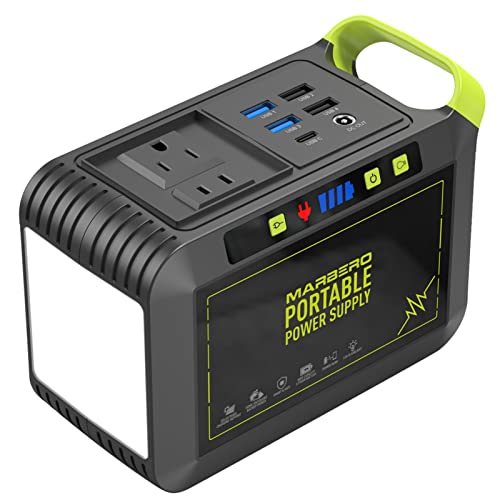
Overview: A compact, slim power station designed for outdoor use. It combines multiple outputs and a lightweight build to support basic electronics, small appliances, and on-the-go charging. The 88Wh capacity and 8 output ports make it a practical pocketable option for quick power needs during camping, road trips, or backyard gatherings.
Best for: Budget-conscious hikers needing light-duty charging and a small AC outlet for essentials. The built-in BMS enhances safety with multiple outputs available simultaneously, including USB-C PD for faster device charging.
Why selected: Its ultra-compact form (about the size of a DSLR) with an ergonomic handle makes it easy to carry in a backpack or small tote. The 0–80% rapid charge in about 2 hours with the included adapter supports quick recharging during breaks in a day of activities.
Caution/limitation: With an 88Wh capacity, it suits light use but may struggle with high-watt appliances or extended, power-hungry devices. Do not rely on it for demanding gear for long periods without recharging.
Jackery Explorer 300, 292Wh

Overview: A robust LiFePO4-powered generator with a 292Wh capacity and a light frame. It’s designed for longer trips and more devices, offering a higher-output option while remaining portable. The 292Wh capacity supports longer periods between charges and multiple devices simultaneously.
Best for: Campers who want a balance of weight, capacity, and multi-device charging for extended trips without heavy equipment. It is well-suited for laptops, drones, cameras, and CPAP when paired with solar charging.
Why selected: LiFePO4 chemistry enhances longevity, supporting thousands of charge cycles. The unit includes practical carrying logistics with a strong handle, aiding transport during hikes or pack-outs.
Caution/limitation: While lighter than some competitors, it’s still heavier than ultra-portables. Heavy or high-watt appliances may require careful planning to stay within the 300W continuous limit.
DARAN 89.6Wh LiFePO4 Power Bank

Overview: A compact solar-ready power bank with LiFePO4 chemistry. It provides a versatile array of ports, including AC outlets and USB-C PD, wrapped in a slim, pocketable chassis for easy carry during hikes or short camping trips.
Best for: Outdoor enthusiasts who need reliable fast charging for multiple devices in a small form factor. It’s particularly useful for quick office or fieldwork tasks where several devices must stay powered on the go.
Why selected: The fast-charging capability and multiple outputs (AC, USB-C PD, USB-A, and DC) enable flexible charging. The LED display clearly shows status and remaining power for easy planning.
Caution/limitation: The 89.6Wh capacity restricts continuous power for high-draw devices; plan for essential devices only and consider a larger unit for power-intensive gear.
DaranEner Portable Power Station, 192Wh

Overview: A mid-range LiFePO4 power station with 192Wh capacity and dual AC outlets. It supports fast charging via USB-C PD and multiple ports for phones, laptops, and small appliances, making it a practical option for varied outdoor needs.
Best for: Campers who want a reliable, higher-output option without carrying a heavy load. Suitable for charging laptops, cameras, or CPAP equipment on weekend trips and emergency use.
Why selected: LiFePO4 chemistry affords longer life and steadier performance. The unit includes MPPT optimization for solar charging, enhancing efficiency when solar panels are used.
Caution/limitation: Not ideal for high-consumption appliances or devices with large startup surges. Solar panel compatibility is helpful but solar input is modest, so plan charging times accordingly.
HOWEASY Portable Power Station, 88Wh

Overview: A compact unit with three charging modes and 8 output options, including 110V AC and USB ports. Its compact footprint and built-in display help manage power during camping or emergencies.
Best for: Campers who value a balance of portability and flexible recharging, including AC, car, and solar charging options. Good for powering lights, small fans, or USB devices during outdoor outings.
Why selected: The 88Wh capacity paired with 110V AC outlets and multiple USB ports supports a broad range of devices in a small package. Three charging modes offer adaptability when solar or wall outlets are not available.
Caution/limitation: The 88Wh capacity limits how long it can sustain higher-wattage devices; a larger unit may be preferred for longer trips or more power-intensive equipment.
Portable Charger Power Bank, 60000mAh (ZZI)
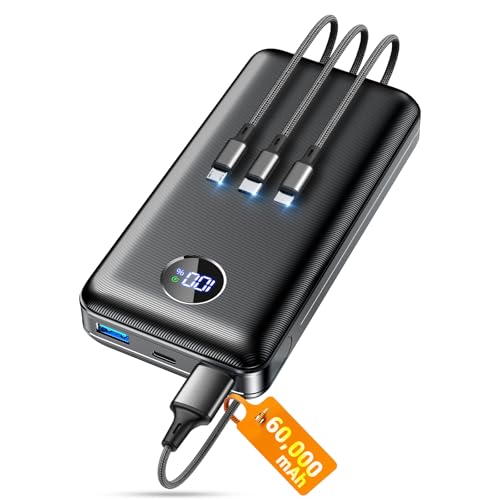
Overview: A high-capacity power bank designed for charging multiple devices with a 3‑in‑1 cable. Its 60000mAh rating promises extended use for phones and small devices during camping, travel, or emergencies.
Best for: Travelers who need to recharge several devices on a long trip and want a single solution with a dedicated charging cable. Suitable for brief outages or day trips where solar charging isn’t practical.
Why selected: The integrated 3‑in‑1 cable and high capacity support multi-device charging quickly, with smart recognition to optimize output for different devices.
Caution/limitation: Large capacity units may be restricted in air travel; verify airline regulations before packing for flights.
Portable Power Station 300W, 220Wh (Apowking)
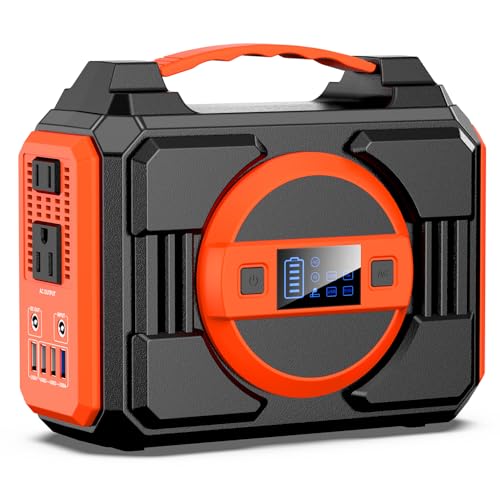
Overview: A compact solar generator with enhanced capacity and seven outputs, including two 110V AC sockets. It supports solar recharging and is designed for home outage backup, camping, and RV trips.
Best for: Campers who want a flexible setup with multiple outlets and the option to recharge via solar panels. Good for small appliances and simultaneous charging of several devices.
Why selected: The dual 110V AC outlets provide greater versatility for running small appliances, while the solar input option adds flexibility for off-grid use.
Caution/limitation: Solar charging performance depends on panel efficiency and sunlight; real-world charging times can vary based on conditions.
EnginStar 296Wh, 300W Power Station

Overview: A mid-to-large capacity portable generator with two 110V pure sine wave outlets and multiple ports. Built for safety and multi-device charging, it supports outdoor camping, emergency readiness, and CPAP use.
Best for: Campers who need reliable power for longer outings or appliances requiring clean sine-wave output. It’s also suitable for home backup scenarios during outages.
Why selected: The 296Wh capacity, dual AC outlets, and robust protection system make it suitable for sensitive electronics and extended outdoor use.
Caution/limitation: Heavier than ultra-portables, which may affect backpacking or minimalist camping setups. Ensure adequate carry options and plan recharges accordingly.
Buying Guide: How To Choose A Camping Portable Power Station
- Capacity matters: 80–100Wh units are best for lightweight phone charging; 200–300Wh handles laptops and small appliances; 300–600Wh supports more devices for longer trips.
- Portability vs. power: If you hike to campsites, prioritize weight and size. For base camps or RV use, higher capacity can justify added weight.
- Output options: Check the mix of AC outlets, USB-C PD, USB-A, and DC ports. Consider what devices you’ll power and their wattage needs.
- Charging options: Look for AC charging, car charging, and solar input compatibility. MPPT or optimized charging can improve solar efficiency.
- Battery chemistry and life: LiFePO4 batteries generally offer longer life cycles and stability compared to standard lithium-ion cells.
- Safety features: A good unit includes BMS protection, overcharge/overdischarge protection, temperature control, and short-circuit protection.
- Durability and form factor: A rugged shell, ergonomic handles, and secure ports reduce wear in outdoor conditions.
- Maintenance and longevity: Consider expected cycle life and warranty terms. A higher upfront cost may be offset by longer life and reliability.
FAQ
- What is a portable power station best for camping?
It powers phones, lights, small appliances, laptops, CPAP machines, and cameras when outlets aren’t available. - Do LiFePO4 batteries last longer outdoors?
Yes, LiFePO4 cells typically offer more charge cycles and stability in temperature variations than standard lithium-ion cells. - Can these power stations be charged by solar panels?
Most models support solar charging, but check the maximum input wattage and panel compatibility for real-world results. - Is 88Wh enough for a weekend trip?
It suits light devices and short trips; plan carefully for essential needs and consider a higher-capacity unit for longer stays. - Should I choose two smaller units or one larger unit?
Two smaller units provide redundancy and flexibility for different activities, while one larger unit simplifies charging and storage. - Are these good for emergency home backup?
Yes, many models can power essential devices during outages, but verify peak power and continuous load capabilities relative to your home devices.