Best Power Banks for RV: Top RV-Ready Portable Power Stations
When shopping for an RV power solution, look for portable power stations that deliver reliable AC and USB-C output, are easy to transport, and offer safe charging with long lifespans. This guide highlights five RV-ready options, explaining who each is best for and why it stands out. It helps road-trippers, full-time RVers, and weekend campers choose the right balance of capacity, speed, and expandability for off-grid living.
Summary table of chosen products:
| Product | Best For | Key Benefit |
|---|---|---|
| Jackery Explorer 1000 v2 | Casual campers and small RV setups | High surge power with practical 1070Wh capacity |
| Jackery Solar Generator 1000 v2 + 200W Panel | RVers who want faster charging on the go | Fast charging options plus solar expansion |
| EF ECOFLOW Delta 2 | Home backup and longer trips | Expandable to higher capacities with many outlets |
| Anker SOLIX C1000 Gen 2 | Tech-heavy setups and multi-device users | Very fast recharge and robust port count |
| Anker SOLIX F2000 | Higher-wattage appliances and larger RVs | Powerful 2,000W with broad accessory support |
Jackery Explorer 1000 v2 Portable Power Station

The Jackery Explorer 1000 v2 delivers 1,500W continuous AC output with a 3,000W surge, enough to run appliances like mini-fridges and small HVAC fans. Its 1,070Wh LiFePO4 battery supports a long cycle life, helping RVers keep essentials powered during trips or emergencies. A lightweight 23.8 lb body with a foldable handle makes it easy to move around campgrounds.
Best for: Casual RV travelers and short excursions who need reliable AC power without frequent recharges. Choose this if you want sturdy capacity in a compact package and a proven brand with easy charging workflows, including faster recharges via the app.
Caution: Real-world runtime depends on load; high-wattage devices will drain the unit quickly.
Jackery Solar Generator 1000 v2 with 200W Solar Panel

This package pairs a 1,070Wh LiFePO4 battery with a 1,500W AC output and 100W USB-C, plus a 200W solar panel option. It supports fast charging via the Jackery app and focused battery longevity with a 10-year design lifespan. The included solar option makes it ideal for RVers seeking quicker top-ups at the campsite.
Best for: RVers who want faster on-site charging and solar expandability for longer trips. Pick this if you value rapid top-offs and plan to rely on solar for quiet, emission-free charging.
Caution: Solar panel performance depends on sun exposure; you may need additional panels for cloudy days.
EF ECOFLOW Delta 2 Portable Power Station

The Delta 2 offers 1,024Wh LiFePO4 capacity with up to 1,800W continuous AC output, plus a robust 15-port outlet array for powering multiple devices. It’s marketed as flexible for home backup, camping, and RV use, and supports quick charging from AC input. The system is expandable with additional batteries to scale up to several kilowatt-hours for extended trips.
Best for: RV users needing a higher-output, expandable option and broad device compatibility. Choose this if you anticipate running multiple high-wattage devices simultaneously.
Caution: The high output is excellent, but runtime will depend on the mix of loads; plan for peaks rather than gradual draws.
Anker SOLIX C1000 Gen 2 Portable Power Station
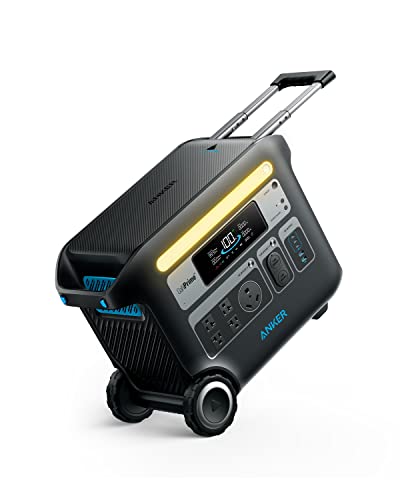
The SOLIX C1000 Gen 2 emphasizes rapid recharging with HyperFlash technology, pushing 0-80% in about 1.4 hours. It delivers 2,000W continuous output (3,000W peak) across 10 ports, including RV-specific outlets. Its 1,024Wh LiFePO4 battery supports long service life, helping RVs power through outings with multiple devices.
Best for: Tech-forward RVers who need fast recharges and the ability to power many devices at once. Choose this if you want quick top-ups and a broad port variety for versatility.
Caution: While powerful, the high-output setup can drain the battery quickly under heavy loads; balance usage with capacity.
Anker SOLIX F2000 Portable Power Station

The SOLIX F2000 delivers 2,000W continuous output, with a peak capacity that supports demanding RV loads. It features a large port array and a robust LiFePO4 battery designed for longevity in off-grid settings. This unit is a solid choice for RVs that require higher-wattage appliances to run simultaneously without compromise.
Best for: Larger RV setups and frequent high-wattage use. Choose this if you need substantial power for multiple devices and long trips without frequent recharges.
Caution: Higher power means a larger footprint; ensure storage space and ventilation are adequate for extended use.
Buying Guide: Key Purchase Considerations
- Capacity versus load: Assess your typical RV loads (fridge, air conditioner, water pump) and match to an 1,000–2,000Wh range for daily use, higher for extended off-grid stays.
- Output options: Confirm AC outlets, USB-C PD, and dedicated RV ports meet your device needs. More ports provide flexibility but may affect weight.
- Charging speed: Look for devices with fast charging (AC and car/adapter options) and consider solar compatibility for off-grid efficiency.
- Lifespan and safety: Prioritize LiFePO4 chemistry for longer cycles and stable performance in temperature fluctuations; check built-in protections and battery management features.
- Expandability: If you expect longer trips, choose systems that allow additional batteries or modular capacity up to several kilowatt-hours.
- Portability: Consider weight and handle design for frequent relocation around the RV or campground.
- Solar readiness: If solar is important, verify panel compatibility and any included solar panel options for easier setup at campsites.
- Reliability: Prefer well-known brands with documented performance in RV environments and straightforward operation via apps or displays.
Frequently Asked Questions
- What capacity is best for a small RV?
A: For a compact setup with occasional power needs, 1,000–1,500Wh is a practical starting point, balancing portability and runtime. - Can these power stations run an air conditioner?
A: Some models can push around 1,500W–2,000W, which may run small AC units or high-draw devices, but verify continuous output and surge capacity for your specific unit. - Are LiFePO4 batteries safer for RV use?
A: Yes. LiFePO4 offers stable chemistry, longer life, and better thermal stability, making them a common choice for outdoor power stations. - Is solar charging worth it for RV travel?
A: Yes, especially for longer trips or remote camping, as solar can reduce generator usage and provide quiet, emission-free charging. - What should I consider for safety and maintenance?
A: Look for overcharge, short-circuit, and high-temperature protections, clear operating temperature ranges, and easy-to-replace components or service options. - Can I run multiple devices at once?
A: Most models provide a mix of AC outlets, USB-C, and DC ports to support several devices; consult the port count and total wattage to prevent overloads.