Best Power Booster for TV Antenna: Clearer Signals and Stronger Free Channels
Answering the need for reliable over‑the‑air reception, this guide highlights top power booster antennas that improve signal strength, reduce pixelation, and expand channel options. It’s ideal for cord-cutters, rural viewers, and apartment dwellers with spotty reception. The best choices balance gain, interference filtering, and multi‑output options for households with multiple TVs.
Summary table of selected products
| Product | Best For | Key Benefit | Note |
|---|---|---|---|
| GE Indoor HD Digital TV Antenna Amplifier | Single TV, moderate distance | Low noise, built‑in LTE filter | Compact indoor use |
| Channel Master TV Antenna Booster | Multiple rooms | Four outputs, LTE filter | Indoor/outdoor versatility |
| CSUXYD TV Antenna Amplifier | Strong local signals | Adjustable gain, 4G/5G filter | DB tuner for aiming |
| Indoor TV Antenna Amplifier by GZMJRD | All-in-one indoor | 4G/5G filter, easy install | Universal compatibility |
| Fabriyut 2026 TV Antenna | Indoor/outdoor use | 5000+ miles range, waterproof | Weatherproof design |
GE Indoor HD Digital TV Antenna Amplifier
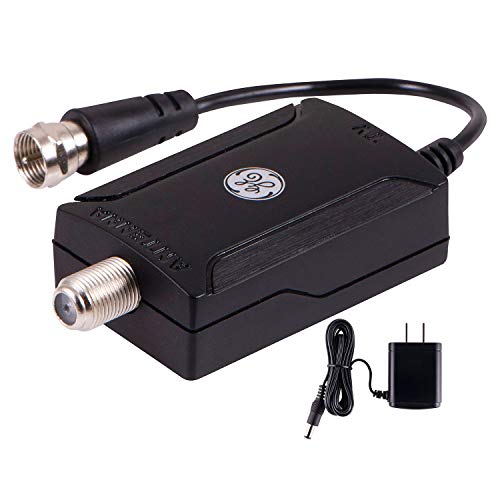
The GE amplifier is designed for universal compatibility with 1080p and 4K Ultra HD signals, delivering a low-noise boost to HDTV reception. It includes a built‑in 4G/5G LTE filter to block wireless interference and improve clear reception for VHF and UHF channels. Best for a single TV in moderate signal areas, it helps reduce pixelation caused by weak signals. A potential limitation is that performance still depends on antenna positioning relative to broadcast towers, obstacles, and distance.
Who it’s best for: viewers with one TV and moderate signal strength who want a straightforward, plug‑in enhancement without separate external boosters. Why selected: it minimizes interference while maintaining clean amplification for reliable local channels.
Channel Master TV Antenna Booster
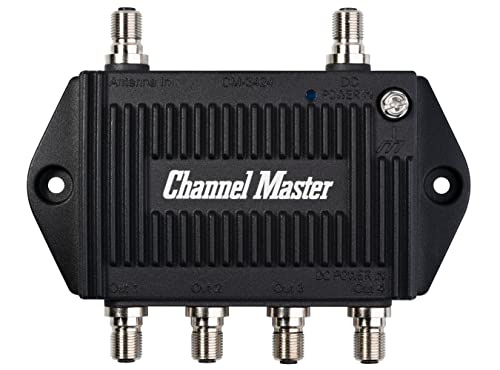
This booster supports four output ports, enabling signal distribution to four rooms while strengthening overall reception. It is compatible with indoor, outdoor, or attic installations and includes a built‑in LTE filter to minimize interference. Best for homes with multiple TVs or zones that struggle with weak signals, it helps unify signal strength across rooms. Limitation: performance can vary with non‑amplified antennas and outdoor exposure conditions.
Who it’s best for: households needing multi‑room amplification with flexible installation. Why selected: the four‑way distribution and robust housing suit diverse layouts and weather scenarios.
CSUXYD TV Antenna Amplifier Signal Booster

The CSUXYD amplifier emphasizes a strong signal boost with adjustable gain (5dB to 25dB) and an integrated 4G/5G LTE filter. It includes a clear-before-buying guideline and a DB tuner for aiming the antenna. Best for users in areas with fluctuating channel strength who want to tailor amplification to local conditions. Caution: overly aggressive gain in strong signal regions may cause over‑amplification and noise if misadjusted.
Who it’s best for: viewers who need customizable gain and precise aiming. Why selected: its adjustable range and pre‑use signal guidance help optimize reception in variable landscapes.
Indoor TV Antenna Amplifier by GZMJRD

The GZMJRD amplifier markets itself as a universal, easy‑to‑install option with a built‑in 4G/5G LTE filter to block interference and clear pixelation. It emphasizes signal strength checks and guidance on whether a booster is needed, and it supports many antennas. Best for first‑time buyers seeking a straightforward upgrade without complex setup. Limitation: performance varies with the original antenna’s quality and placement, not a magic fix for all weak towers.
Who it’s best for: beginners or those seeking a simple plug‑and‑play boost. Why selected: clear installation and universal compatibility make it a low‑friction upgrade path.
Fabriyut 2026 TV Antenna

The Fabriyut model claims an expansive 5000+ miles range with built‑in amplification for 4K, HD, and 1080p signals. It is described as weatherproof for indoor/outdoor use, making it suitable for varied environments. Best for users near broadcast towers seeking broad coverage and rugged operation. Caution: extreme distances may still yield limited channels, and placement remains critical for optimal results.
Who it’s best for: extreme‑range viewers who want a durable, weatherproof option. Why selected: the combination of long‑range reception and outdoor suitability expands where signals reach.
Buying Guide: Power Boosters For TV Antennas
- What to consider: signal strength in your area, number of TVs, and whether you need indoor or outdoor installation. Use a LTE/4G/5G filter to reduce wireless interference for clearer HD reception.
- Gain range: choose models with adjustable gain when possible to tailor performance to your environment and avoid over amplification in strong areas.
- Multiple outputs: if you have more than one TV, a splitter with built‑in amplification can improve consistency across rooms.
- Compatibility: ensure the booster supports your existing antenna and TV tuner. Universal compatibility helps future‑proof your setup.
- Installation ease: consider plug‑and‑play units for quick setup, but be mindful that location and direction toward towers influence results.
- Durability and placement: indoor units are simple, outdoor/attic models offer broader coverage but require weather considerations.
Frequently Asked Questions
- Do I need a booster for every channel? Not always. A booster helps when you have weak signals or long cable runs, but it won’t add channels beyond what’s broadcast in your area.
- Will a booster fix pixelation caused by channel interference? A high‑quality LTE filter helps reduce interference, which can lessen pixelation, but strong line‑of‑sight to towers remains important.
- Can I use multiple boosters in one setup? It’s generally unnecessary and can cause impedance issues. Use one appropriate booster per main antenna path or per multi‑output distribution as needed.
- Is outdoor installation worth it? Outdoor or attic placements can dramatically improve reception by reducing walls and obstacles, but weatherproofing and safety are essential.
- How do I know if I’m in a green or yellow channel area? Check your local broadcast maps or run a signal strength check with your TV or a tuner app to categorize channels before boosting.
- Does more gain mean better reception? Not always. Excessive gain in strong signal areas can introduce noise; tune the gain to balance clarity and strength.