Best Rechargeable Batteries for Solar Panels: Practical Picks for Reliable Power
Powering solar projects with durable, rechargeable batteries ensures longer runtime and fewer replacements. The following selections are tailored for solar panel lights, outdoor sensors, trail cameras, and portable solar setups. Each option balances capacity, chemistry, and compatibility to help you choose confidently for American outdoor use.
| Product | Chemistry | Capacity | Approx. Size / Form |
|---|---|---|---|
| (4-Pack) HyperPS 14430 LiFePo4 | LiFePO4 | 400mAh | 3.2V, 14 x 43 mm |
| Brightown 12-Pack NiMH AA | NiMH | 1000mAh | AA, 1.2V |
| (8-Pack) HyperPS 14430 LiFePo4 | LiFePO4 | 400mAh | 3.2V, 14 x 43 mm |
| JESSPOW 14430 LiFePO4 Battery | LiFePO4 | 450mAh | 14430 size, 3.2V |
| Stealth Cam Sol-Pak 3000mAh | Li-ion | 3000mAh | 12V panel readiness |
Note: All products are intended for solar-related applications such as lights, security cameras, and outdoor devices. Selection tips focus on compatibility, cycle life, and real-world performance under outdoor conditions.
HyperPS 14430 LiFePO4 4-Pack

The HyperPS set uses lithium iron phosphate (LiFePO4) chemistry, delivering a stable nominal voltage of 3.2V per cell with a capacity of 400mAh. These compact 14430-sized cells are suitable for low- to mid-demand solar applications requiring compact, lightweight backups. The LiFePO4 chemistry provides longer cycle life and improved safety characteristics, making them a practical choice for outdoor solar lights, toothbrushes, shavers, and flashlights. Each cell weighs approximately 14.9 g, aiding in portability for mounted solar devices.
Key considerations include ensuring device compatibility with 3.2V LiFePO4 cells and confirming fit within the device’s battery compartment. While suitable for smaller loads, users should account for total system energy when designing larger solar setups or high-drain devices. The 14 x 43 mm footprint helps in tight cavities where AA or AAA cells won’t fit, but it’s essential to verify dimensions and voltage requirements before replacement.
Brightown 12-Pack NiMH AA Batteries
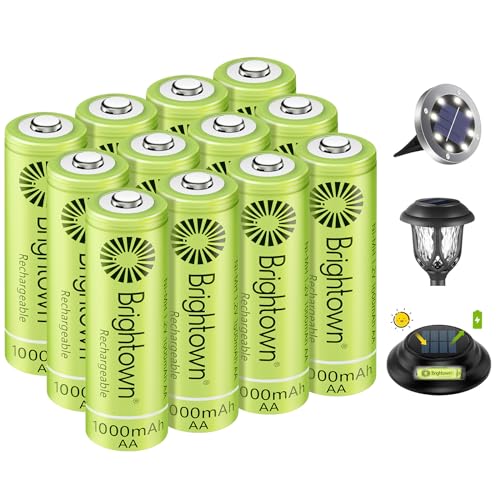
These Brightown NiMH AA batteries offer 1000mAh capacity with a high-recharge cycle potential—up to 1000 recharges. Pre-charged to about 30% for safer transport, they’re ready for initial charging in solar devices once installed. NiMH chemistry provides good performance for solar lights, remote sensors, and portable solar chargers, with less memory effect than older NiCd options. They’re designed to deliver reliable energy in variable outdoor conditions and help reduce ongoing battery costs over time.
When using NiMH AA cells in solar applications, consider temperature sensitivity and the device’s preferred chemistry. NiMH cells tolerate a range of operating temperatures but can exhibit reduced capacity in extreme cold. Proper storage and periodic recharging every few months can preserve overall life. These batteries shine in long-term solar lighting kits and home devices requiring frequent, dependable recharges.
HyperPS 14430 LiFePO4 8-Pack

This is the larger 8-pack version of the HyperPS 14430 LiFePO4 cells. Each 14430 cell maintains a 3.2V nominal voltage with 400mAh capacity, similar to the 4-pack, but in greater quantity for extended solar projects. The increased pack size is well-suited for multiple devices or longer-term installations where battery swaps are infrequent. The LiFePO4 chemistry continues to offer robust cycle life and enhanced safety under outdoor conditions, making it a solid option for low-drain solar lights and field applications requiring more energy per pack.
Practical guidance includes confirming device compatibility with 3.2V LiFePO4 cells. Because the 14430 form is shorter than common AA cells, some enclosures may need a small adaptation to accommodate the form factor. Consider how many cells you’ll need for your desired runtime and whether your solar controller can manage the charging profile for LiFePO4 chemistry to maximize longevity.
JESSPOW 14430 450mAh LiFePo4 Battery

The JESSPOW 14430 battery provides 450mAh capacity at 3.2V, marking a modest increase in energy over standard 400mAh cells. The 14430 form factor is compatible with external solar lighting, garden lights, and other small solar-powered devices. The slightly higher capacity and robust LiFePO4 chemistry offer a practical balance of weight and performance for moderate-load applications. Notably, this cell is designed for outdoor use and can deliver consistent energy across multiple charge cycles.
Important considerations include verifying physical fit and ensuring the device’s charging circuitry supports LiFePO4 chemistry. The 14430 size is not a direct AA replacement, so enclosure dimensions must be checked. With a higher cycle life potential, these cells suit projects that require reliable replacements over several seasons without frequent battery changes.
Stealth Cam Sol-Pak Solar Battery Pack 5000mAh

The Stealth Cam Sol-Pak Solar Battery Pack combines a high capacity 5000mAh Li-ion cell with an external 12V solar panel solution designed for wireless or cellular trail cameras. This setup aims to maximize field life by providing a robust power source that reduces the frequency of battery swaps in remote hunting or surveillance locations. The system includes high-performance solar charging with adjustable positioning to optimize light capture in varying conditions. It’s compatible with Stealth Cam’s 12V external jack ecosystem and is geared toward extended operation in back-to-back low-light days.
Buyers should assess device compatibility, including connector type and charging expectations. Li-ion chemistry offers high energy per weight but requires proper battery management and compatible charging electronics. The 12V panel and long cable length provide flexible installation options for camera mounts, tree stands, or outbuildings. This option is ideal for users seeking maximum field life for wildlife monitoring or security setups where maintenance windows are limited.
Buying Guide: Key Factors For Choosing Rechargeable Solar Batteries
- Chemistry and voltage compatibility: LiFePO4 cells provide safety and long life with a stable 3.2V per cell, while NiMH cells offer robust performance in standard AA/AAA formats. Confirm device voltage requirements and terminal form factors before purchasing.
- Capacity vs. runtime: Higher capacity typically translates to longer runtimes between charges. Calculate the device’s current draw and expected daily usage to estimate needed capacity (mAh) for your climate and sun exposure.
- Form factor and fit: Some solar devices require nonstandard sizes (e.g., 14430) that fit into compact enclosures. Measure the battery compartment and compare with the product dimensions to ensure a proper fit.
- Cycle life and durability: Outdoor deployments benefit from batteries with high cycle counts and resistance to temperature fluctuations. LiFePO4 often outperforms other chemistries in lifecycle longevity.
- Charging compatibility: Ensure the charger or solar panel can safely manage the selected chemistry, including any specific charging profiles and temperature operating ranges.
- Environmental considerations: Outdoor gear may experience rain, heat, and cold. Look for batteries designed for outdoor use and consider storage practices to maximize lifespan.
- Maintenance and replacement strategy: Plan for periodic checks, especially in solar-powered setups that run year-round. Batteries with easy replacement and clear indicators help minimize downtime.