Best Solar Battery Options for Trail Cameras: Power When You Need It Most
If you rely on trail cameras in remote areas, you need dependable power that isn’t limited by frequent battery changes. This guide highlights five top solar battery packs and panels that work with 12V and 6V trail cameras, helping you choose the right solution for long deployments, varying weather, and different camera setups. The selections are suited for hunters, wildlife researchers, and property managers who want continuous coverage with minimal maintenance.
| Product | Best For | Key Benefit |
|---|---|---|
| Stealth CAM Durable Sol-Pak Solar Battery Pack (5000 mAh) | Extended field life in low-light days | High-capacity Li-ion with 12V panel |
| HME Trail Camera 12V/Solar Auxiliary Power Pack | Rugged, dual-power use | Weather-resistant with 12V and solar options |
| Stealth CAM Durable Sol-Pak Solar Battery Pack (3000 mAh, 10ft cable) | Compact setups | Smaller battery with strong solar panel |
| WingHome Trail Camera Solar Panel Kit | Budget-friendly reliability | Built-in 2000mAh battery, IP66 |
| KJK Trail Camera Solar Panel (6W, 10000mAh) | Strong long-term charging | High efficiency with built-in large battery |
Stealth CAM Sol-Pak Solar Battery Pack (5000 mAh)

The Sol-Pak 5000 mAh solar battery pack provides extended camera field life by combining a rechargeable Li-ion battery with a 12V solar panel. It is designed for Stealth Cam wireless or cellular trail cameras that feature an external 12V DC jack. Best for longer field deployments where sun exposure is reliable and you want to minimize battery swaps.
Best for: Hunters or researchers using Stealth Cam wireless or cellular cameras in remote locations who want steady power with fewer site visits. The built-in capacity helps cover multi-day stretches in days with limited light.
Why selected: It pairs a sizable 5000 mAh battery with a 12V amorphous solar panel and adjustable swivel brackets to optimize sun capture. The integration reduces downtime caused by drained batteries in back-to-back low-light periods.
Caution: Only compatible with cameras having an external 12V DC jack; verify connector compatibility before setup.
HME Trail Camera 12V/Solar Auxiliary Power Pack

This power pack adds versatility with both 12V external battery support and an included solar panel. Its weather-resistant design makes it suitable for remote or extended-use setups where cameras must endure rain, snow, or temperature swings. Best for off-grid sites where you need dependable power without frequent maintenance.
Best for: Users who want dual charging options—either a steady 12V supply or solar-assisted charging—for rugged environments.
Why selected: The combination of durability and dual power options helps maintain operation during challenging weather, reducing the risk of camera downtime due to power loss.
Limitation: The data emphasizes general durability; ensure your camera model supports the external power configuration you intend to use.
Stealth CAM Sol-Pak Solar Battery Pack (3000 mAh, 10ft Cable)
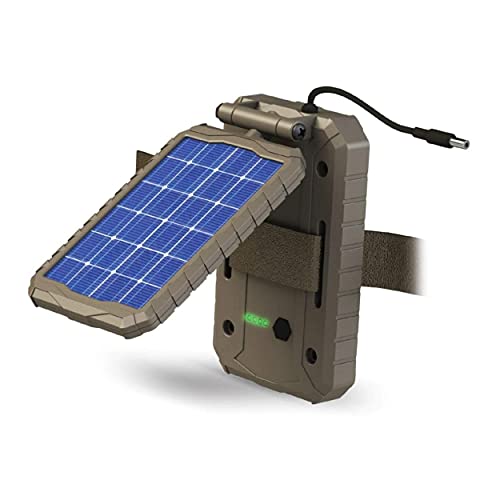
This compact 3000 mAh option focuses on delivering steady power with a practical 10-foot insulated cable for flexible installation. It’s ideal for smaller camera rigs or setups where footprint and cable routing are critical. Best for: smaller trail cameras or users who need a lighter, more portable solar charging option.
Why selected: The smaller battery size reduces weight while still providing extended field life, aided by a reliable 12V solar panel and a longer cable for flexible placements. Best avoided if your camera consumes power rapidly on long deployments.
Caution: While lighter, the smaller capacity may require more frequent solar recharging in low-light seasons.
WingHome Trail Camera Solar Panel Kit (IP66)
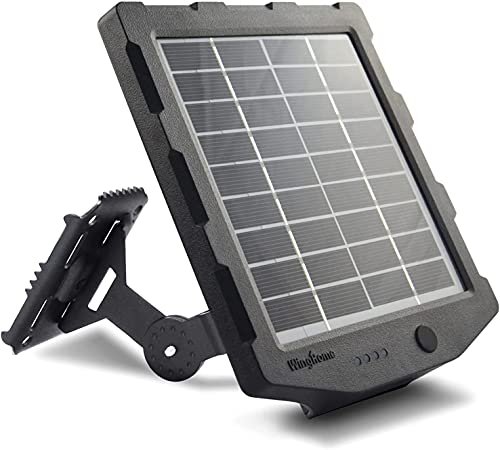
The WingHome kit combines a solar panel with a built-in 2000 mAh battery and IP66 waterproof rating. It’s designed for universal compatibility with WingHome and other brands, using 6V or 12V outputs. Best for: Budget-conscious users who want a reliable power source with a weatherproof build and straightforward setup.
Why selected: The integrated battery and robust enclosure simplify installation while delivering steady solar power for typical hunting season activity.
Caution: Check compatibility with your specific camera power input, as some models may require adapters to match the plug sizes listed.
KJK Trail Camera Solar Panel (6W, 10000mAh)
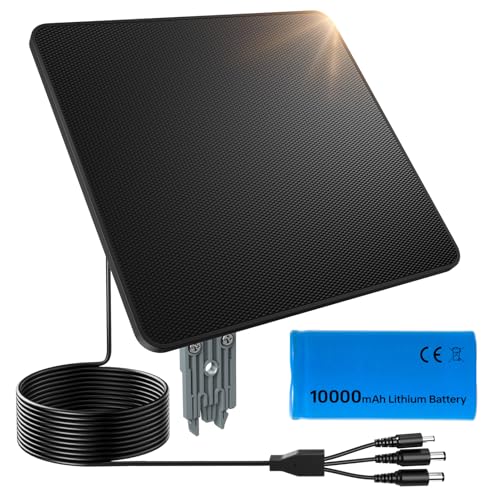
The KJK system delivers a high-efficiency 6W solar panel paired with a built-in 10,000mAh battery, providing steady 12V power for long-term outdoor use. It is IP67-rated for water resistance and designed for cellular and wireless hunting cameras. Best for: Users who need a robust power source that minimizes battery changes during extended field deployments.
Why selected: A high-capacity internal battery complements the 6W panel to support multiple days of sun exposure, reducing downtime between camera checks.
Caution: Confirm your camera’s DC connector size before purchase to ensure proper compatibility with the listed ports.
FUTUREZEN 10W Solar Panel with 10400mAh Battery

This FUTUREZEN kit combines a 10W solar panel with a large 10400mAh battery and a selectable 6V/12V output. It includes multiple DC connectors for broad compatibility. Best for: Users seeking higher capacity in a single unit for extended field use and compatibility across many camera brands.
Why selected: The 10W panel and big internal battery support reliable power availability, particularly in mixed sun conditions, while adjustable voltage helps tailor output to your camera’s needs.
Caution: Not compatible with AC-powered or PoE cameras; verify connector types and voltage settings for your specific model.
WECOOL Trail Camera Solar Panel (IP66, 5000mAh)

WECOOL offers a solar panel with a built-in 5000mAh battery and IP66 rating for rugged outdoor use. It emphasizes long-lasting power continuity, even during extended cloud cover or constant monitoring. Best for: Enthusiasts who want dependable solar power with a robust enclosure and broad compatibility across 12V and 6V cameras.
Why selected: The high-efficiency solar design paired with significant storage helps maintain camera operation for long monitoring windows in varied weather.
Caution: The listing notes high efficiency; ensure your camera’s input matches the DC connectors offered by this kit to avoid adapter needs.
Buying Guide: Key Considerations For Trail Camera Solar Power
- Power capacity vs. run-time: Higher mAh typically means longer operation between charges. Choose based on your camera’s power draw and the number of cloudy days you expect.
- Voltage compatibility: Most trail cameras run on 6V or 12V. Verify your camera’s required voltage and confirm the kit’s adjustable outputs (6V/12V) before purchase.
- Weather resistance: Look for IP ratings (IP66 or IP67) and rugged housings for rain, dust, and extreme temperatures.
- Connectivity and compatibility: Ensure the panel’s connector types (DC jack sizes) match your camera, or be prepared to use adapters.
- Portability vs. capacity: Larger batteries extend field life but add weight. Balance the size of the solar kit with how you deploy and retrieve cameras.
- Ease of installation: Kits with adjustable mounting brackets, long cables, and built-in batteries simplify setup in remote areas.
Frequently Asked Questions
- Q: Do solar panels work in cloudy weather? A: Yes, most panels still generate power at reduced efficiency; built-in batteries help store energy for night use.
- Q: Will solar power damage my camera? A: No, when used with proper voltage and connectors, it provides a stable power source without harming the camera.
- Q: How do I know which voltage to choose? A: Check your camera’s manual or label on the device; common options are 6V or 12V.
- Q: Is IP66/IP67 enough for harsh conditions? A: Yes, these ratings indicate good dust and water resistance, suitable for most outdoor environments.
- Q: Can I mix and match panels with different cameras? A: Yes, as long as the output voltage and connector match the camera’s input requirements.
- Q: How often should I check the solar setup? A: In early deployments, check every few days to ensure the panel is properly aligned and the battery is charging.