Best Solar Panels for Small Electronics: Lightweight, Portable Solutions for Everyday Power
Answering the need for dependable off-grid power, these solar panels are designed to charge small electronics and DIY projects. Ideal buyers include campers seeking phone charging on hikes, students building science projects, hobbyists powering micro-devices, and emergency-prepared households needing lightweight solar options. This guide highlights five compact panels, comparing efficiency, portability, and versatility to help you pick the right fit for low-power gear.
| Product | Best For | Key Benefit |
|---|---|---|
| FellDen Micro Solar Panels | DIY projects and small devices | 5V, 200mA panels with wire for quick setup |
| SOLUPUP Solar Panels 30W | Outdoor charging for multiple devices | Foldable, USB-C/USB-A outputs, IPX5 |
| KEJNYT 10 Pcs 0.45W Panels | Low-power experiments and hobby kits | High-efficiency polycrystalline cells, flexible wiring |
| Aocoray Mini 5V 6W Panel | Mobile charging and compact setups | Lightweight, includes long cable, robust enough for outdoors |
| SOLPERK 20W Panel Kit | Battery maintenance and portable power | Smart MPPT controller ready, weather-ready build |
FellDen Micro Solar Panels With Wire

Best for DIY enthusiasts and learners building simple solar-powered projects. This kit includes five 110mm by 60mm panels rated at 5V and 200mA each, with wire for easy integration into model builds or small experiments. The compact form factor makes it suitable for classroom demos, science fair projects, or basic solar charging of tiny devices. A practical limitation is that each panel delivers modest current, so larger gadgets or multiple devices require bundling panels in parallel to increase amperage.
SOLUPUP 30W Portable Foldable Solar Charger

Better for campers and outdoor users who need to power multiple small devices. This foldable 30W panel uses monocrystalline cells with 23%+ efficiency and dual USB outputs (5V/3A, 15W max). Its IPX5 water resistance helps in rugged conditions, and a built-in smart chip enhances charging safety and optimization. Choose this if you want quick, reliable sun-powered charging on trips; caution: higher output requires adequate sun exposure and use of compatible USB devices.
KEJNYT 10 Pcs Small Solar Panels

Best for students and hobbyists building light-powered devices or teaching kits. The 10-pack provides 0.45W, 3V, 150mA panels sized 55mm by 60mm. Polycrystalline cells offer reasonable efficiency for small-area projects, and the included wire clips allow quick parallel or series connections without soldering. The main limitation is the modest voltage and current, so use this set for low-power experiments rather than charging larger gadgets.
Aocoray Mini 5V 6W USB Solar Panel
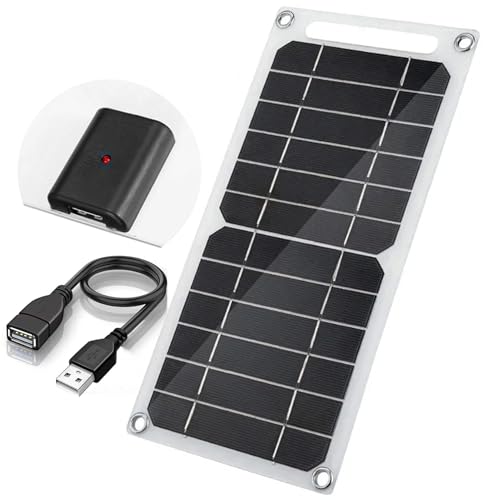
Best for mobile charging and compact setups where space is at a premium. This 5V, 6W panel is designed for charging small USB devices like phones, cameras, or mini fans, and it includes a long 55-inch cable for flexible placement. High efficiency and durable construction support outdoor use. A potential limitation is the relatively small output, so avoid relying on it for power-hungry devices or prolonged use without a backup source.
SOLPERK Solar Panel Kit 20W
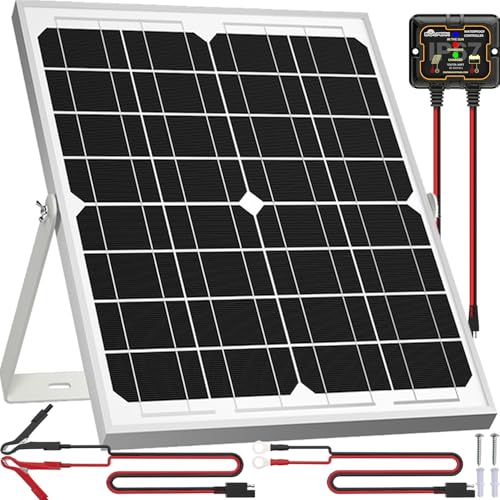
Best for battery maintenance and mobile setups with a bit more power. This 20W panel uses monocrystalline cells with a high conversion rate and sturdy construction for outdoor use. It can charge and maintain various 12V batteries with an intelligent MPPT controller. Ideal for vehicles, boats, and RVs where a stable battery state is important. Limitation: integration with an MPPT controller may require additional components depending on the system.
Buying Guide: Key Considerations For Small Electronics
What size and power do you need? Start by listing the devices you intend to charge and their typical power draw. For phones and light USB devices, panels in the 5–20W range are usually sufficient with midday sun. If you need to maintain a 12V battery, look for panels paired with a charge controller or MPPT controller.
Portability vs. durability: Foldable panels maximize travel ease, while rigid panels can offer longer lifespans in harsh environments. Consider IP ratings, weather sealing, and the materials used in frames and glass when choosing for outdoor use.
Output compatibility: Check USB-A, USB-C, and 12V DC outputs. Ensure the panel’s voltage matches your devices or includes a safe regulation method. Built-in safety features like overcurrent and short-circuit protection are beneficial for DIY projects.
Wiring and expandability: If you plan to scale up power, opt for panels that allow easy in-parallel and in-series connections. Wire clips and pre-attached leads reduce setup time in DIY builds.
Real-world sun conditions: Peak efficiency assumes optimal sunlight. In real-world scenarios, shading, angle, and weather reduce performance. A larger panel or multiple units can compensate for less-than-ideal sun exposure.
FAQ
- What is a good panel for charging a smartphone off-grid? A compact 5–20W panel with USB-A or USB-C outputs is typically sufficient, especially in bright sun scenarios.
- Can small panels charge a portable power bank? Yes, many small panels provide USB outputs suitable for charging power banks, depending on their maximum current and voltage.
- Is foldable better than rigid for travel? Foldable designs offer superior portability and storage, making them ideal for backpacks and road trips.
- Do I need a charge controller? For 12V battery charging or higher, a charge controller or MPPT controller improves safety and efficiency; for simple USB charging, it may not be necessary.
- What should I look for in waterproof panels? Look for IP ratings (e.g., IPX5 or higher) and durable sealants for use in rain or splashes during outdoor activities.
- Can I connect multiple small panels to charge a device faster? Yes, connecting panels in parallel increases current and can speed up charging, provided your device’s input supports higher amperage.