Best Soldering Kit for Beginners: Easy Start Tools for Do‑It‑Yourself Projects
Buying a soldering kit for beginners means choosing a toolset that is safe, reliable, and simple to learn with. This guide highlights five beginner‑friendly options, fitting different project goals from basic electronics repair to small DIY builds. The best choices here are suited for hobbyists, students, teachers, and first‑time hobbyists looking for clear temperature control, safety features, and complete accessory sets.
The following table summarizes the top five picks, focusing on suitability, key strengths, and any notable limits. Use it to quickly compare features before diving into each product’s details.
| Product | Best For | Key Strengths | Limitations |
|---|---|---|---|
| Soldering Iron Kit, 60W with 10‑in‑1 Tools (Q‑MING) | Beginner repair projects; quick heat | Fast heat, adjustable temperature, included tips and flux | Basic digital readout not present |
| YIHUA 926 III 60W Digital Station | Small electronics practice with steady temp | Digital display, PID control, sleep mode | More compact, higher price tier |
| Soldering Iron Premium Kit, 60W (MEAKEST) | All‑in‑one starter with safety features | Six vents, safety switch, versatile tips | Tips variety may not cover heavy industrial use |
| DIY Soldering Project Game Kit (Etoput) | Education and hands‑on learning | Five retro games, engaging build | More playful than professional tool for repairs |
| Soldering Iron Kit, 60W + Multimeter (KYZHXVO) | Everyday electronics tinkering | 18‑in‑1 kit, multimeter included, comprehensive | Overall kit size can be bulky |
Note: The products above are selected for a broad beginner audience. Each option provides practical features to support safe, straightforward soldering practice. In the sections below, you’ll find who each product is best for and why it stands out for new users.
Soldering Iron Kit, 60W With 10‑In‑1 Tools (Q‑MING)

- Best for quick heat and all‑in‑one beginner setup. The 60W pencil‑type iron offers adjustable temperatures from 200–450°C with an on/off switch for energy savings and safer welding.
- Why chosen: It includes 5 interchangeable tips, a stand, a sponge, 0.6mm solder wire, and flux paste, giving new users a complete starter kit without hunting for extras.
- Who it’s for: Ideal for first‑time repair tasks, small electronics, and learning basic soldering technique on a budget.
- Caution: Short heating periods require careful handling near the tip; ensure adequate ventilation during use.
YIHUA 926 III 60W Digital Soldering Station
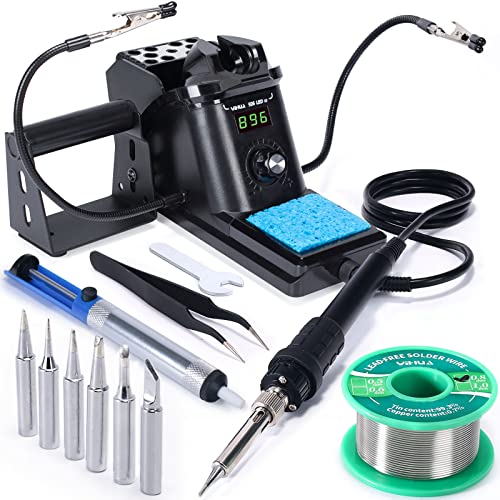
- Best for steady temperature control and longer projects. The station provides a wide range (194℉–896℉) with PID stabilization to keep the iron at the set temperature.
- Why chosen: The digital display helps beginners read exact temps, and the integrated stand with storage keeps workspaces tidy.
- Who it’s for: Suitable for learners who want consistent performance on delicate electronics and precise soldering tasks.
- Caution: The system is more compact and may be overkill for only occasional hobby use; price reflects the features.
Soldering Iron Premium Kit, 60W (MEAKEST)

- Best for a complete, safety‑minded starter kit. The 60W iron uses a ceramic heater with 200–450°C range and 6 vents to help prevent overheating.
- Why chosen: Includes multiple tips, solder wire, a desoldering pump, and paste—great for students or hobbyists who want a robust first project kit.
- Who it’s for: Perfect for beginners who anticipate various small electronics tasks like phones, PC components, or wearables.
- Caution: The breadth of accessories can be overwhelming for absolute beginners; take time to learn each tool’s use.
DIY Soldering Project Game Kit (Etoput)

- Best for education and hands‑on learning. This kit includes five retro games and an acrylic case, turning soldering practice into an engaging project.
- Why chosen: Combines learning with a tangible outcome, helping beginners stay motivated while practicing essential soldering skills.
- Who it’s for: Students, teachers, or families seeking a playful way to develop basic electronics soldering ability.
- Caution: Primarily a learning kit; may not satisfy someone seeking only professional repair tools.
Soldering Iron Kit, 60W With Multimeter (KYZHXVO)
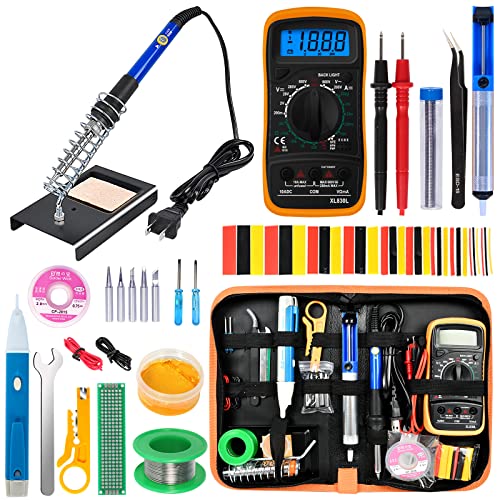
- Best for versatile projects. The 18‑in‑1 kit combines a 60W soldering iron with a multimeter and a wide set of accessories for electronics work.
- Why chosen: It provides a broad toolset in one package, which helps beginners tackle different tasks without buying separate instruments.
- Who it’s for: Ideal for hobbyists who want a single, comprehensive starter kit that expands with their skills.
- Caution: The larger kit may demand more storage space and organization to keep tips and components sorted.
Buying Guide: Key Considerations For Beginners
- Power and heat control: Look for 60W to 80W irons with adjustable temperature to handle electronics of varying densities. A digital display or temperature readouts help new users dial in the right heat.
- Safety features: On/off switches, sleep modes, heat dissipation vents, and comfortable heat‑resistant handles reduce risk during practice and long sessions.
- Accessory variety: A complete kit with multiple tips, flux, solder wire, a stand, and a desoldering tool offers more learning opportunities and fewer shopping trips.
- Ease of use: For beginners, choose kits with clear instructions, compact size, and space‑saving designs to promote good habits from the start.
- Project suitability: If you want educational value, consider kits that include learning components or small build projects. For repair practice, prioritize stable iron performance and a good tip assortment.
- Future proofing: A kit with extra tips and a multimeter or comprehensive accessories can grow with your skills and reduce the need for frequent upgrades.
Frequently Asked Questions
- What is the best beginner soldering temperature range?
- Do I need a soldering station or a basic iron?
- What safety gear should I use with soldering?
- Can I use leaded solder today?
- Is desoldering necessary for beginners?
For general electronics, start around 350–400°C (662–752°F) and adjust as needed for different components and boards.
A basic iron is fine for simple practice, but a station with temperature control helps beginners achieve consistent results on delicate electronics.
Wear eye protection, work in a well‑ventilated area, use flux responsibly, and keep a damp sponge or brass tip cleaner handy.
Many beginners use leaded solder for ease of use, but non‑lead solder is common and safer for many environments. Check local guidelines and device requirements.
Yes. Desoldering pumps or wick helps correct mistakes and is a valuable skill as you advance in soldering projects.