Best Stereo Receiver for TV: Clear Sound for Your Home Theater
Answers for shoppers seeking a reliable stereo receiver that complements a TV setup. This guide highlights five top options, showing who each model is best for and why it fits TV listening and home entertainment. Whether you want simple Bluetooth streaming, multi-room audio, or true surround capabilities, there’s a receiver here for different rooms and budgets. The selection focuses on compatibility with TVs, ease of use, and practical connection options.
Summary table of selected products
| Product | Best For | Key Benefit |
|---|---|---|
| Sony STR-DH190 | Budget-friendly TV listening and Bluetooth streaming | Phono input, Bluetooth, 100W x 2 |
| Yamaha R-S202BL | Two-room or compact setups with Bluetooth | Two-system speaker selector, Bluetooth |
| Denon AVR-S570BT | 8K-capable home theater with Bluetooth | 4x HDMI 2.1 8K inputs, eARC, 5.2 channels |
| Pyle 5.2 Channel Receiver | 4K pass-through and strong channel count on a budget | 4K Ultra HD, 5.2 surround |
| WOOPKER AK45 Pro | Compact 2.0 channel setup with mic inputs | 400W peak, Bluetooth 5.0, USB/SD |
Sony STR-DH190 2-Ch Receiver With Bluetooth

The Sony STR-DH190 is a straightforward, budget-friendly stereo receiver designed for TV listening and general music playback. It offers Bluetooth for wireless streaming, a phono input for vinyl fans, and multiple analog inputs. Best for: casual TV watchers who want simple Bluetooth connectivity and a clean, compact front-end amplifier in a living room or bedroom. Limitation: lacks HDMI inputs for modern TV devices, so rely on analog connections or external HDMI switch if needed.
Yamaha R-S202BL Stereo Receiver
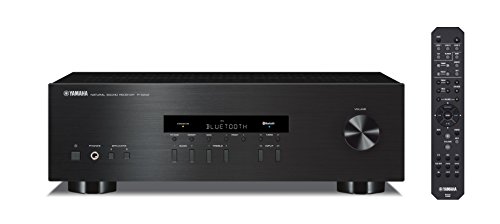
The Yamaha R-S202BL focuses on two-room versatility, auto power standby, and easy Bluetooth streaming. It provides a clean signal path with a dedicated speaker selector for two systems, which helps separate TV audio in different rooms. Best for: small living spaces or apartments where you want reliable stereo sound and simple Bluetooth access. Limitation: lacks HDMI inputs for direct TV video handling; rely on external adapters if HDMI is required.
Yamaha RX-V385 5.1-Channel AV Receiver

This Yamaha model delivers 5.1 surround sound with HDMI connectivity and built-in Bluetooth, making it a versatile choice for TV-watching and movies. Best for: users who want a compact AV receiver that supports modern HDMI setups and wireless music streaming. Limitation: not all HDMI features are guaranteed across every TV; ensure your TV compatibility with HDR and 4K streaming if you plan heavy video use.
Pyle 5.2 Channel Hi-Fi Receiver

The Pyle 5.2 Channel Hi-Fi Receiver offers 4K pass-through and a 5.2 layout, appealing to budget buyers who still want multi-channel capability. Best for: home theaters on a budget that still require TV pass-through and solid audio output. Limitation: feature depth is lighter on room calibration and streaming options compared to premium brands.
WOOPKER AK45 Pro Amplifier

The WOOPKER AK45 Pro is a compact 2.0 channel amplifier with Bluetooth 5.0, USB, SD, and mic inputs. Best for: small rooms or desks where you want a powerful but space-saving option to drive compact speakers or a home karaoke setup. Limitation: not a true AVR; lacks dedicated center/halo channels for full surround sound and TV-specific processing.
Buying Guide: Key Considerations For TV Stereo Receivers
What should you look for when selecting a stereo receiver for TV use? Consider these practical factors to match your room and sources.
- Connections: Ensure you have the right inputs for your TV. HDMI ARC/eARC support, Bluetooth, and multiple analog inputs help cover digital and legacy devices.
- Power and speaker configuration: Match the receiver’s channel count to your speakers (2.0, 2.1, 5.1, etc.). More channels support surround sound or multi-room setups.
- Video pass-through: If you want the receiver to handle video, verify 4K/8K pass-through capabilities and HDR support where applicable.
- Format support: Look for Dolby Digital, DTS, and other common audio formats for TV and movie playback.
- Room suitability: Smaller rooms benefit from compact receivers; larger spaces may benefit from a higher-power unit with better dynamics.
- Simplicity vs. features: Budget models emphasize ease-of-use and essential connections; premium models offer advanced calibration and multi-room options.
Why pick a particular model?
- Budget TV listening: Sony STR-DH190 offers Bluetooth and a phono input at a lower price point.
- Bluetooth-first living spaces: Yamaha R-S202BL and Denon AVR-S570BT provide straightforward wireless streaming and robust inputs for TVs and music players.
- Compact home theaters: Yamaha RX-V385 and Pyle receivers balance audio quality with space and HDMI capabilities for TV use.
- Karaoke and small rooms: WOOPKER AK45 Pro and Donner-type options provide mic inputs and flexible source connections for casual setups.
Frequently asked questions
- Can I connect a TV directly to a stereo receiver? Yes, using HDMI ARC/eARC or analog inputs if needed, depending on the receiver model.
- Do I need a dedicated AV receiver for TV audio? Not always. For basic stereo TV audio, a two-channel receiver with HDMI passthrough and Bluetooth is often sufficient.
- Is Bluetooth enough for home theater sound? Bluetooth is convenient for music; for movies, wired connections or HDMI-based systems typically deliver better latency and multichannel formats.
- What is 8K HDMI input and why does it matter? 8K HDMI inputs support higher video resolutions and future compatibility; useful for users with 8K TVs and gaming consoles.
- Should I buy a 2.0/2.1 receiver or a 5.1/7.1 AV receiver? For TV-focused listening, a 2.0/2.1 with good Bluetooth and HDMI options is often enough; for immersive TV/movies, a 5.1 system adds surround sound.
- Are wired speakers required when using a Bluetooth receiver? Not required, but wired speakers generally provide better audio fidelity and reliability than wireless speaker kits in most setups.