Best Guitar Synthesis Pedals for Rich, Expressive Tones
If you’re shopping for a synth pedal for guitar, you want models that deliver clear tracking, polyphonic tones, and easy real-time control. This guide highlights five pedals that suit different players—from live solo performers to studio tone chasers. Each pick is explained with who it’s best for, why it stands out, and a practical caveat to consider before you buy.
| Product | Best For | Key Benefit |
|---|---|---|
| BOSS SY-1 | Live players seeking immediate, playable synth tones | Expressive Polyphonic Guitar/Bass Synthesis |
| BOSS SY-200 | Pro players needing memory, MIDI control, and broad sonic palette | 128 memories, expanded sound set |
| FLAMMA FC05 | Compact, budget-conscious players who want classic modulation sounds | 11 modulation effects in a small package |
| Electro-Harmonix Mono Synth | Beginners to intermediate players wanting quick, easy synth tones | Eleven presets with simple control layout |
| Electro-Harmonix SYNTH9 | Texperts seeking a rich preset-driven synth palette | Nine classic-sounding synth presets |
BOSS SY-1 Guitar/Bass Synthesizer Pedal

The BOSS SY-1 is a polyphonic synth pedal designed for guitar and bass, offering dedicated synthesis voices and a Send/Return loop for effects integration. It’s best for players who need immediate, performance-ready synth textures and straightforward live control through expression inputs. The SY-1 excels in bite-sized, responsive tones suitable for on-stage riffing and pads.
Who it’s for: session players, live performers, and players who want quick access to reliable polyphonic synth sounds without a complex setup. Why selected: BOSS reliability, instant gratification, and integrated performance controls suit fast live contexts. Caution: while expansive, this pedal may feel limited if you need deep editing compared to other multi-voice synth units.
BOSS SY-200 Synthesizer Effects Pedal
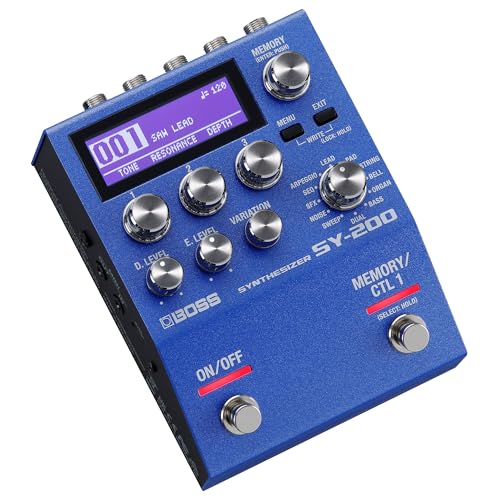
The SY-200 accelerates the concept of a guitar/bass synth into a compact 200-series format with expanded sound shaping and 128 memories. It’s best for players who want a broader sonic palette and robust memory for live sets. Two onboard footswitches enable real-time control, with optional external switches, an expression pedal, and MIDI for deeper integration.
Who it’s for: players needing a larger tone library and real-time performance features. Why selected: its balance of size, memory, and MIDI connectivity supports complex live rigs or studio work. Caution: the expanded feature set can require a learning curve for those new to Boss synth workflows.
FLAMMA FC05 Mini Modulation Pedal
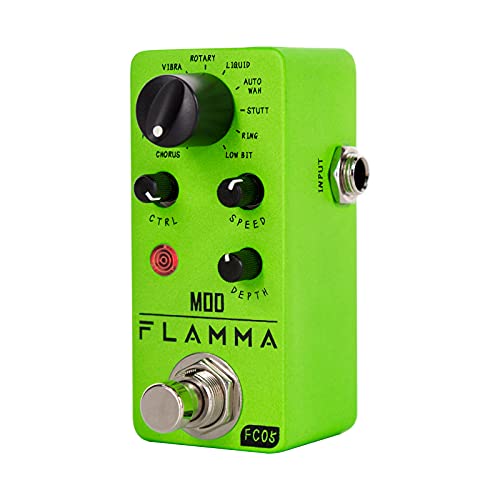
The FLAMMA FC05 combines 11 classic modulation effects—Chorus, Flanger, Tremolo, Phaser, and more—in a compact chassis. It’s best for players who want a versatile mod section without adding bulk to their board. The metal shell adds durability, and its small footprint makes it ideal for travel or tight pedalboards.
Who it’s for: players who value a broad modulation palette on a budget. Why selected: it provides many classic sounds in a tiny package, making it a practical choice for experimenting with synth-like textures alongside other pedals. Caution: it’s modulation-focused and does not provide deep synth voice controls alone.
Electro-Harmonix Mono Synth Guitar Synthesizer Pedal

The Mono Synth from Electro-Harmonix is designed for quick, intuitive access to eleven preset synth voices. It includes an EXP pedal input for live expressive control and lets users create, save, and recall presets. This is best for beginners or players who want reliable, easy-to-tune synth textures without complex routing.
Who it’s for: players seeking fast setup and repeatable tones in live or studio contexts. Why selected: its straightforward preset approach reduces learning time while still enabling expressive control. Caution: preconfigured presets may feel limiting for players who crave deeper customization beyond the eleven voices.
Klowra Verdict Polyphonic Octave Pedal (Note: Synth Focus)

The Klowra Verdict offers four-voice polyphonic tracking with octave shifts and organ, synth, and cello emulation. It also includes a dry-through option for preserving input tone, plus an Infinite Freeze Sustain and Ramp features for live pads and transitions. It’s best for solo performers who want a rich, evolving bed tone without a large rig.
Who it’s for: solo performers and performers needing a robust onboard texture. Why selected: versatile tracking and a broad effect set help fill sonic space in small formats. Caution: this option may be more feature-dense than some players need for simple synth lines.
Electro-Harmonix SYNTH9 Synthesizer Machine Pedal

The SYNTH9 provides nine presets designed to emulate classic synth sounds, usable on guitar or bass without extra pickups or MIDI. The usable tracking range extends from open strings to around the 23rd fret on high strings, making it a practical choice for players seeking familiar synth textures with minimal setup time.
Who it’s for: players who want a straightforward, preset-driven synth flavor with easy integration. Why selected: the preset palette covers a broad spectrum of classic tones, enabling quick tonal changes during performances. Caution: the preset-driven approach may limit deep customization for players who want bespoke sculpting of each voice.
Buying Guide
What should you consider when choosing a guitar synth pedal?
- Tracking and polyphony: Look for pedals that reliably track chords and complex voicings across multiple strings to avoid dropouts.
- Voices and sound design: Decide if you want a pedal with many preset voices or deeper editing capabilities for custom sounds.
- Memory and MIDI: For live performances, consider how many presets you’ll need and whether you want MIDI control or expression pedal compatibility.
- Ease of use: If you perform live, prioritize intuitive controls and quick-access footswitches over extensive menu navigation.
- Input/output and effects loop: Send/Return or external effects compatibility helps integrate synth tones with your existing signal chain.
- Footprint and durability: A compact, durable unit reduces pedalboard clutter and withstands gigging conditions.
Frequently Asked Questions
- What is a guitar synth pedal best used for?
It adds scalable synth tones, pads, and lead textures to guitar parts, expanding sonic options for riffs and ambient sections.
- Do guitar synth pedals require special pickups?
No. Most modern pedals work with standard guitar inputs and do not require MIDI-equipped instruments.
- Can I use a guitar synth pedal in the studio?
Yes. These pedals are suitable for recording and can be integrated with DI tracks or amp sims.
- Is it better to buy a multi-voice synth or a single-voice pedal?
Multi-voice pedals are advantageous for rich chords and evolving textures, while single-voice units can be simpler and faster to learn.
- Will a synth pedal affect my guitar’s clean tone?
Most pedals preserve your input tone when bypassed, but some models may alter the signal during processing.
- Should I prioritize presets or customization?
Your preference matters. Preset-focused pedals are quick for live use, while customizable models suit players who want tailored tones.