Best Trail Camera Booster Antennas for Stronger Signals
In wildlife monitoring, a reliable cellular trail camera depends on a stable cellular signal. Booster antennas can significantly improve image transmission in weak areas. This guide highlights five top trail camera booster antennas, detailing compatibility, performance, and installation notes to help you pick the right option for your setup.
Summary of chosen products
| Product | Brand | Key Benefit | Frequency Range |
|---|---|---|---|
| 10dBi Outdoor 4G LTE Antenna | eifagur | Strong long-range signal for multiple camera brands | 698-2700 MHz |
| SPYPOINT CA-01 Long-Range Antenna | SPYPOINT | Omnidirectional boost with easy mounting | Broad 698-2700 MHz range |
| Reveal Extended Range Booster Antenna | TACTACAM | Extended reach for low-coverage areas | Varies by model |
| RP-SMA Male Antenna Booster (2-Pack) | eifagur | Versatile upgrade for multiple cameras | 698-2700 MHz |
| 4G LTE Cellular SMA Antenna | eifagur | All-in-one replacement for common 4G cameras | 698-2700 MHz |
10dBi Outdoor 4G LTE Long Range Antenna

The 10dBi Outdoor 4G LTE Long Range Cellular Trail Camera Antenna from eifagur is designed to boost signal reception for multiple camera ecosystems, including SPYPOINT Flex-M, Link Micro, and Tactacam Reveal X generations. With a 10 dBi gain and omni-directional radiation, it improves signal strength in weak zones without requiring precise orientation. The antenna is IP67-rated for weather resistance and ships with a 20-foot low-loss RG58 cable, allowing flexible mounting away from the camera. A 40 cm (approximately 15.8 inches) mast length helps clear obstructions in many tree-canopy environments.
Compatibility spans a broad mix of devices—from SPYPOINT FLEX-M and Link models to TACTACAM Reveal X Pro and Gen 2.0/3.0 variations—making it a practical all-in-one booster for mixed-camera setups. The included adapters (RP-SMA Female to SMA Male) expand compatibility with common antenna ports. While installation is straightforward, optimal results come from mounting the antenna in a location with clearer line-of-sight to cell towers when possible. Maintenance is minimal, and the IP67 rating helps shield electronics from rain and dust.
Overall, this antenna targets users needing a robust boost without complex mounting hardware. It balances high gain with weather sealing and flexible cabling, helping cameras transmit images more reliably in rural or wooded terrain. Users should verify compatibility with their specific SPYPOINT or TACTACAM model before purchase, but the broad compatibility makes this a versatile choice for multi-camera systems.
SPYPOINT CA-01 Long-Range Antenna

The SPYPOINT CA-01 is a dedicated long-range cellular antenna designed to boost SPYPOINT trail cameras in areas with less-than-ideal signal. It is omnidirectional, meaning it does not require precise alignment toward a cell tower to work effectively; as long as obstructions are minimized, it can enhance reception. The CA-01 comes with a 15-foot cable and a mounting bracket, enabling quick and clean installation in elevated or sheltered locations. This combination is well-suited for permanent setups where cameras are placed in tree canopies or elevated perches.
Key advantages include straightforward installation and a design focused on SPYPOINT ecosystems, ensuring compatibility with Flex-M, Link, S-LINK, EVO, and other SPYPOINT models. The antenna’s omnidirectional profile reduces the need for constant repositioning, which is helpful for cameras that already experience daily movement or seasonal changes in their surroundings. The bracket supports mounting on poles or structures, and the length of the cable provides ample reach for flexible placement.
Potential considerations involve ensuring the cable length matches the intended mounting point to prevent excessive signal loss. While the CA-01 performs well in a variety of environments, actual gains depend on local network conditions and tower proximity. For users prioritizing SPYPOINT-brand optimization, this option remains a top pick for reliable, simple-to-deploy signal boosting.
RP-SMA Male Antenna Booster (2-Pack)
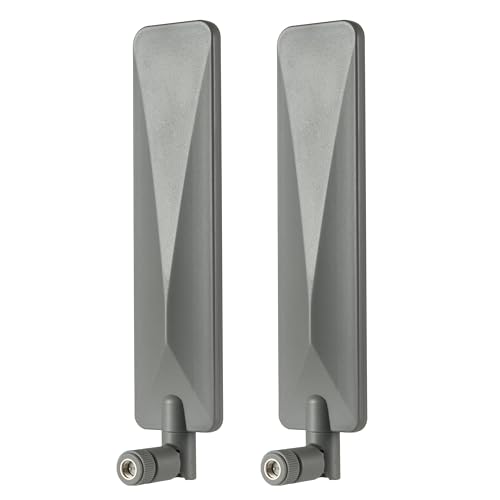
The 2-pack RP-SMA Male Antenna Booster from eifagur is designed as a flexible upgrade path for multiple camera brands, including Spypoint LM2, Flex-M, Flex-S, Flex-Dark, and various TACTACAM and Moultrie models. With a frequency range of 698-2700 MHz and a 9 dBi gain, the omni-directional design offers dependable signal improvement without the need for precise aiming. The IP67 waterproof rating ensures resilience in adverse weather. The kit typically includes one or more RP-SMA to SMA adapters to facilitate broad compatibility.
These boosters are especially useful if you already own several cameras and want a uniform upgrade across devices. The 9 dBi gain provides a balanced enhancement without compromising battery life too aggressively in moderate use. A VSWR under 1.8 and 50-ohm impedance help maintain signal integrity. For users with mixed camera ecosystems, this option presents a practical, cost-effective choice to standardize antenna performance.
In practice, installers should test signal changes after installation and ensure cables are routed to avoid physical damage or interference. This product is a solid complement to an existing trail camera setup, offering straightforward installation and compatibility with diverse devices.
4G LTE Cellular SMA Antenna

The 4G LTE Cellular SMA Male Waterproof Antenna from eifagur offers a compact upgrade path for a range of 4G LTE trail cameras and routers. With a frequency range spanning 698-960, 1710-2170, and 2300-2700 MHz, this antenna covers the major cellular bands used by U.S. networks. Its 5 dBi gain and omni-directional radiation pattern provide a balanced signal boost suitable for many rural and semi-urban environments. Included are mounting accessories and a 3-meter RG58 cable, plus an RP-SMA to SMA adapter for broader compatibility.
This antenna is well-positioned for users who want a simple, plug-and-play upgrade without committing to a high-gain, directional option. IP67-rated waterproofing adds durability for field use, while the 3-meter cable length offers flexibility in mounting location. It is compatible with a range of SPYPOINT, TACTACAM, Muddy, and Moultrie devices, making it a versatile choice for multi-camera setups.
Buying Guide: Key Purchase Considerations
When choosing a booster antenna for trail cameras, consider the following factors to ensure you get the best performance for your needs.
- Compatibility: Verify that the antenna supports your specific camera models or brands. Some boosters are optimized for SPYPOINT or TACTACAM systems, while others offer broader compatibility with multiple brands.
- Gain (dBi): Higher gain can improve signal in weak areas but may narrow the effective range if misused. For most wildlife setups, 5–10 dBi offers a good balance between coverage and practicality.
- Directionality: Omni-directional antennas work well in varied terrain and do not require precise aiming. Directional or extended-range designs can yield stronger signals in specific directions but may need more precise placement.
- Frequency Range: Ensure the antenna covers the cellular bands used by your carrier (typically 698–2700 MHz for 4G LTE in the US).
- Durability: Weatherproofing (IP ratings) and rugged construction matter for field use. IP67 is common and indicates good protection against dust and water.
- Cable and adapters: Lengths around 10–20 feet accommodate flexible mounting. Check included adapters (RP-SMA, SMA) to confirm compatibility with your camera ports.
- Installation: Look for kits with mounting brackets and simple, tool-free installation where possible. Omnidirectional antennas simplify setup in changing environments.
- Power and battery life: Most boosters do not draw power from the camera; rather, they are passive antenna upgrades. Consider battery life implications if your camera’s transmission is battery-dependent and uses high data rates.
- Environmental fit: In wooded or hilly terrain, elevated mounting or a mast can improve line-of-sight to towers, enhancing gains from the antenna.
- Multi-camera scenarios: If you manage several cameras, consider a single model with broad compatibility or a 2-pack solution to standardize upgrades across devices.
In summary, the right booster antenna should match your camera ecosystem, provide a balance of gain and practicality, and withstand field conditions. For mixed-brand setups, a versatile, omnidirectional option with broad frequency coverage and sufficient cable length is typically the most effective approach. Always test performance after installation and adjust placement for optimal reception.