Best TTY Phones for Hearing Impaired: Clear, Loud, and Easy-to-Use Options
Finding a phone that accommodates hearing loss means prioritizing amplified sound, large buttons, visual alerts, and hearing aid compatibility. This guide highlights five top options that aim to help seniors and people with hearing impairments stay connected. Each entry notes who it’s best for and why it stands out, plus a practical caution. Read on to compare features side-by-side and identify the model that best fits daily needs, dexterity, and preferred calling experience.
| Product | Best For | Key Benefit |
|---|---|---|
| Swissvoice 3355 | Elderly users needing photo speed-dial | Large photo memory buttons with up to 90 dB ringer |
| Clarity XLC8 | Hard of hearing who want Bluetooth pairing | Up to 50 dB amplification and talking caller ID |
| Clarity XLC3.4+ | Users needing strong amplification on the go | 50 dB amplification and talking caller ID |
| Generturbo Cell Phone Ringer | Busy households with distance or noise challenges | 116 dB ringer with visual alerts |
| Clarity P300 | Simple corded option with adjustable sound | Adjustable ringer and volume for clarity |
| ZAMQIU Large Button Phone | Elderly with visual impairments | SOS one-touch dialing and adjustable volume |
Swissvoice 3355 DECT 6.0 Big Button Phone

The Swissvoice 3355 is designed for elderly users who benefit from large, clearly labeled buttons and photo memory dialing. It includes an SOS photo button and an additional cordless handset, plus a loud ring up to 90 dB. The phone is hearing aid compatible for clearer reception. This model suits buyers seeking a straightforward, tactile experience with memory-assisted dialing. A practical caution: the device relies on a traditional landline setup and may be less adaptable to modern VoIP configurations.
Clarity XLC8 Amplified Cordless Phone

Best for: users who want strong amplification and the option to pair with a cell phone for home-only use. The XLC8 delivers up to 50 dB amplification, adjustable tone, and a talking caller ID with a talking keypad. Bluetooth pairing adds flexibility for cell calls. Caution: Bluetooth pairing may require setup and can be less effective if the cell signal is weak in certain rooms.
Clarity XLC3.4+ Amplified Cordless

Best for: users needing reliable amplification in a portable handset. The XLC3.4+ provides up to 50 dB of amplification, four tone settings, and talking caller ID with a talking keypad. It’s a strong choice for those who value adjustable sound along with clear caller information. Caution: It is a cordless model, so ensure stable cordless coverage in living spaces with multiple floors.
Generturbo Cell Phone Ringer Amplifier

Best for: homes where the phone is often out of direct reach or in a bag. This external ringer plugs in and provides up to 116 dB alert with visual flash, helping users notice calls even from distant rooms. It’s especially helpful for hearing-impaired users who need a strong, multimodal alert. Caution: This device is an extra accessory and not a standalone phone; ensure compatibility with the user’s primary device.
Clarity P300 Landline Phone

The P300 focuses on simple usage with adjustable ringer pitch and volume. It amplifies incoming sounds up to 26 dB, catering to those with mild to moderate hearing loss. It’s a practical pick for users who prefer a corded, straightforward design with dependable amplification and easy operation. Caution: Amplification level is lower than some other models, which may be less suitable for severe hearing loss.
ZAMQIU Large Button Phone
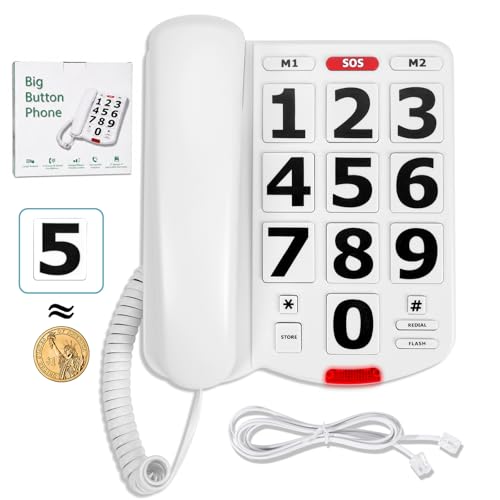
Best for: seniors needing large, easy-to-read buttons and SOS access. This model features three one-touch speed dial keys and adjustable volume for ringer and earpiece. It also signals incoming calls with a visual indicator. Caution: Note that it does not support hands-free operation, and hearing aids may not be compatible in all scenarios.
Buying Guide
What to consider when choosing a TTY/hard-of-hearing phone:
- Amplification: Look for models offering 30 dB to 50 dB or more, depending on hearing loss severity.
- Alerts: Consider ringer volume, visual alerts, and SOS features for missed calls or emergencies.
- Dialing aids: Large buttons, photo dialing, and speed dial simplify use for dexterity challenges.
- Phone type: Corded vs cordless; consider mobility needs, stairs, and floor plan.
- Connectivity: Evaluate landline, VoIP, Bluetooth, and integration with cell phones for versatility.
- Compatibility: Check hearing aid compatibility and any interference with current devices.
Practical setup tips: place the phone within easy reach, test amplification with typical talking volumes, and configure visual alerts in a frequently visible area. For homes with multiple users, prefer models with memory dialing or photo-based contacts to reduce confusion during urgent moments.
Frequently Asked Questions
- What is the best phone for severe hearing loss?
Look for models offering 40 dB–50 dB amplification and clear, loud telephony; consider cordless options with strong base amplification and optional Bluetooth pairing for cell calls. - Are amplified phones compatible with hearing aids?
Many amplified phones are designed to be hearing aid compatible, but verify the specific model’s compatibility notes to avoid interference. - Do these phones support visual alerts?
Several models include visual ringer alerts (flashing lights) in addition to loud audible alerts, aiding those with hearing impairment. - Is cordless or corded better for seniors?
Corded phones offer simplicity and reliability, while cordless options provide mobility; choose based on living space and dexterity needs. - Can I use these phones with VoIP services?
Some amplified cordless models support VoIP via adapters or built-in compatibility; check product specifics for any limitations. - What about SOS or emergency dialing features?
Look for dedicated SOS buttons or one-touch speed dials to quickly contact trusted contacts in emergencies.