Best UV Light for Rocks: Top 5 Picks for Rockhounding and Mineral Enthusiasts
If you’re hunting for hidden fluorescence in rocks, minerals, or resin projects, a quality 365nm UV light makes the search faster and more reliable. This guide compares five compact, rechargeable UV flashlights that excel at rocks, uranium glass, resin curing, and pet urine detection—depending on your main use. Each choice targets different needs, from long-range detection to portability. The selected models help rockhounding beginners, resin crafters, and outdoor explorers find the right balance of power, beam spread, and durability.
Summary table of selected products (quick reference):
- Product 1: 365nm UV Light Flashlight with LCD — best for accurate identification and long-lasting battery life.
- Product 2: DARKBEAM 365nm & 395nm — best for dual-wavelength detection and resin work.
- Product 3: COSOOS 2 Pack 395nm — best value pack for portable use and pet urine detection.
- Product 4: UV Flashlight 365nm 3xLED — best for wider beam and resin curing on the go.
- Product 5: Goreit 365nm 30W — best for high-powered, far-reaching detection and professional use.
365nm UV Light Flashlight with LCD Display
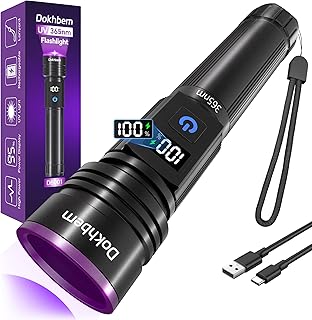
This rechargeable UV flashlight uses 365nm UV light and an upgraded lamp setup for reliable rockhounding and pet urine detection. It includes an LCD display showing battery life, aiding long field sessions. Best for buyers who want precise control and real-time power readouts for extended rock checks and resin work.
Who it’s best for: rockhounding enthusiasts who value accurate identification and a visible battery indicator. Why selected: strong LED performance and a clear LCD readout support precise work in dim environments. Caution: avoid direct eye exposure and monitor heat during continuous use.
DARKBEAM UV Flashlight 365nm & 395nm
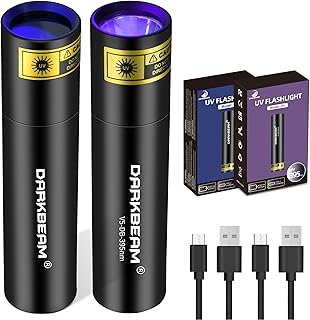
This two-pack uses upgraded 365nm and 395nm LEDs with 10W power per unit and 1300mW radiant intensity, offering both 365nm (hidden fluorescence) and 395nm (more intense glow). Better for rocks and antique evaluation where dual wavelengths improve detection. Limitation: 1-hour runtime per charge means shorter field sessions without breaks.
Who it’s best for: hobbyists needing dual-wavelength coverage for complex fluorescence. Why selected: hard filter and dual wavelengths improve detection of subtle marks and resins. Caution: avoid direct viewing of UV light for safety.
COSOOS 2 Pack UV Flashlight 395nm

This 2-pack includes compact, portable 395nm blacklights ideal for field use and quick tests of pet urine, stones, resin, and scorpions. It’s IPX4 waterproof for outdoor use and pocket-friendly for on-the-go readers. Best for value-conscious buyers who need two units and easy transport.
Who it’s best for: budget-focused rockhounds and pet-detector tasks with portable tools. Why selected: two-pack convenience and water resistance. Caution: batteries are not included, so plan for power needs in the field.
UV Flashlight 365nm 3xLED, 20W Range

This handheld flashlight combines 20W power with a three-LED array to deliver a wide beam suitable for resin curing and broad detection. It uses a hard filter to improve UV purity and reduce visible light interference. Best for resin crafters and rockhounds who want a stronger beam for larger surface areas.
Who it’s best for: users needing wider coverage and reliable UV fluorescence in dim outdoor environments. Why selected: higher wattage and 3-LED design improve curing and detection. Caution: built-in battery is non-removable, limiting field maintenance options.
Goreit 365nm Black Light with Filter and LCD

This professional-grade 30W 365nm flashlight uses a four-core UV LED array and a multi-layer filter to maximize UV purity. It reaches up to 30 feet of beam distance, useful for distant detection in outdoor rockhounding. Best for serious hobbyists or professionals needing longer-range detection and reliable fluorescence.
Who it’s best for: experienced rockhounds and investigators who require longer reach and stronger fluorescence. Why selected: high power and extended beam distance improve early threat or marker detection. Caution: 365nm light is intense; avoid prolonged direct exposure to eyes.
Buying Guide: How To Choose The Right UV Light For Rocks
- Wavelength and purpose: 365nm is common for rocks, resins, and currency security; 395nm provides stronger glow but can spread more visible light. For rocks, 365nm with a good filter typically yields cleaner fluorescence.
- Power and beam spread: Higher wattage and multiple LEDs improve resin curing and larger surface coverage. If you need distance, prioritize higher beam distance and a robust filter.
- Battery and charging: Rechargeable units with LCD readouts reduce guesswork on power. USB-C charging is convenient for field use; check runtime per charge.
- Durability and water resistance: IP ratings and rugged housings help when used outdoors in rain or dusty rocks. A portable, lightweight design suits fieldwork best.
- Portability and kit contents: Packs with multiple units offer redundancy and portability. Consider whether you want a single-tool solution or a set for different tasks.
- Safety and handling: Avoid direct eye exposure, and use filtering to limit visible light interference. Use protective gear when working with resins or powders.
Frequently Asked Questions
- What wavelength is best for rockhounding? 365nm is widely used for rock fluorescence, offering clear contrast with many mineral varieties when paired with a good UV filter.
- Do I need a waterproof UV flashlight for field work? If you work outside or in wet conditions, an IPX4 rating or higher helps protect the device from splashes.
- Is a higher wattage flashlight always better? Not always. Higher wattage increases brightness and beam distance, but battery life and heat must be managed in field use.
- Can UV flashlights cure resin? Some high-power UV flashlights accelerate resin curing, especially with compatible resins and filters. Verify compatibility with your material.
- What safety precautions are needed? Do not look directly into UV light and use proper eye protection; use filtering and limit exposure to skin when possible.
- Should I buy a 2-pack or single unit? A 2-pack is convenient for portability and shared tasks—great for partners or backup units in the field.