Best Wireless Microphones for Classroom Teaching
Answering the need for clear, crowd-pleasing classroom audio, these wireless microphone systems are designed for teachers, presenters, and tour guides. The top picks here emphasize easy setup, long battery life, and hands-free operation to keep students engaged. This guide highlights five strong options and explains who each is best for, plus practical considerations to help you choose. The short buying table below gives quick comparisons to start with.
| Product | Best For | Why It Stands Out |
|---|---|---|
| Norwii Bluetooth Voice Amplifier | Small to mid-sized classrooms | 10-watt output, lightweight, wired headset option for hands-free teaching |
| SHIDU 35W Voice Amplifier | Large rooms or multi-speaker needs | High power, wide coverage, stable 40 m wireless range |
| W WINBRIDGE WB005N | Teachers on the move | Ultra-light clip mic, long battery life, auto-pairing |
| ZERFUN S67 | Elegant, compact setups | Ultra-light 11g mic, 2.4G wireless with DSP noise reduction |
| COHYAN Teacher Voice Amplifier | Multi-speaker presentations | Dual mics, charging case, 20 m range |
Norwii Bluetooth Voice Amplifier With Wired Microphone
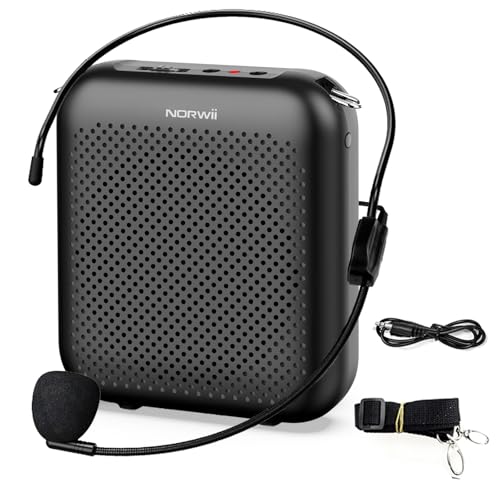
The Norwii system is a compact 10-watt voice amplifier paired with a wired headset microphone. It is best for teachers who want strong amplification in small to medium classrooms without wearing a heavy headset. The design prioritizes clear speech with a booster circuit that supports readable sound at a distance. A key limitation is feedback avoidance: maintain about 20 cm distance between mic and amplifier to minimize feedback.
Who it’s best for
- Teachers teaching in small to mid-sized rooms
- Instructors who prefer hands-free, wired microphone options
- Educators seeking a lightweight, portable tool for field trips or outdoor use
Gicorino Voice Amplifier With Dual Magnetic Wireless Lavalier Mics
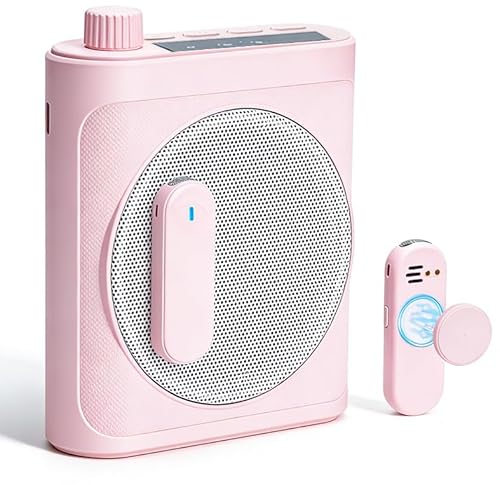
Gicorino’s upgraded wireless voice amplifier ships with two magnetic lavalier microphones and features a 270° omnidirectional mic and DSP noise reduction. It supports Bluetooth 5.3 and USB playback, offering flexible modes for teaching, meetings, or outdoor activities. The system is well-suited for presenters who want hands-free mic options and a clear, natural sound with reduced feedback.
Who it’s best for
- Educators who value hands-free mic use without bulky headsets
- Presenters requiring reliable wireless range up to roughly 30 meters
- Teachers needing both Bluetooth playback and wired options
Limitation: the dual-mic setup may require careful mic management in noisier rooms to avoid feedback.
SHIDU 35W Power Voice Amplifier With Bluetooth Lavalier

SHIDU’s 35W amplifier delivers strong coverage suitable for larger classrooms or events. It pairs with a 2.4G lavalier microphone for stable connections and fewer dropouts. The product emphasizes broad room reach and relatively simple operation, making it a practical pick when coverage is a priority. A potential trade-off is the higher weight and size compared to ultra-compact models.
Who it’s best for
- Educators in large classrooms or multi-room settings
- Presenters who need a stable wireless connection and clear sound penetration
W WINBRIDGE Wireless Voice Amplifier With Clip Mic

The WINBRIDGE WB005N emphasizes lightweight design and long battery life. A clip-on microphone makes it convenient for teachers to move around the classroom or move to different stations without tethered devices. The system claims 12–15 hours of use with a 2600 mAh speaker battery, plus easy auto-pairing. A caveat is that real-world range and battery life can vary with usage and environmental factors.
ZERFUN S67 Wireless Voice Amplifier For Teachers

ZERFUN S67 emphasizes a compact, lightweight design combined with a true 2.4G wireless system and an 18W speaker. Its DSP intelligent anti-howling technology helps maintain clean audio in busy spaces. Good for educators who want a minimal setup with powerful sound. Limitation: the compact design may limit mic options for multi-speaker sessions.
COHYAN Teacher Voice Amplifier With Dual Mics

COHYAN offers a dual-mic system with an all-in-one charging case, designed for teachers who present with more than one speaker. The system supports a 20 m range and has a 10W amplifier capable of covering typical classrooms efficiently. Best for multi-speaker lessons, tours, or group activities. A potential limitation is the reliance on the charging case for power management, which may require careful charging routines.
Buying Guide
What should you consider when choosing a wireless microphone system for teaching?
- Room size and audience. Higher wattage or additional mics help in larger spaces or with multiple speakers.
- Microphone type. Clip/lavalier mics offer freedom of movement; headset mics reduce handling noise but can feel bulky.
- Range and stability. Look for 20–30 meters (65–100 feet) of reliable wireless transmission to cover classrooms and outdoor areas.
- Battery life and charging. Long-lasting batteries and convenient charging (especially charging cases) reduce downtime between sessions.
- Ease of use. Auto-pairing, simple controls, and clear indicators minimize setup time between classes.
- Feedback and noise suppression. DSP features help reduce howling and background noise in active environments.
- Portability and weight. Lighter systems reduce fatigue for teachers who move around a lot.
- Media options. Bluetooth playback or USB input can support background music or announcements without additional devices.
FAQ
- What is the typical range I should expect from classroom wireless mics?
Answer: Most classroom systems offer 20–30 meters (65–100 feet) of stable wireless range, suitable for single classrooms and nearby outdoor spaces. - Do I need a headset, or can a lavalier microphone work best?
Answer: Lavaliers provide hands-free mobility; headset mics are often preferred for high-output environments but can be heavier to wear. - Can these systems connect to a computer or projector?
Answer: Many models support Bluetooth or USB playback, and some have line-out options to couple with projectors or PA systems. - How long will the battery last in typical classroom use?
Answer: Battery life ranges from 8 to 15 hours per charge for most units; charging cases can extend daily use by powering both units simultaneously. - Is DSP noise reduction essential?
Answer: Yes, DSP reduces background noise and feedback, helping ensure clear speech in busy classrooms. - What should I choose if I have multiple speakers or tour groups?
Answer: Look for dual-mic systems with a reliable wireless range and a charging solution to manage multiple mics efficiently.