Best Wireless XLR for Speakers: Top 5 for Live Sound
If you need cable-free mic and line-level audio for live events, these wireless XLR systems are designed to keep performers moving. They suit different environments—from small clubs to larger venues—by balancing range, interference handling, and ease of use. The top picks here are best for vocalists, presenters, and sound technicians who want reliable, straightforward setup without sacrificing audio quality. Expect clear, dynamic sound with minimal latency where noted. For each option, note who it’s best for and any limitations you should test before a big show. A quick buying table follows the intro to compare key specs at a glance.
| Product | Best For | Range | |
|---|---|---|---|
| JOYO MW-2 | Dynamic mic users, live gigs | 100 ft | Noise with some condenser mics; test beforehand |
| ALTO Stealth 1 Mono | Powered speakers, live mixing | 100+ ft | UHF channels can require careful tuning |
| Donner CV-2 | Dynamic mics, PA setups | 100 ft | Latency under 5 ms; verify compatibility with gear |
| Bose XLR Wireless Transmitter | Line-level sources to S1 Pro+ systems | Up to 30 ft | Best for Bose ecosystem; may limit non-Bose gear |
| Ulumac Aroma | Multiple devices, live shows with interference | 65-130 ft | Not for phantom-powered mics |
JOYO MW-2 2.4GHz Wireless XLR System

The MW-2 turns any wired dynamic mic into a wireless setup with a plug-in transmitter and a receiver for mixer or PA. It offers up to 100 feet of range with auto-frequency hopping to minimize dropouts in open spaces. It supports up to four simultaneous MW-2 systems, making it suitable for small bands or multi-mic events. The system records at 24-bit/48kHz for clear vocal detail and features a rechargeable battery delivering 6-8 hours of use. Best for performers using dynamic mics, with testing advised for condenser mics due to potential noise from interference.
Who this is best for: vocalists, presenters, or host teams using dynamic mics who need reliable wireless performance in open venues. Choose this if you require multi-system compatibility and a straightforward setup. Caution: If you rely on condenser mics, test compatibility first, as noise may occur with certain mic models.
ALTO Stealth 1 Mono UHF XLR System

ALTO’s Stealth 1 Mono offers instant UHF wireless connectivity with an XLR transmitter and receiver that feature 16 selectable channels to help dodge interference. With a reliable 100+ feet range, it’s designed to eliminate long cable runs for live events. This system is suitable for powered speakers, mixers, and dynamic mics, making it a robust choice for touring setups and fixed installations where speed and reliability are essential.
Who this is best for: technicians and performers needing cable-free setup with straightforward channel selection and strong range. Better for: environments with potential RF interference where multiple wireless devices operate. Caution: ensure channel availability and monitor potential UHF channel overlap in crowded venues.
Aokeo AK-M1 XLR Bluetooth Receiver (2 Pack)
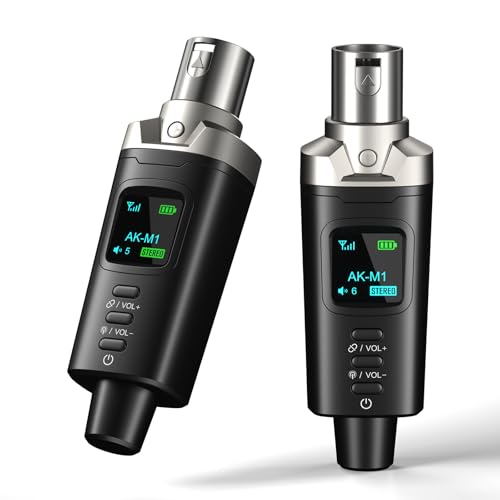
The AK-M1 Bluetooth receiver converts Bluetooth audio to an XLR output for PA systems, enabling wireless playback from iOS devices or laptops to active speakers or mixers. It supports mono output in a single unit or dual mono/stereo with the P3D pair. It uses a 16-bit/48kHz DAC for sound quality and is designed for simple, cable-free music playback rather than high-channel live sound. It’s a versatile option for quick setups and small venue playback needs.
Who this is best for: DJs, mobile presenters, and small venues needing wireless music playback from consumer devices. Choose this if you prioritize easy Bluetooth integration over ultra-low latency. Caution: Bluetooth compression may affect fidelity for critical live sound applications.
TAVOSOP 2.4GHz Wireless XLR Transmitter and Receiver

Built-in rechargeable lithium battery and a compact plug-and-play design make the TAVOSOP system easy to deploy for dynamic microphones, audio mixers, and guitars. It uses 2.4G wireless transmission for low latency and a typical range around 30 meters, suitable for small to mid-sized venues. It’s not limited to XLR mics and can also receive guitar audio, expanding its use beyond traditional vocal applications.
Who this is best for: small bands and solo performers who need a simple, compact wireless option with battery-powered operation. Better for: setups requiring quick deployment and minimal wiring. Caution: verify that 2.4G systems won’t pick up interference in very crowded RF environments.
Buying Guide
Key questions to ask when choosing a wireless XLR system for speakers:
- What type of mic will you use (dynamic vs condenser) and will the system support it without noise?
- What is the required range and venue size? Do you need multi-transmitter support?
- Is latency critical for your application, such as live performance with timing-sensitive content?
- Do you require battery-powered operation or will mains power be available?
- How important is ease of setup and channel management in your workflow?
- What other gear will be used (powered speakers, mixers, cameras) and is compatibility guaranteed with your existing equipment?
Interference and Channel Management
UHF systems often offer more stable performance in RF-dense venues than 2.4GHz options, but they may require manual channel selection. 2.4GHz systems can provide auto-pairing and universal compatibility, yet they’re more susceptible to interference from nearby wireless networks. Consider the venue’s RF environment and whether you’ll manage multiple wireless links simultaneously.
Power and Runtime Considerations
Battery life matters for longer events. Some units advertise 6-8 hours or more, while others rely on external power. If you perform extended sets, a system with longer battery life or the ability to run on external power is advantageous.
Sound Quality and Latency
Look for 24-bit/48kHz or higher sampling rates for clearer sound, especially in live vocal performances. Latency below 5 ms is less noticeable on stage, but even small delays can affect timing in certain configurations. If ultra-low latency is essential, verify the system’s specs and, if possible, review a live demonstration.
Practical Test Checklist
- Test with your actual microphone(s) before booking events.
- Check for noise or hiss with condenser mics and adjust or replace accordingly.
- Confirm compatibility with your mixer or PA and ensure all devices pair correctly.
- Assess the system’s component durability in your typical performance environment.
FAQs
- Q: Do wireless XLR systems work well with multiple mics on stage?
- A: Yes, many units support multiple transmitters, but check the exact channel capacity and pairing process to avoid interference.
- Q: Is 2.4GHz better than UHF for live sound?
- A: UHF can offer more stable performance in crowded RF environments; 2.4GHz often provides easier setup and universal compatibility, especially for quick launches.
- Q: Can I use these systems with condenser microphones?
- A: Some models support condenser mics with proper phantom power; others perform best with dynamic mics. Test before critical events.
- Q: What’s the typical battery life I should expect?
- A: Battery life ranges from about 4–8 hours depending on model and usage; check the manufacturer’s spec for your chosen unit.
- Q: Do I need to pair each transmitter and receiver separately?
- A: Yes. Most systems require pairing with the transmitter powered before the receiver to ensure proper sync.