Best Long Range Cellular Antennas for Trail Cameras to Boost Outdoor Messaging
Answering the question: a long-range cellular antenna can dramatically improve trail camera performance in weak signal areas. This guide highlights five top options, explains who they’re best for, and notes practical considerations like ruggedness and installation. Ideal buyers include wildlife researchers, serious hunters, and property owners who rely on remote camera visibility. The table below compares standout choices to help you decide quickly.
| Product | Best For | Key Benefit | Typical Limitation |
|---|---|---|---|
| Bingfu 4g LTE Long Range Trail Camera Antenna Wall Mount | All-weather outdoor trail cameras | 6 dBi omnidirectional gain; wide frequency coverage | Wall-mount design may limit placement flexibility |
| SPYPOINT Trail Camera Antenna CA-01 | Cameras with inconsistent signal in open terrain | Omnidirectional signal booster with 15 ft cable | External cable length may require secure routing |
| Herd 360 Trail Camera Long Range Booster | Users needing directional high-gain boost | Directional antenna with included coax and adapters | Directionality requires aiming for best results |
| 8dBi RP-SMA Male Long Range Antenna (2-pack) | Multiple cameras with RP-SMA connectors | High 9 dBi to 8 dBi range, RP-SMA compatibility | Must confirm connector type on camera |
| 10dBi Outdoor 4G LTE Long Range Antenna | Extreme weak-signal locations | IP67 waterproof, 20 ft cable, broad frequency range | Higher price and larger size |
Bingfu 4g LTE Long Range Trail Camera Antenna Wall Mount
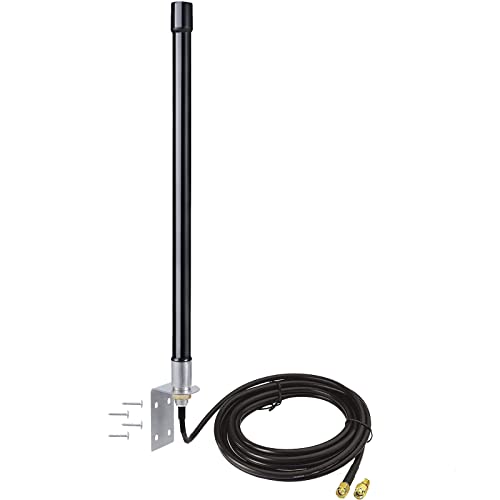
Best for: Outdoor enthusiasts who need a rugged, wall-mounted antenna compatible with multiple 4G trail cameras. This model uses a fiberglass cover for weather resistance and covers broad frequency bands (698-960, 1710-2170, 2300-2700 MHz) with a 6 dBi gain. The omni-directional design helps in environments with variable signal direction, and its compatibility spans Spypoint and other major brands. Caution: wall-mount placement may limit roam during installation; ensure a stable mounting surface.
SPYPOINT Trail Camera Antenna CA-01 Long-Range Booster

Best for: SPYPOINT users seeking to improve signal in marginal coverage areas. The CA-01 booster is omnidirectional and ships with a 15-foot cable and mounting bracket, enabling flexible installation. It’s a straightforward upgrade for those who want better reliability without hunting for the strongest single signal direction. Limitation: performance depends on clearing obstructions; install in an elevated, unobstructed spot when possible.
Herd 360 Trail Camera Long Range Booster

Best for: Hunters and researchers needing directional high-gain enhancement for a specific cell tower. The directional antenna and included 15-foot coax are designed to maximize reach toward the strongest signal. It’s a good pick where the target tower is known. Caution: requires alignment toward the cell tower; misalignment reduces gains.
8dBi RP-SMA Male Long Range Antenna (Pack of 2)

Best for: Users with multiple RP-SMA-equipped cameras who want a cost-effective upgrade. The 8 dBi omni-directional design provides solid gains across a range of 698-2700 MHz. It’s suitable for common Spypoint and Tactacam models. Limitation: ensure exact connector compatibility; not all cameras use RP-SMA on every model.
10dBi Outdoor 4G LTE Long Range Antenna

Best for: Users facing consistently weak signals who need a high-gain, weatherproof option. The 10 dBi omnidirectional antenna covers a wide frequency range (698-2700 MHz), includes IP67 waterproofing, and ships with a long 20-foot cable. It’s a robust choice for remote properties. Caution: larger size and higher amplification can attract more wind loading; ensure secure mounting and appropriate clearance.
Buying Guide
What should I consider when choosing a long-range cellular antenna?
Frequency compatibility matters: ensure the antenna covers the bands used by your carrier and camera. Gain indicates potential signal improvement; higher gain helps in weak areas but can be more directional if not omnidirectional. Connector compatibility is essential: many trail cameras use RP-SMA or other connectors; verify your camera’s port before purchasing.
How should I install for best results?
Install as high as possible with a clear line of sight to the nearest cell tower. Use elevated mounts and avoid dense foliage or metal obstructions. When possible, position omnidirectional antennas to avoid adjacent obstructions; for directional models, aim toward the strongest tower signal. Cable quality and length affect performance; longer runs can reduce signal strength, so use high-quality low-loss coax.
What are common trade-offs?
Some antennas are bulkier or require external mounting; wall mounts save space but reduce placement flexibility. Directional antennas can offer higher gains but demand precise aiming. Weatherproofing (IP ratings) improves durability but may add to size and cost. Balance build quality, ease-of-install, and site conditions to pick the best fit.
How do I compare options quickly?
- Check gain and frequency range to ensure compatibility with your camera and coverage area.
- Review mounting options (wall, pole, or tripod) and cable length to suit your terrain.
- Consider omnidirectional versus directional design based on how stable the tower direction is at your site.
What about safety and maintenance?
Choose weatherproof models for outdoor use. Inspect connections periodically to prevent water intrusion and ensure that mounting remains secure in wind. Replace worn cables or damaged connectors promptly to maintain signal integrity.
FAQ
- Q: Will a higher gain antenna always improve signal? A: Higher gain can improve signal in weak areas, but it may be less forgiving with nearby obstructions and requires proper alignment for directional models.
- Q: Do these antennas work with all cellular trail cameras? A: Most are designed for common RP-SMA or similar connectors; verify connector type and compatibility with your camera model.
- Q: Is installation permanent? A: Many antennas use mounts or brackets; choose a solution you can relocate if your site conditions change.
- Q: Can these antennas replace a poor mobile data plan? A: They improve signal quality but do not replace data service; ensure your carrier plan supports your camera’s data needs.
- Q: What maintenance is recommended? A: Periodically check mounts, cables, and seals; reseal waterproof joints if necessary and test signal strength after storms or high winds.
- Q: Are there safety considerations for elevated placements? A: Yes; secure all mounts and avoid electrical hazards or locations prone to sudden access issues; follow local safety guidelines when working at height.