Best Microphone Adapter for Speaker and Audio Systems
Looking for a flexible microphone adapter that lets you connect mics or headsets to speakers, amps, keyboards, or audio interfaces? This guide highlights five reliable options and explains who they’re best for, how they work, and important caveats. Whether you’re a musician, a home studio producer, or a casual gamer, you’ll find adapters that fit common 3.5mm, 1/4″, and XLR connections.
Overview of top picks
- QianLink 2 Pack 6.35mm to 3.5mm Adapter – best for turning pro audio jacks into standard headphone jacks.
- MOBOREST 3.5mm to 1/4″ Stereo Adapter – best for converting 3.5mm devices to 1/4″ gear with copper construction.
- Devinal 6.35mm to XLR Female Adapter – best for professional mic-to-pro-audio chain connections.
- MillSO Headset Splitter – best for mic+audio split from a single 3.5mm TRRS to separate mic and headphone paths.
- ANDTOBO 1/4″ to 3.5mm Stereo Copper Adapters – best value for quick 3.5mm/6.35mm conversions in pairs.
| Product | Best For | Key Benefit |
|---|---|---|
| QianLink 2 Pack | General adapters | Gold-plated connectors reduce signal loss |
| MOBOREST 2-Pack | 3.5mm to 1/4″ conversions | Pure copper, durable |
| Devinal XLR to 1/4″ | Pro audio setups | XLR to mono 1/4″ conversion |
| MillSO Splitter | Mic + audio on headsets | TRRS to dual TRS outputs |
| ANDTOBO 2-Pack | Headphone and amp work | Pure copper, long life |
QianLink 6.35mm to 3.5mm Adapter (Grey)

The QianLink adapter converts a 6.35mm (1/4″) stereo jack to a 3.5mm (1/8″) female connection, enabling headphones or devices with 3.5mm plugs to work with pro audio gear. It uses 24K gold-plated connectors for corrosion resistance and low signal loss, and its solid brass copper construction supports durable use. Best for: musicians or home studios needing quick compatibility between keyboards, amps, or mixers and consumer headphones.
Who it’s best for: players with 6.35mm sockets on gear who want to run standard headphones or smaller devices through their pro setups. Limitation: not designed for XLR or multi-pin connections; use with compatible devices only.
Tisino XLR Female to 1/4″ TS Adapter

Note: This option converts XLR female to a mono 1/4″ plug, suitable for simple mic-to-instrument paths in certain setups. Best for: users working with XLR mics who need a quick mono feed into 1/4″ inputs. Limitation: not suitable for stereo or modern TRRS configurations; verify compatibility with your interface.
MOBOREST 3.5mm to 1/4″ Stereo Adapter (Black, 2-Pack)
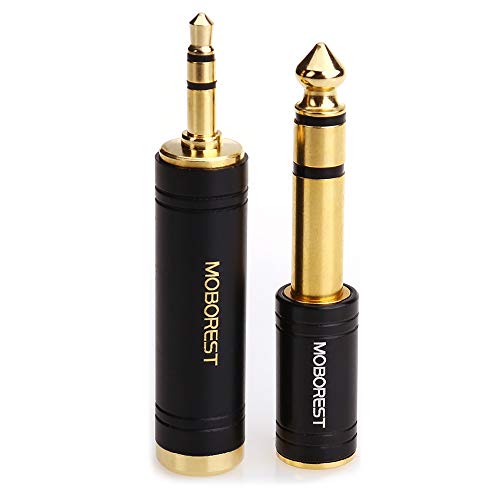
This adapter converts a 3.5mm jack to a 1/4″ stereo plug using pure copper construction for durability and longevity. Best for: connecting consumer headphones or small devices to mixers, amps, or keyboards with a 1/4″ input. Limitation: copper design may still require proper insertion to avoid intermittent contact.
Devinal 6.35mm to XLR Female Adapter

Devinal provides a 6.35mm mono male to XLR female connection, designed for professional audio work. Best for: connecting a guitar amp or keyboard output to a mic input that accepts XLR. Limitation: mono 1/4″ to XLR may not preserve stereo signal; ensure your chain expects mono input.
MillSO Headset Splitter 3.5mm

MillSO splits a single 3.5mm TRRS jack into two TRS outputs, one for mic and one for headphones. Best for: gamers or call-center setups using headsets with separate mic and audio cables. Limitation: does not work with some 3-pole condenser mics or 4-pole TRRS mics; verify microphone type before use.
ANDTOBO 1/4″ to 3.5mm Copper Adapters

ANDTOBO offers a pure copper 3.5mm to 1/4″ stereo adapter in a 2-pack. Best for: quick, cost-effective conversions between headphones and gear with a 6.35mm socket. Limitation: ensure full insertion of 3.5mm port to avoid poor contact; copper is durable but not a guarantee of compatibility with all devices.
Buying Guide
Key considerations when choosing a microphone adapter for speakers and audio gear:
- Connector compatibility: Confirm the exact jacks on both devices (6.35mm, 3.5mm, XLR, TS, TRRS) before buying.
- Signal path type: If you need stereo signal, ensure the adapter preserves stereo; for mono mics, a mono adapter suffices.
- Construction quality: Copper or brass bodies with gold-plated contacts often offer better durability and lower resistance.
- Application scenario: Stage, studio, or home use may dictate different robustness and shielding needs.
- Portability and packaging: If a kit includes multiple adapters, it’s useful for travel or multi-device setups.
- Limitations and exceptions: Some adapters do not support TRRS microphones or may not work with certain gaming headsets; check device requirements.
Frequently Asked Questions
- What is a microphone adapter used for?
It connects mismatched jacks between mics, headphones, amps, keyboards, or speakers to form a usable audio path.
- Can I use a 3.5mm adapter with a professional mixer?
Yes, if the mixer accepts a compatible 3.5mm input or if you use a 3.5mm-to-6.35mm adapter approved for line-level signals.
- Is gold plating necessary?
Gold plating helps resist corrosion and can reduce signal loss over time, but other high-quality metals also perform well.
- Are XLR to 1/4″ adapters suitable for all mics?
No. Some mic types or interfaces require specific impedance and balanced connections; verify compatibility with your gear.
- What’s the difference between TRS and TRRS adapters?
TRS carries stereo audio; TRRS includes a microphone line. Use TRRS when a mic signal must be carried along with audio.
- Do adapters affect sound quality?
Low-quality connectors can add resistance or noise. Choose well-constructed adapters with solid contacts for better results.
Choosing the right microphone adapter depends on your devices and intended use. The options above cover common needs from simple 3.5mm-to-6.35mm conversions to more complex mic-and-headphone split configurations. Use the buying guide questions to match each product to your setup and avoid compatibility issues.