Best TV Antenna Preamplifiers for Clear OTA Channels
Answering the search for stronger, clearer over-the-air signals, this guide highlights top preamplifier options for TV antennas. Each product is suited to different setups—from compact indoor antennas to multi-room installations. Pick the model that matches your signal environment, antenna type, and viewing goals.
| Product | Best For | Key Benefit |
|---|---|---|
| GE Indoor HD Digital TV Antenna Amplifier | Casual indoor use with built-in LTE filtering | Low-noise boost with 4G/5G filter for clearer HD channels |
| Channel Master TV Antenna PreAmp 1-1-Port | Single TV, weak signal areas, longer coax runs | Higher power output and LTE filter for reliable reception |
| Antennas Direct ClearStream Juice Plus | ATSC 3.0 NEXTGEN TV, UHF/VHF/FM reception | Weatherproof preamplifier with tilt for easy coax connections |
| Avenue A LNA-200 Boost XT | Passive antennas needing more gain | TwinAmp technology boosts VHF and UHF separately |
| CSUXYD TV Antenna Amplifier | Flexible installation with adjustable gain | 4G/5G LTE filter and adjustable gain for pixel-free channels |
The following sections break down each option, explaining who should buy it, where it shines, and any important limitations. Use these details to compare how well each model aligns with your antenna type, installation, and location.
GE Indoor Amplifier With LTE Filter
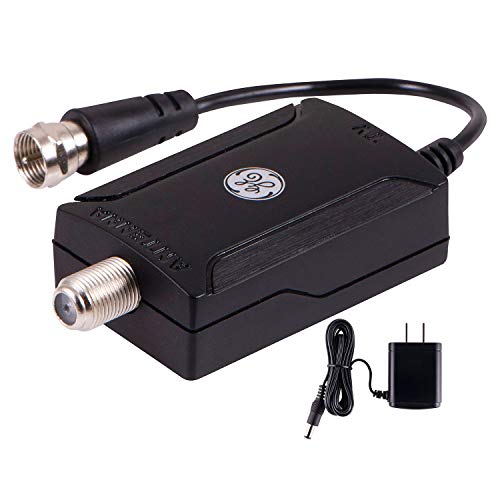
The GE model is a universal, corded amplifier that works with most TV antennas and supports HDMI 1080p/4K UHD signals. It includes PureAmp technology with a built-in 4G/5G LTE filter to reduce wireless interference. Best for: viewers with an indoor antenna who need a quieter signal and clearer HD channels without external interference.
Data notes: It boosts signal strength to compensate for cable loss and minimizes reception dropouts. Limitations: The effectiveness depends on your antenna position and physical obstacles such as buildings or trees, and highly distant towers may still yield fewer channels.
Channel Master Four-Output Preamp 4-Output
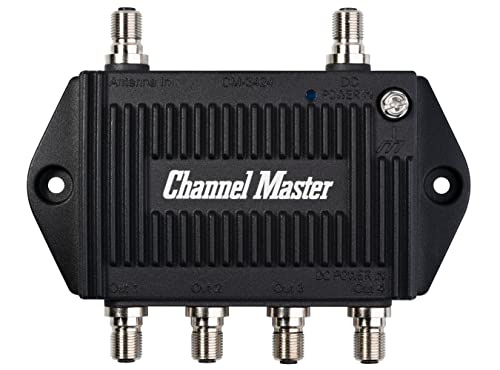
Designed as an enhanced replacement for multi-splitters, this preamp provides four outputs for multiple rooms while boosting the overall signal. Best for: homes with several TVs distributed across rooms where a single antenna serves multiple displays. It works with indoor or outdoor antennas and offers a built-in LTE filter to mitigate interference.
Limitations: It is a distribution amplifier with preamplification benefits; performance depends on antenna reach and cable quality. Not ideal if your setup has heavy multipath or strong local obstructions.
Channel Master 1-Port Preamplifier

This single-port preamp improves signal strength for non-amplified antennas and emphasizes a higher power output relative to basic distribution amps. Best for: users with weak signals in a single-TV setup who want a reliable upgrade without adding multiple outputs. Cautions: It won’t fix problems caused by interference, obstructions, or multipath; attic installations may require outdoor positioning for best results. Also, avoid using with antennas that already include a pre-amplifier.
Antennas Direct JUICE Plus Preamplifier
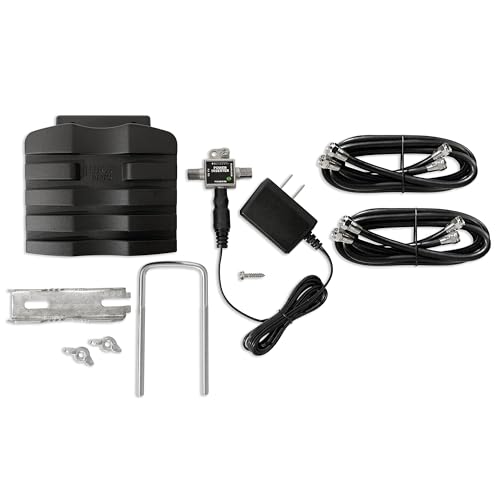
JUICE Plus preamplifier boosts UHF, VHF, and FM bands. It is NEXTGEN TV (ATSC 3.0) ready and designed for weatherproof housing with tilt-in housing for coax connections. Best for: households upgrading to NEXTGEN TV capabilities or needing robust performance in challenging weather or outdoor installations. Limitations: Best results require proper outdoor or attic placement; in some setups, attic installations may still need outdoor mounting for reliable reception.
Avenue A LNA-200 Boost XT

Boost XT combines TwinAmp technology to separately amplify VHF and UHF signals with ultralow noise. Best for: users with passive antennas who need stronger amplification without introducing excessive noise. Caution: Proper alignment and away-from-obstructions placement are still required for best results; the device cannot fix fundamental signal absence in the area.
CSUXYD Adjustable Gain TV Antenna Amplifier

CSUXYD offers adjustable gain from 5dB to 25dB with a built-in 4G/5G LTE filter. Best for: users who need precise gain control to optimize reception in mixed environments with varying signal strengths. Limitation: The best gain setting depends on your exact location and antenna orientation; excessive gain can amplify noise along with signal in some cases.
Buying Guide: Preamplifier Essentials
- What is a preamplifier and when is it needed? A preamplifier strengthens weak OTA signals before they travel through coax cables, reducing loss and improving channel stability.
- Indoor vs. outdoor installation: Indoor units are easy, but outdoor or attic placements often yield better reception, particularly for distant towers.
- LTE filtering: LTE and 5G filters reduce wireless interference from cell signals, improving picture clarity on many modern antennas.
- Gain considerations: Higher gain can improve weak signals but may also amplify noise. Look for units with adjustable gain for flexibility.
- Channel planning: In multi-TV setups, distribution amplifiers or multi-output preamps can help maintain signal quality across rooms.
- Compatibility: Check your antenna type (indoor/outdoor, passive) and ensure the preamp supports it and does not interfere with existing built-in amplification.
Frequently Asked Questions
- Do I need a preamplifier for a digital HDTV antenna? Not always. A preamplifier is helpful when the antenna receives weak signals or you have long cable runs.
- Can I use multiple amplifiers in one system? Generally not recommended; a single properly matched preamplifier or a distribution amplifier suited for multi-TV use is preferred.
- Will a preamplifier fix all reception problems? No. It improves signal strength but cannot overcome major obstructions, interference, or significantly distant towers.
- Is LTE filtering important? Yes, filters reduce interference from cellular networks and improve image clarity on many HD channels.
- How do I choose the right gain? Start with moderate gain; if channels are pixelated, gradually increase, but stop if you start seeing noise or no improvement.
- What installation advice helps best? Place the antenna as high and unobstructed as possible, and experiment with antenna direction to find the strongest signal.