Best Simple Cell Phones for Kids in 2026
Answering the need for age-appropriate connectivity, these simple cell phones for kids offer basic calling, limited apps, and parental controls where available. They’re ideal for parents seeking easy-to-use devices that foster safety and communication without overwhelming features. This guide highlights five suitable options, noting who each is best for and why they stand out.
| Product | Best For | Key Benefit |
|---|---|---|
| BLKE Max Mini Phone | Young children and students needing a tiny backup phone | World’s smallest form with Quad-Core Android and facial ID |
| Bark Phone | Parents needing comprehensive monitoring | Advanced safety monitoring and app/contacts controls |
| Easyfone T200 | Kids and seniors wanting a simple, no-internet phone | Classic feature-phone feel with clear calls and no data |
| Teracube Thrive | Kids who need parental controls and wellness features | Built-in parental controls and safe Android |
| BLKE AIR Mini Phone | Extreme portability with kid-friendly security | Face ID, dual cameras, and compact size |
BLKE Max Mini Phone Unlocked

The BLKE Max Mini Phone is a palm-sized Android device powered by a quad-core processor and Android 9. It runs essential apps and supports 2G/3G networks, making it a practical, tiny option for kids who want real smartphone features without a large device. Best for: students or younger kids who want a small, capable phone for calls, messaging, and light app use. Limitation: 2G/3G networks may limit app downloads—Wi-Fi is recommended for initial setup and app access.
Bark Phone

The Bark Phone is designed for safety-focused households. It provides state-of-the-art monitoring across texts and multiple social platforms, with features to approve apps and contacts. Best for: parents who want robust safety alerts and control over who their child can text or call. Limitation: activation requires selecting a monthly data plan, which adds ongoing cost beyond the device.
Easyfone T200 4G Unlocked

- Simple operating system focused on calls and texts
- No Internet access and no camera; clear, loud sound for easy hearing
- Includes FM radio, flashlight, Bluetooth, and long standby
Best for: families seeking a basic, distraction-free phone for kids or seniors who need a dependable calling device without data features. Limitation: avoids modern smartphone apps, which may be a drawback for kids who want app access.
Teracube Thrive Kids Smart Phone
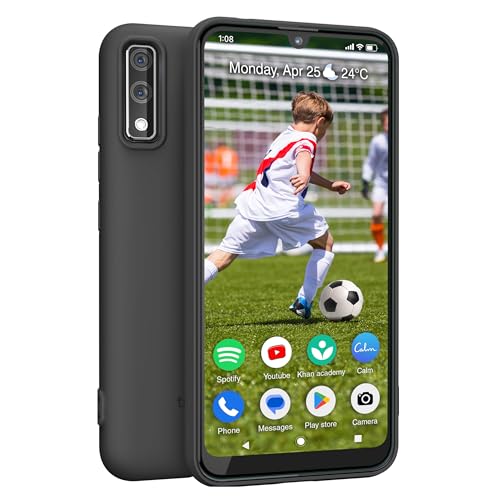
The Teracube Thrive blends kid-friendly design with built-in parental controls. It runs Android and includes 64GB storage, plus options to block or limit social media and internet access. Best for: families who want a safer Android experience with easy remote management. Limitation: requires a monthly plan and its safety features are most effective with ongoing monitoring.
V3 4G LTE Flip Phone

- Modern flip design with Android Go for essential apps
- Dual display for quick caller ID and messages
- Quad-core performance in a familiar flip-phone shape
Best for: users who want a traditional flip-phone experience with simple Android access. Limitation: is a general-purpose device and may include more features than a strictly minimal phone for very young children.
BLKE AIR Mini Phone

The BLKE AIR Mini Phone offers extreme portability with Face ID and dual cameras in a compact package. It’s designed as a kid-friendly mini smartphone that can also function as a small backup device for adults. Best for: families needing ultra-compact, secure access with video chat capability via front camera. Limitation: requires SIM compatibility checks for your carrier and network bands.
Buying Guide: Key Considerations For Selecting A Kid-Friendly Phone
- Purpose: Determine if the device is for basic calling and messaging, or if light app use is acceptable. Some models prioritize safety and monitoring, others emphasize minimal distractions.
- Parental Controls: If safety is a priority, consider devices with remote management, app restrictions, contact controls, and location tracking.
- Connectivity: Check supported networks (2G/3G/4G) and SIM compatibility. Some models use Wi-Fi for app downloads while others rely on cellular plans.
- Battery Life: Look for a device with dependable battery life for school hours and after-school activities.
- Durability and Size: For younger kids, a small, sturdy device that’s easy to hold is ideal, but ensure it’s not too fragile for daily use.
- Camera And Security: If cameras are included, consider privacy features like facial recognition or parental approvals for photo sharing.
- Cost of Ownership: Some devices require monthly data plans. Factor in ongoing costs when budgeting.
- Future Use: If the child will grow with the device, plan for potential app needs, storage expansion, and OS updates.
FAQ for Buyers
- What is the best simple phone for very young kids?
– A compact, no-frills phone with basic calling and parental controls is ideal, such as models designed for kids with limited app access and safety features. - Do kid phones require a data plan?
– Many do, especially smartphones with app access. Some offer Wi-Fi-first use or starter plans; always confirm ongoing costs before purchase. - Can these devices track a child’s location?
– Some phones, like Bark and Teracube Thrive, provide location services or tracking as part of their safety features. Check the product’s features and app compatibility. - Are cameras on kid phones safe?
– Cameras can be a concern for privacy. Look for devices with controlled app access and secure login features such as Face ID or parental controls. - Which device supports the most robust parental controls?
– Models marketed for safety and kid wellness (like Bark and Teracube Thrive) typically offer comprehensive monitoring and remote management tools. - Is a flip-phone better than a smartphone for kids?
– Flip-phones provide simplicity and fewer distractions, while smartphones offer app-based safety tools and location sharing. Choose based on your child’s needs and supervision level.