Best Solar Charger for Marine Battery: Top 5 Picks for Boat, RV and More
Looking for a reliable solar charger to maintain a marine battery while out at sea or parked by the dock? This guide highlights five strong options designed for 12V systems, focusing on boats, RVs, trailers, and other outdoor setups. These picks emphasize reliable MPPT control, multi-stage charging, and maintenance-free operation. Ideal buyers include boat owners needing steady trickle charging, RV travelers seeking low-maintenance battery upkeep, and anyone aiming to extend battery life with smart protection features.
| Product | Best For | Key Benefit | Limitations |
|---|---|---|---|
| SUNER POWER 12W Pro | Small boats, trailers | Ultra-Smart MPPT, 3-stage charging | Lower wattage than larger kits |
| Voltset 20W | Medium boats, RVs | Higher efficiency, universal 12V compatibility | Moderate size; weight considerations |
| POWOXI 7.5W | Compact setups, scooters | Smart protection, rugged build | Lower output for larger needs |
| SUNER POWER 20W Pro | Mid-range boats, campers | High MPPT efficiency, maintenance-free | Similar footprint to 12W kits |
| SUNAPEX 12V Kit | Everyday vehicles, moderate usage | All-weather durability, onboard controller | Moderate power, versatile connectors |
SUNER POWER Waterproof 12W 12V Solar Battery Charger & Maintainer Pro
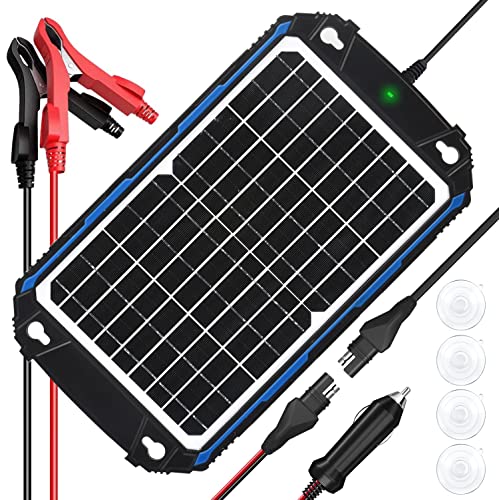
Best for small boats and trailers needing a compact, feature-rich trickle charger. This unit uses Ultra-Smart MPPT technology to maximize efficiency, delivering up to 99% tracking with peak conversion near 98%. The 3-stage charging (Bulk, Absorption, Float) supports safe, long-term battery health. It automatically stops charging at full charge and resumes when needed, reducing maintenance. Choose this if you want a dependable, low-wattage solar solution with smart control for 12V lead-acid or Li-ion packs.
Who it’s best for: Boat owners with small battery banks or occasional charging needs who want a smart, maintenance-free option. If you require minimal power draw but strong efficiency, this is a solid match.
Limitations: The 12W configuration may be insufficient for larger 12V systems or high-demand days on bigger boats.
Voltset 12V Solar Battery Charger – 20W With Smart MPPT

Better for mid-size boats, RVs, or trailers needing faster charging and broader battery compatibility. The 20W panel includes an advanced MPPT controller to deliver 20-30% faster charging for 12V batteries and supports LiFePO4, AGM, GEL, flooded, and Lithium Ion chemistries. This kit prioritizes universal compatibility and multi-layer protection to prevent overcharge, over-discharge, short circuits, and reverse polarity. It’s a strong all-around choice for users who want a single solution for various 12V batteries and vehicles.
Who it’s best for: Owners with mixed battery types or those seeking a versatile charger that handles multiple 12V chemistries with reliable safeguards. If your system includes LiFePO4 or hyped protection needs, this is a top candidate.
Limitations: Slightly larger than the smallest 12W options; ensure mounting space and wiring are appropriate for your setup.
POWOXI Upgraded 7.5W Trickle Charger Maintainer
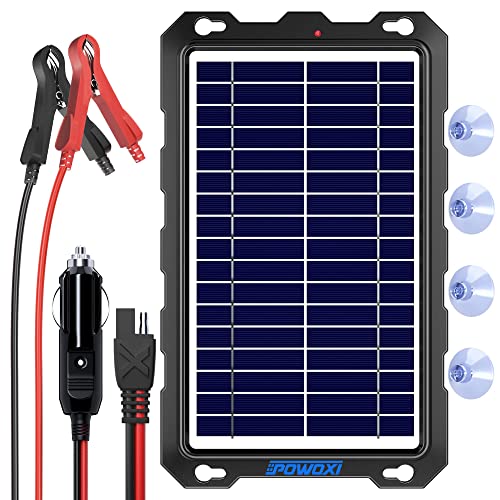
This compact solar charger is suited for small vehicles, motorcycles, boats, and other light-duty battery setups. It features an intelligent charging controller with protective measures to minimize the risk of overcharge and short circuits. The rugged design uses high-transparency glass and a robust frame, offering durability in challenging environments. Best for: users who need a simple, reliable 7.5W option that is easy to install and maintain.
Who it’s best for: Small boats, personal watercraft, snowmobiles, and compact trailers where space is limited and a lightweight charger is preferred. Use this if you want a budget-friendly, low-maintenance device.
Limitations: Lower output means slower charging for larger batteries or frequent use; not ideal for high-demand systems.
SUNER POWER 20W Pro With Ultra-Smart MPPT

Best for mid-range needs, this 20W option blends higher solar input with the same advanced MPPT features as the 12W model. Its Ultra-Smart MPPT controller maintains a high tracking efficiency and fast charging while the three-stage charging protects the battery during Bulk, Absorption, and Float stages. Free maintenance means no manual intervention is required beyond installation and monitoring. Choose this if you want a balance between size, power, and smart charging in marine situations.
Who it’s best for: Boat owners with moderate battery banks who want a more robust charger without stepping up to large 50W systems. It also suits RVs with longer off-grid periods.
Limitations: Similar in footprint to smaller kits; ensure the mounting area supports a 20W panel and controller assembly.
SUNER POWER 50W Pro Solar Battery Charger

Designed for larger battery banks on boats, RVs, and trailers, this 50W Pro model leverages Ultra-Smart MPPT to maximize energy capture. The improved three-stage charging supports safe, efficient charging and long-term battery health. It’s ideal for users who regularly run a larger 12V system or desire quicker conditioning on days with ample sun. Benefit includes maintenance-free operation and automatic recharging when needed.
Who it’s best for: Operators with sizeable battery banks, such as big boats or full-time RV rigs, seeking stronger performance from solar charging. If you regularly draw significant power, this is a suitable choice.
Limitations: Higher wattage requires more mounting space and may be overkill for small or infrequently used systems.
Buying Guide: Solar Chargers For Marine Batteries
What should you consider when choosing a marine battery solar charger?
- Power output and battery size: Match the panel wattage to your battery bank capacity. Smaller systems benefit from 7.5–20W units, while larger banks may need 20–50W or more for timely maintenance.
- MPPT vs PWM: MPPT controllers optimize energy capture, especially in fluctuating sun. For marine use, MPPT is generally preferable due to variable conditions on water and at docks.
- Battery compatibility: Check whether the charger supports Flooded, AGM, Gel, LiFePO4, and other chemistries. Universal compatibility reduces the need for multiple devices.
- Protection features: Look for overcharge protection, reverse polarity, short circuit protection, and auto-resume charging after discharge. These reduce risk to batteries and equipment.
- Durability and weather resistance: Marine environments require rugged, water-resistant builds and corrosion-resistant frames. Fully sealed or waterproof designs are advantageous.
- Ease of installation: Consider included mounting hardware, cigarette lighter plug, or alligator clip options for quick setup on boats or trailers.
- Maintenance: Systems with automatic maintenance reduce hands-on time and extend battery life, particularly for boats that sit unused for long periods.
Frequently Asked Questions
- What is MPPT and why does it matter for marine charging?
MPPT (Maximum Power Point Tracking) optimizes energy harvest from solar panels, delivering higher efficiency in variable sunlight, which is common on water, docks, and shaded areas. - Can I use a marine solar charger with LiFePO4 batteries?
Yes, many included models support LiFePO4, AGM, Gel, and other 12V chemistries, but verify the compatibility list for your battery type. - Will a 7.5W charger be enough for a small boat?
It can maintain a small battery and top up when sunny, but larger boats or frequent use may require higher wattage for timely charging. - Do I need to disconnect the battery to use a solar charger?
Most modern systems are designed to connect directly to the battery with protections; always follow the manufacturer’s installation instructions to avoid overcharging or electrical faults. - How do I know if the charger is charging the battery?
Look for indicator lights on the controller and ensure the battery voltage rises gradually during daylight hours. - What maintenance is required for marine solar chargers?
Most are maintenance-free, but periodic checks for wiring integrity and clean panels after salt spray or dirt help maximize efficiency.