Best XLR Condenser Microphones for Studio-Quality Sound
If you’re building a home studio or upgrading your broadcast setup, a reliable XLR condenser microphone can elevate recordings, podcasts, and streaming. This guide highlights five standout models, covering versatility, sound quality, and compatibility. Each option balances professional performance with user-friendly features, helping you choose the right mic for vocals, instruments, and voiceover work.
Summary of Chosen Products
| Product | Brand | Type | Key Benefit |
|---|---|---|---|
| MAONO XLR/USB Condenser Microphone: A04 Gen2 | MAONO | USB/XLR Condenser | Versatile dual-mode with software control |
| Audio-Technica AT2020 Cardioid Condenser Mic | Audio-Technica | XLR Condenser | Classic studio sound, solid value |
| MAONO PM320S | MAONO | XLR Condenser | Professional cardioid, affordable entry to pro gear |
| MAONO PM500 | MAONO | XLR Condenser | 34mm large diaphragm for rich detail |
| RØDE NT1 Signature | RØDE | XLR Condenser | Low noise, warm studio sound |
MAONO XLR/USB Condenser Microphone: A04 Gen2

The MAONO A04 Gen2 offers dual XLR and USB connections, enabling flexible use in studio setups or plug-and-play recording with a PC or phone. It supports a high-resolution sampling rate of 192kHz/24-bit and includes a professional chipset designed to deliver clear, studio-quality sound for podcasts, singing, or voiceover. When using XLR, ensure phantom power is available. The accompanying MAONO Link software provides gain control, noise reduction adjustments, and scene EQ presets for customized vocal tone, compressor, and limiter functions in USB mode.
Audio-Technica AT2020 Cardioid Condenser Mic

AT2020 has long been a standard in affordable cardioid condensers, offering a clear, balanced sound suitable for project or home studios. Its cardioid pattern helps isolate the voice while minimizing ambient noise. The mic handles high sound pressure levels and a wide dynamic range, making it versatile for vocals, acoustic guitar, and podcasting. Its simple, durable build makes it a reliable choice for beginners and seasoned users alike seeking dependable, high-quality recordings.
MAONO PM320S Cardioid Studio Condenser

The PM320S is designed for streaming, podcasting, and vocal work, featuring a 48V phantom power requirement for optimal performance with compatible interfaces. Its 16mm condenser capsule offers extended frequency response and strong transient response, supporting clear vocals and instrument recording. The cardioid pickup minimizes background noise, while the included shock absorber and pop filter reduce handling noise and plosive sounds, yielding a more immersive, studio-like result.
MAONO PM500 With 34mm Diaphragm
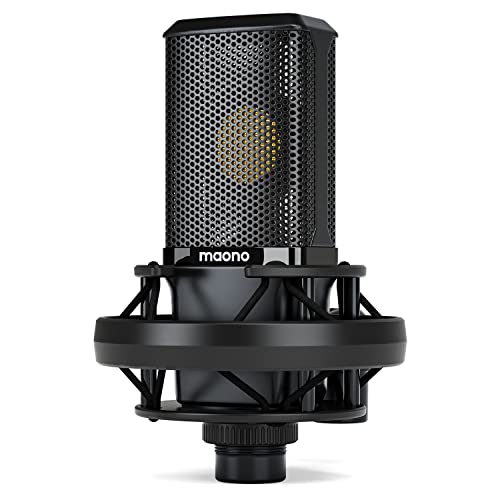
PM500 uses a large 34mm diaphragm to deliver studio-grade sound with a wide 20Hz–20kHz range and low noise. It provides strong low-end handling and a smooth top end, ideal for vocals, instruments, and full mixes. The cardioid pattern helps reduce off-axis noise, and the package typically includes essential accessories like a high-quality XLR cable and shock benefits for a cleaner recording environment. External phantom power is required for operation with mixers or audio interfaces.
RØDE NT1 Signature Series

The NT1 Signature is a large-diaphragm cardioid condenser offering exceptionally low self-noise and a smooth frequency response. It captures vocal and instrument sources with clarity, warmth, and detail, making it a popular choice for home studios, podcasting, and music production. Its true studio-grade performance comes with a robust build, suited for long sessions and multiple recording scenarios, from voiceovers to acoustic instrumentation.
Buying Guide
Key purchase considerations help you pick the right mic for your setup and goals. Consider the following perspectives:
- Application and voice type: For spoken word or podcasts, prioritize low noise and clear midrange. For singing or instrument work, choose a mic with a broader frequency response and higher SPL handling.
- Connectivity: USB/XLR hybrids offer flexibility, but true studio-grade work often benefits from XLR for better preamp control and compatibility with audio interfaces.
- Diaphragm size: Large-diaphragm mics (like 34mm) deliver fuller, warmer tones; smaller diaphragms tend to be more detailed but thinner on the low end.
- Proximity effect and off-axis rejection: Cardioid patterns reduce background noise; consider blueprints for proximity effects if you record close-mic vocals or instruments.
- Phantom power and power requirements: Ensure your interface or mixer can supply 48V phantom power when using XLR mics that require it.
- Accessories and setup: Pop filters, shock mounts, and sturdy stands improve sound quality by minimizing plosives, handling, and vibrations.
- Software compatibility: Some mics include companion software for gain and tone shaping; verify compatibility with your DAW and operating system.
- Budget and value: While premium mics deliver pristine tone, many mid-range options provide excellent results for home studios and podcasting.
- Use-case comparisons: If you need USB convenience, MAONO A04 Gen2 offers dual-mode versatility. For traditional studios, classic XLR models like AT2020 or NT1 Signature can be preferred for long-term reliability.
Selecting the right XLR condenser microphone involves balancing sound quality, workflow, and budget. The models listed here cover a spectrum from beginner-friendly USB/XLR hybrids to established studio workhorses, allowing you to tailor your choice to your recording environment and creative goals.